CULINARY RESIDENCIES
Through residencies with guest chefs, Metabolic Pathways expands the reflections of the exhibition into other spaces within the museum, exploring the relationships between art, territory, memory, and processes of transformation through cooking.
The proposals developed during these residencies will be presented at the museum’s restaurant as temporary menus inspired by the exhibition’s constellations. This initiative aims to create an experience that invites visitors to engage with knowledge not only through sight, but also through the body and the senses.
📍MARCO Museum Restaurant
Tuesday to Sunday
1:00 PM – 4:00 PM
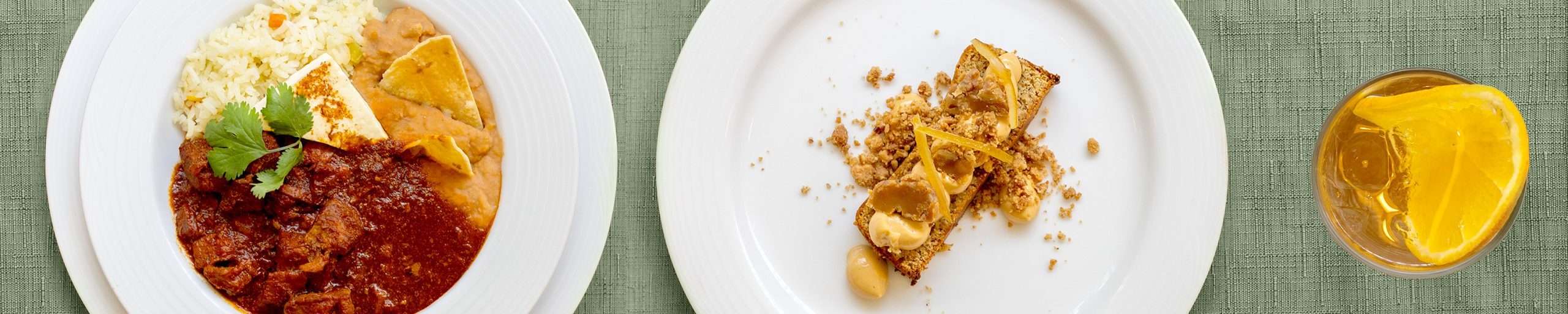
TERRITORIES [ TERRITORIO ] SARA MEDINA

April 7 – May 17, 2026
TERRITORIES [ TERRITORIO ]: The place where one is born, where one exists. The flavors, textures, and colors that feel familiar to us.
The route begins in the territory shared by MARCO and the FEMSA Collection—the place from which we speak. Territory is a place we inhabit, a space that holds and sustains us. It invites us to experience Nuevo León and its history through its textures, its humidity, its colors, and its flavors—through the mouth. In this sense, the mouth becomes both a compass and a map.
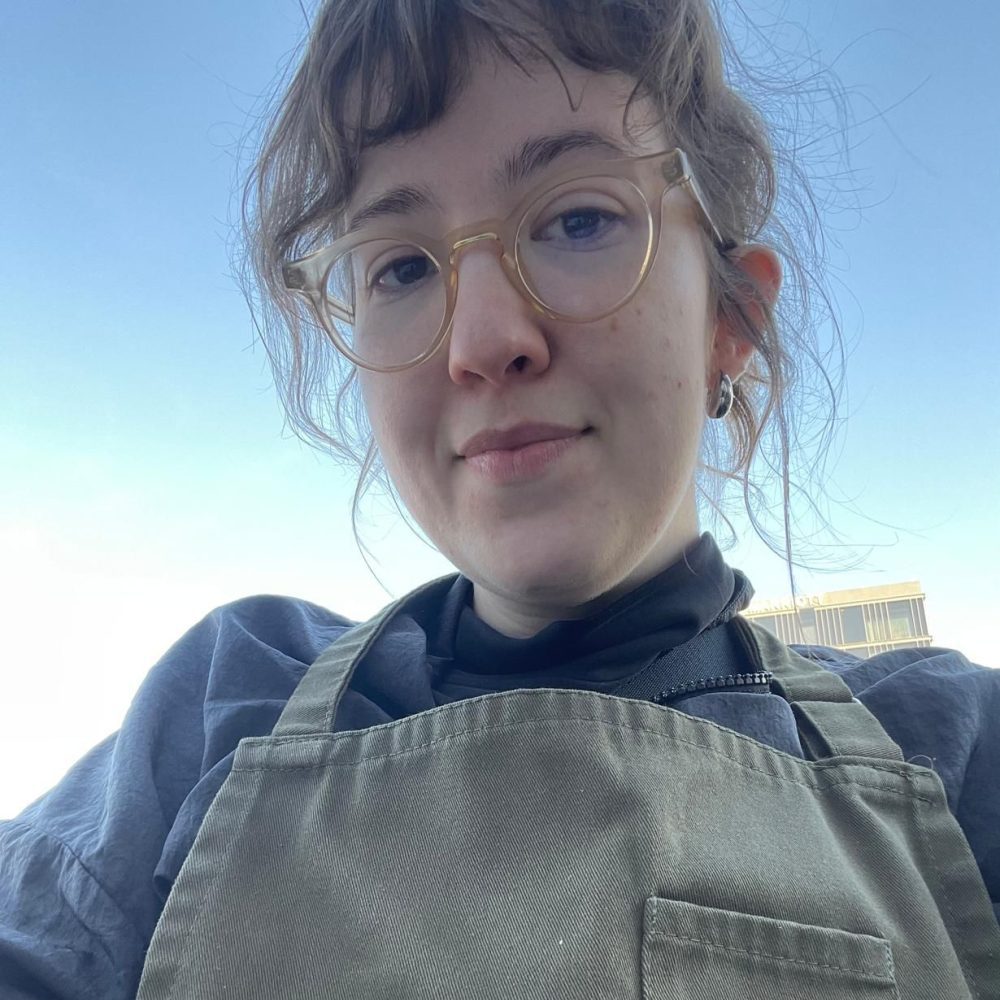
Sara Medina (NL)
Bachelor’s degree in Arts from the University of Monterrey (UDEM). Through participatory projects involving cooking, horticulture, writing, performance, and self-publishing, her practice remains deeply connected to everyday life. Her work has been exhibited in various spaces across Mexico, such as Museo El Centenario and Galería Abierta at Distrito Tec. She is currently pursuing a Master’s degree in Food and Art at The Gramounce. As part of her residency with Laboratorio de Arte A.C., she traveled throughout Nuevo León sourcing local food products, including cheeses, honey, fruits, and citrus.
COLONIAL STRUCTURES [ ESTRUCTURAS COLONIALES ] MARGARITA BERISTÁIN
May 19 – June 28, 2026
COLONIAL STRUCTURES [ ESTRUCTURAS COLONIALES ]: Cooking is rooted in culinary memory—knowledge passed down from generation to generation. It is bodily intelligence, things the body knows. Intuition.
The mouth is also a library: it receives, processes, stores, and transmits information. In countries with a millennia-old gastronomic tradition like Mexico, many recipes have been passed down orally or through teaching others in the kitchen, which is how they have survived over time. Before chefs and cookbooks existed, there were cooks who nourished others and shared their knowledge. This route is not only a geographic journey, but also an emotional and temporal one.
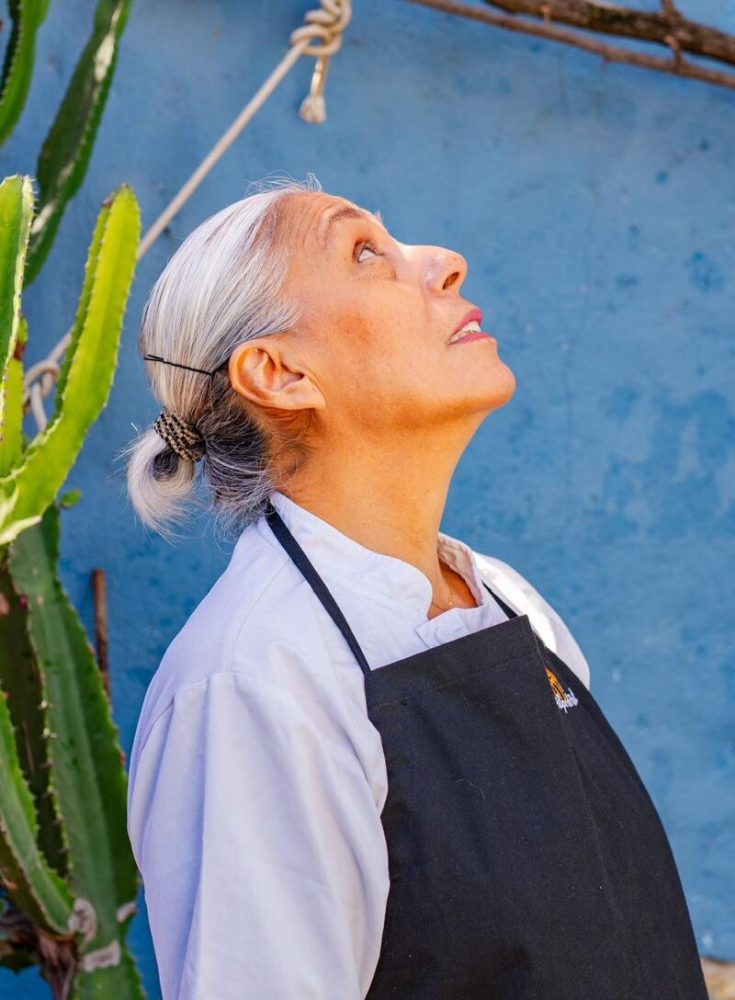
Margarita Beristáin (OAX)
She holds a degree in Chemistry from the Benito Juárez University of Oaxaca. Since her thesis, focused on traditional Oaxacan cuisine, she has combined her scientific training with her passion for gastronomy. For more than 35 years, she has led her restaurant, La Palapa de Raúl, in Tlalixtac de Cabrera, Oaxaca, where she applies her knowledge to create a balanced cuisine that respects the culinary roots of the state. Her specialties include mole negro and braised beef tongue stew. Her cooking is grounded in her family’s history and in a deep documentation of Oaxaca’s gastronomic traditions.
Photo: Roberto Pacheco
ALCHEMY [ ALQUIMIA ] JUAN ESCALONA
June 30 – August 9, 2026
ALCHEMY [ ALQUIMIA ]: On the transformation of matter. The sensory / the sensual. Smoke and fermentation.
The mouth is also a threshold—it carries and transforms food to nourish us. Just like learning, it requires us to be open to experience. In this and other ways, the kitchen is a laboratory where we can observe that everything is in constant change (our bodies, the territory, what nourishes us), only the timelines may vary.
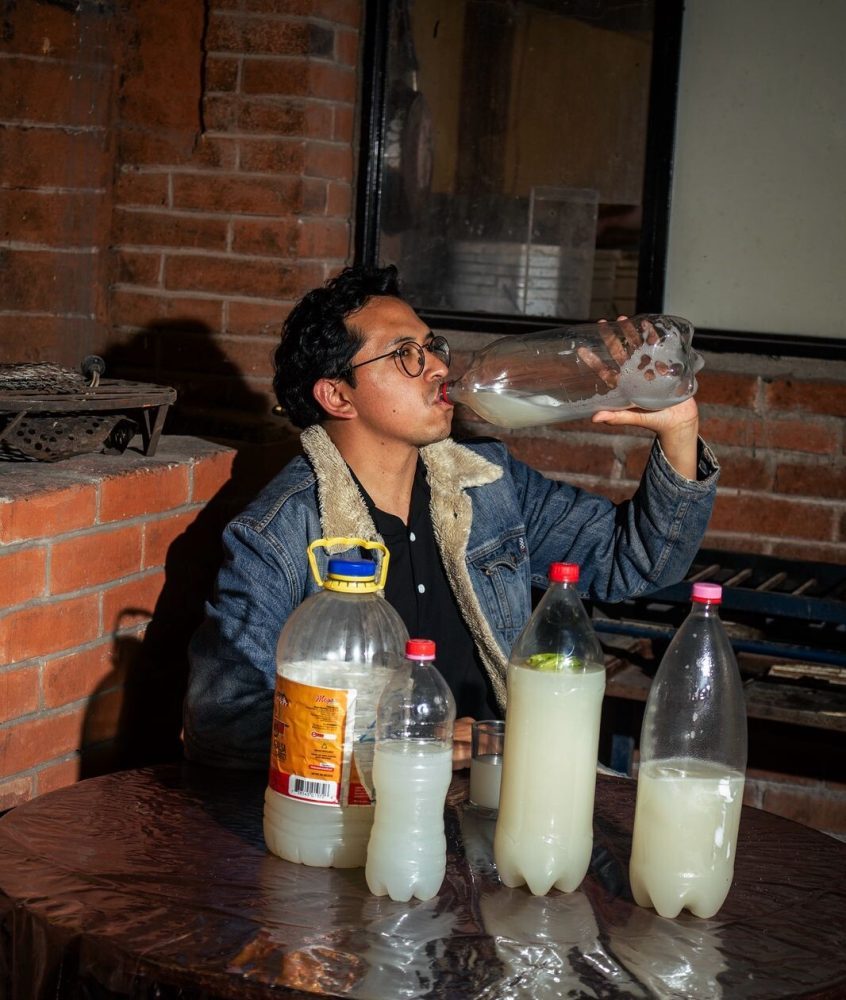
Juan Escalona (HGO):
Cook and researcher. His work is conceived as an intersection between research and cooking. He studied Computational Biology (UNAM, Mexico) and holds a Master’s degree in Philosophy (University of Leeds, United Kingdom). He created the project Laguna seca: cocina de maguey, huizache y pulque, and is about to present the book ¡Que viva el pulque!, which brings together years of research on pulque and its dissemination as part of Mexican culture. He has also worked in some of the world’s top restaurants, such as Pujol, Noma, and Máximo Bistrot.
Photo: Ana Lorenzana
CLOSING [ CIERRE ] COLECTIVO AMASIJO
August 9, 2026
CLOSING [ CIERRE ]: Back to the beginning. The path is not linear—it is a circle. The end as a new point of departure.
As the closing of the program, we will carry out an activity with the Amasijo collective in which we will revisit the journey. If the project begins by overflowing the themes or museum practice beyond the exhibition space, it is now time to let the kitchen overflow into museum practice. What can artistic and museum practice learn from the kitchen? What can we learn about generating knowledge, sharing it, and experiencing it from that space? A table left messy or empty is a record of what we ate and with whom we shared it, and at the same time, it is the prelude to the eager anticipation of the next meal.
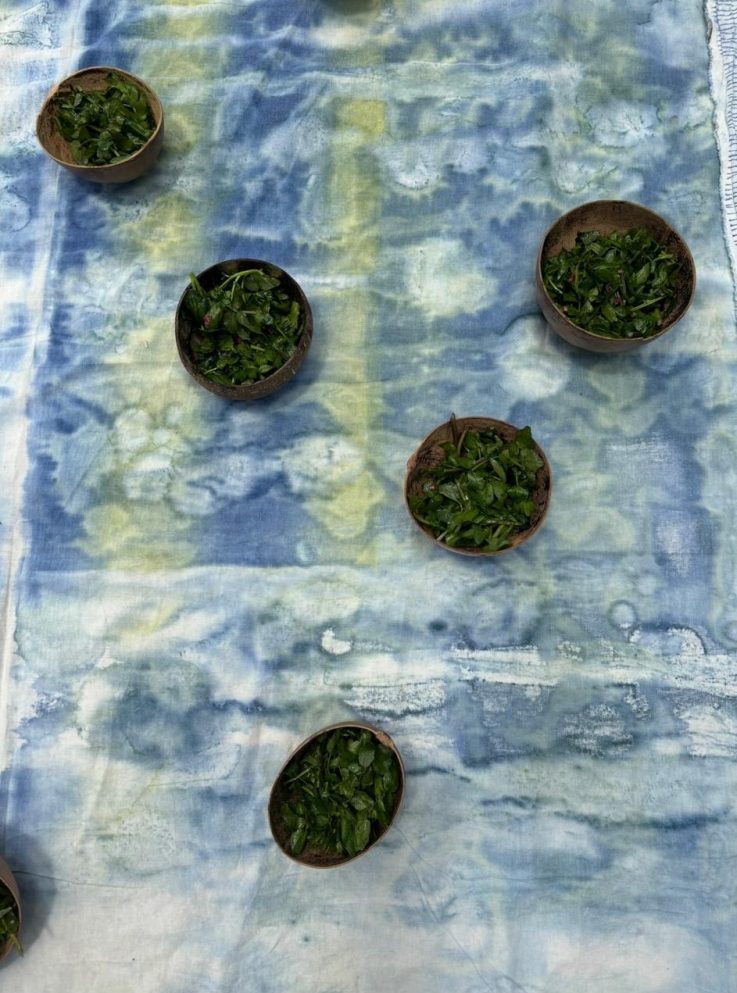
Colectivo Amasijio
Amasijo Collective is a group of women of different ages and professions who find in collective cooking a way to care for both territory and relationships. In addition to celebrating diversity and trusting in the cycles of nature to rethink the culture of scarcity, the collective centers non-dominant narratives—those of people closest to the land—to understand the real cost of climate change and explore pathways toward land regeneration. Amasijo makes visible the interdependence between culture and territory as a daily practice, understanding food as a network of interrelations.