Date
From January 26, 2025 to April 21, 2025
Area / Gallery
Sculpture Courtyard
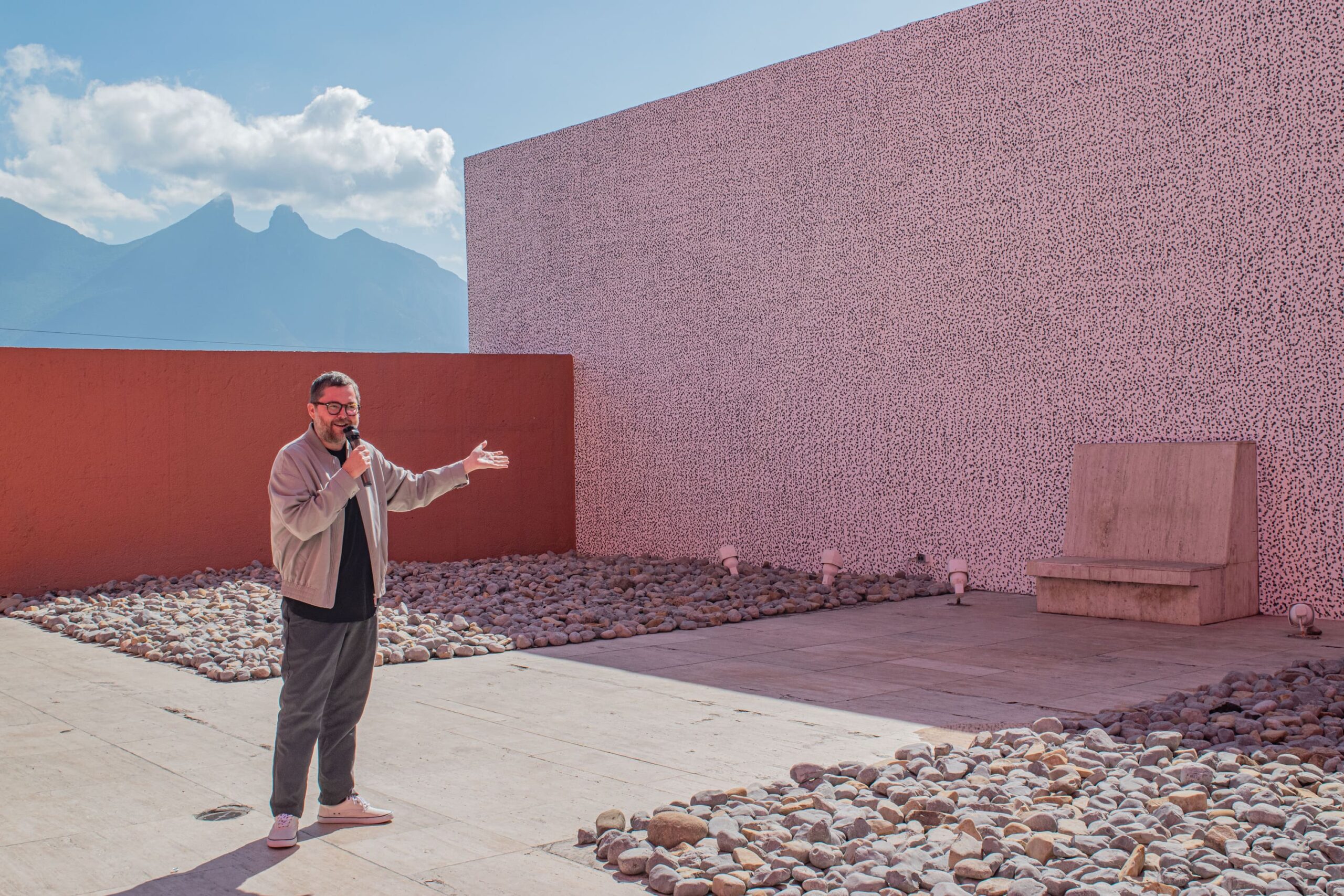
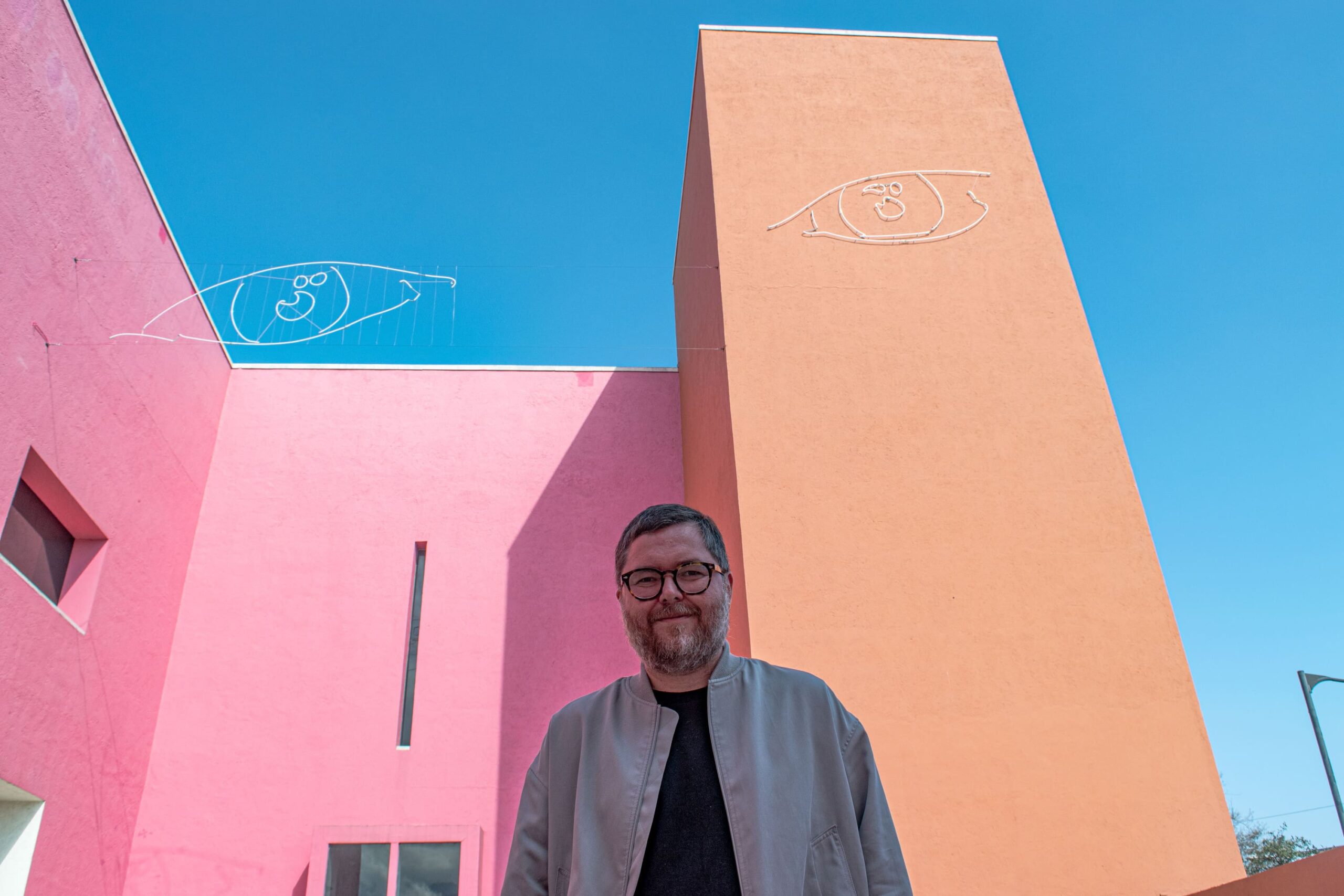
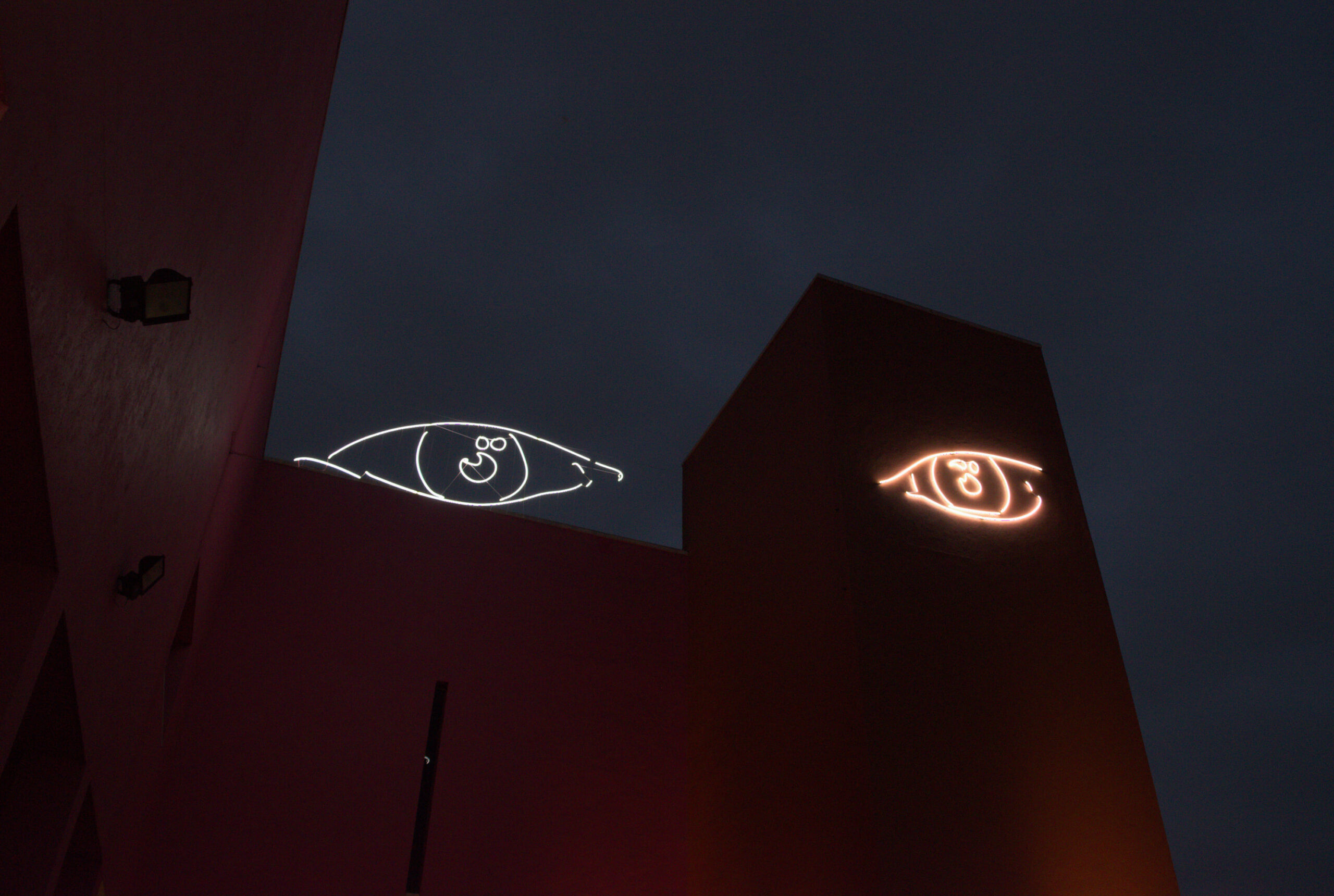
In the Patio de las Esculturas, artist Leo Marz shows two site-specific works as part of the exhibition They Stare at You From Billions of Years Ago, which analyzes the culture of “virality” in social networks.
Marz’s new proposal is based on the philosophical concept of hyperreality, proposed by Jean Baudrillard, and refers to the strategies of simulacra in contemporary times, where reality is presented through false, edited or distorted images, blurring the border with fiction. Also, the artist addresses how different events can be simultaneous despite being located in different temporal moments, both aspects marked by the consumption of media information and social networks.
“The body of work I’m working on now is about how at this moment people go from one reality to another and there is no difference between the virtual and the real in everyday life, because that experience we have in virtual space manipulates the way we understand reality,” explains the Jalisco-born artist who lives and works in Monterrey.
“I am interested in the way in which experiences are juxtaposed, and my concern is not only the image, but the way in which reality materializes. Painting allows me to slow down time to read the scene, on the one hand, the way in which people become an object by representing themselves in a selfie on their cell phone, on the other, the cell phone transforms from an object to a space, which are the social networks.”
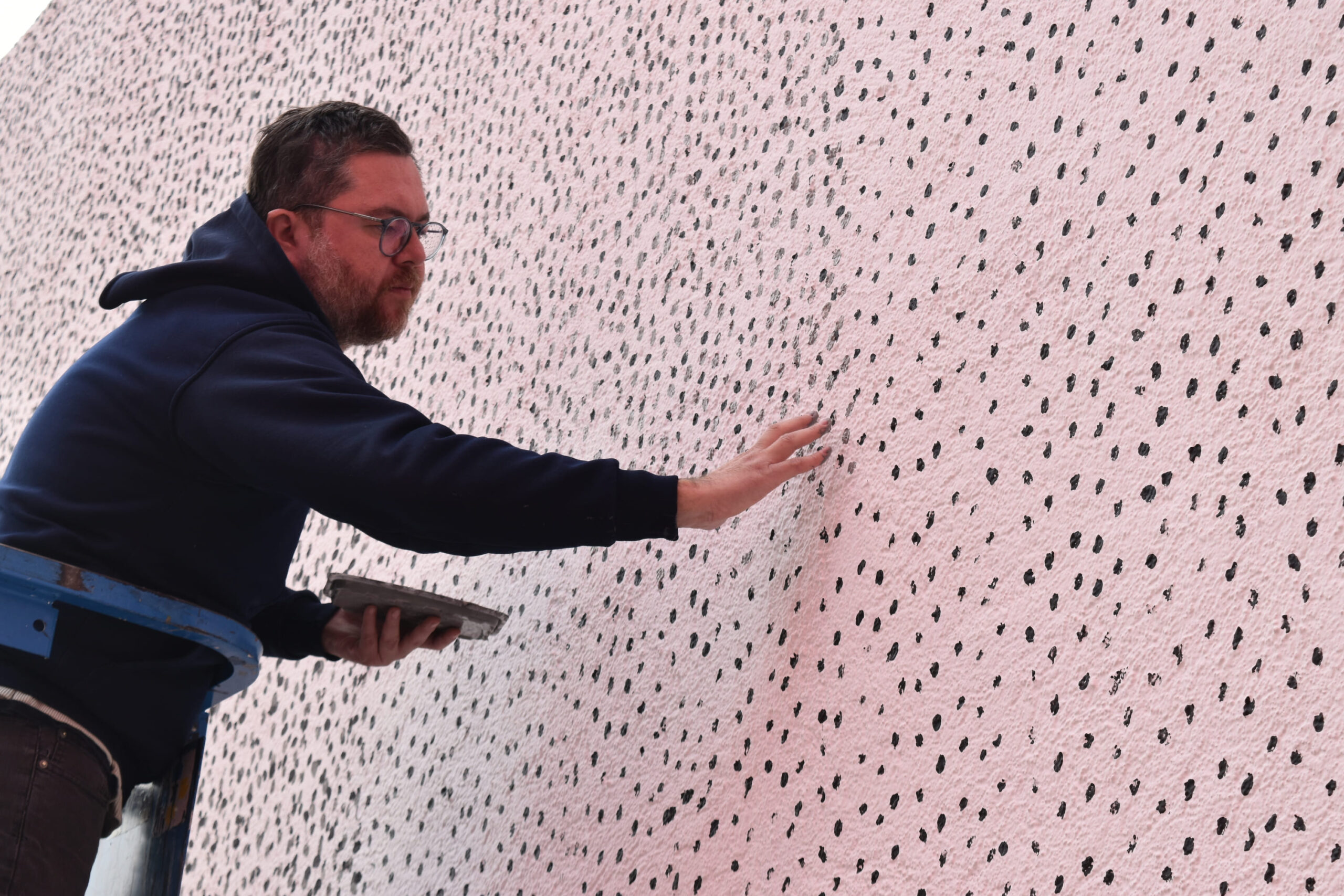
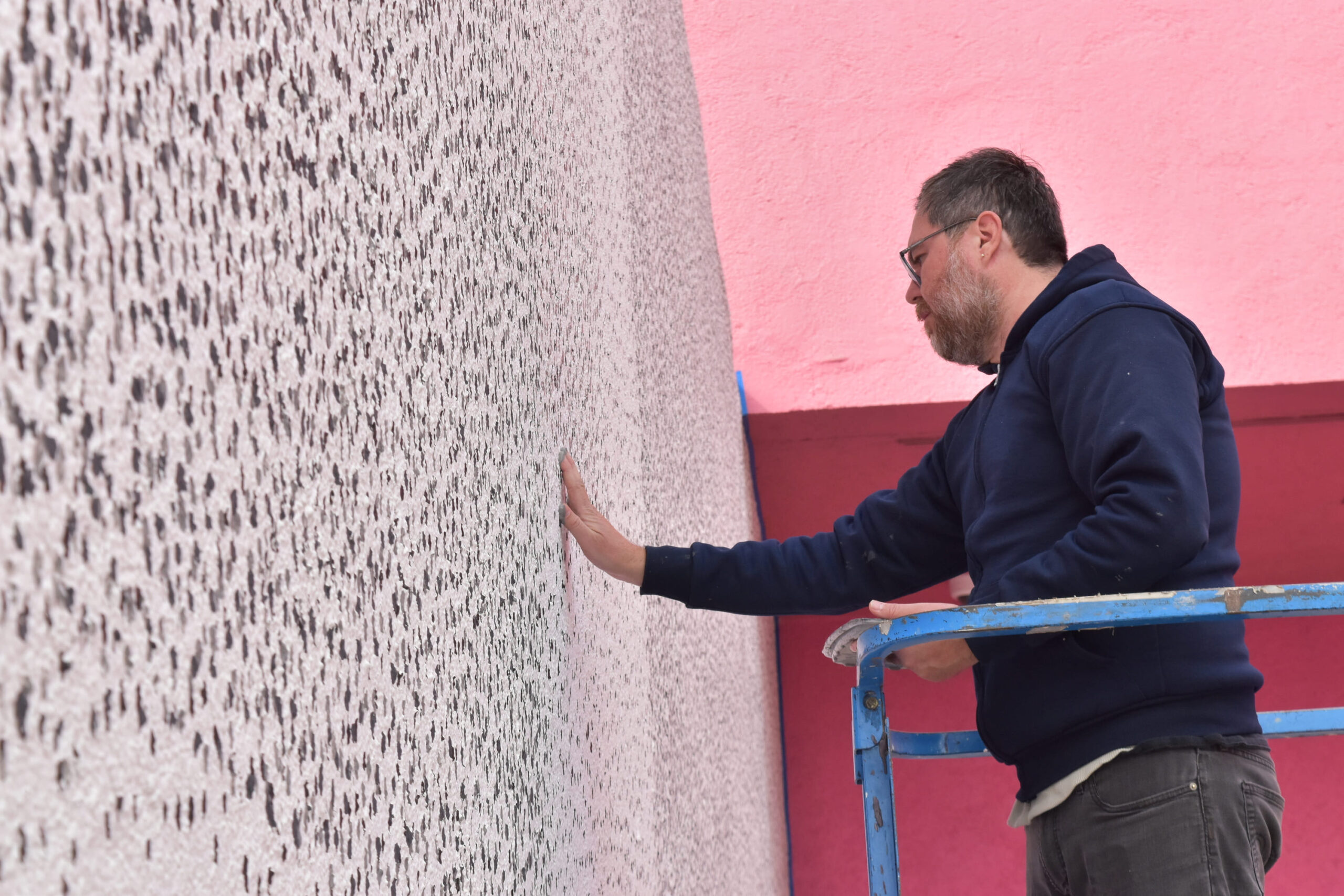
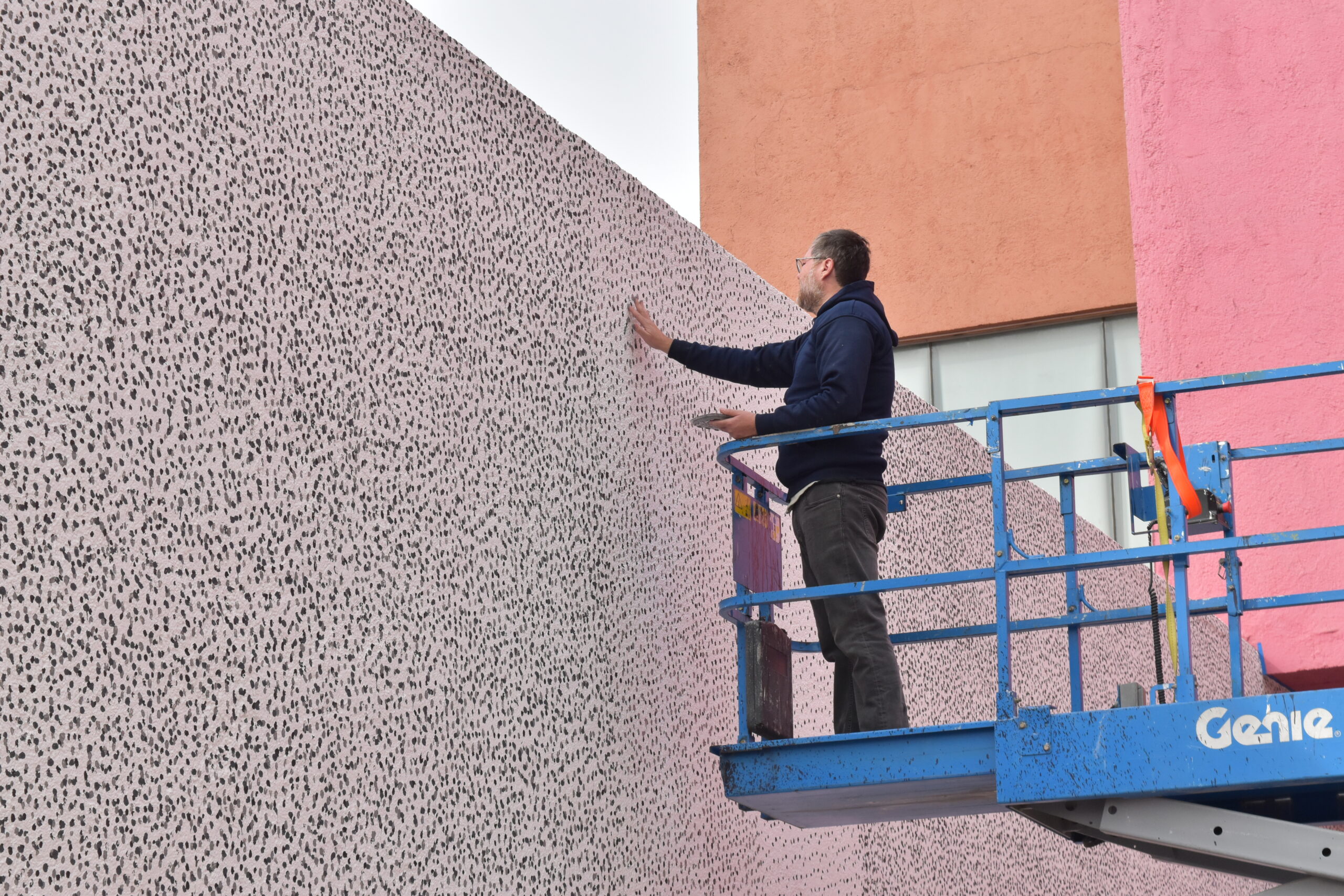
One of the works is They Stare At You From Billions of Years Ago (2023) a mural in which he applied acrylic paint using his fingerprints on a white background. Alternating two shades of gray, the fingerprints create a visual effect similar to white noise or snow, a pattern that appeared in analog television when the signal was weak or nonexistent, usually accompanied by a particular sound, something that no longer exists in digital signals. In addition to the nostalgia it implies, the artist is interested in retaking it because it is estimated that 1% of that white noise is caused by the cosmic radiation of the Big Bang, according to research by astronomers Penzias and Wilson in the 60s.
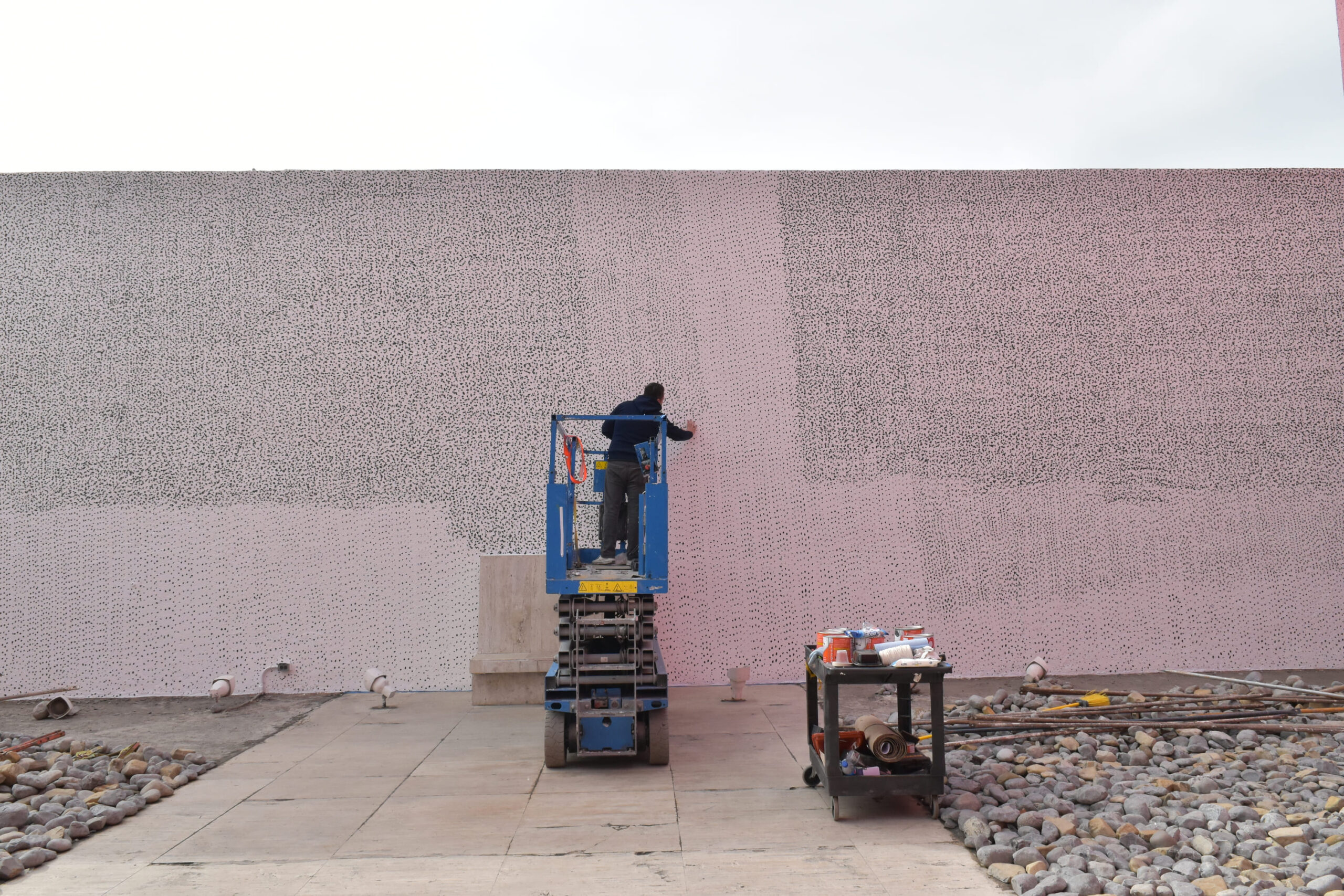
Since the beginning of January, the artist began the mural by establishing a pattern both with the colors and with his hands, stamping his handprints with paint on the surface, distributing them minutely at a similar distance from each other. Because of the size of the surface, which is 26 meters long by 5 meters high, the mural took several days to complete, and the passage of that time for the artist is a way of materializing the present, marking his presence in an elapsed time. At the same time, the work is a self-portrait made up of thousands of fingerprints, referring to the current use of fingers both to navigate mobile devices and to establish a biometric identity.
On the opposite side is the second work: Complete Bliss Is Not a Full Reality (2024), a neon light sculpture in the shape of eyes taken from a selfie; in this case, they correspond to those of the famous socialite Kim Kardashian. The gaze of one of the most mediatic celebrities of the moment is displayed at the top of the space, at a height that allows its visibility from outside the building, right in front of the mural, as if observing the white noise. Recently, Marz has made sculptures in brass or steel retaking eyes of famous and real selfies; for this work he chose one of Kardashian because of the phenomenon she currently represents as a public figure who constructs a reality not only in front of her program, but also in networks, where fiction and veracity are manipulated by herself.
In his production, the artist Leo Marz has been interested in working from certain events connected in some way, despite being located in different temporal moments. In a context marked by the immediacy of communications, the artist is interested in addressing the passage of time, the relationship of one moment with another, questioning the concept of real time and its level of veracity. Reality and its manipulation through editing or to question its level of fiction is another constant in his discourse.