Date
From June 20, 2025 to March 01, 2026
Area / Gallery
Sculpture Courtyard
Curatorship: Mariana Mañón Sepúlveda
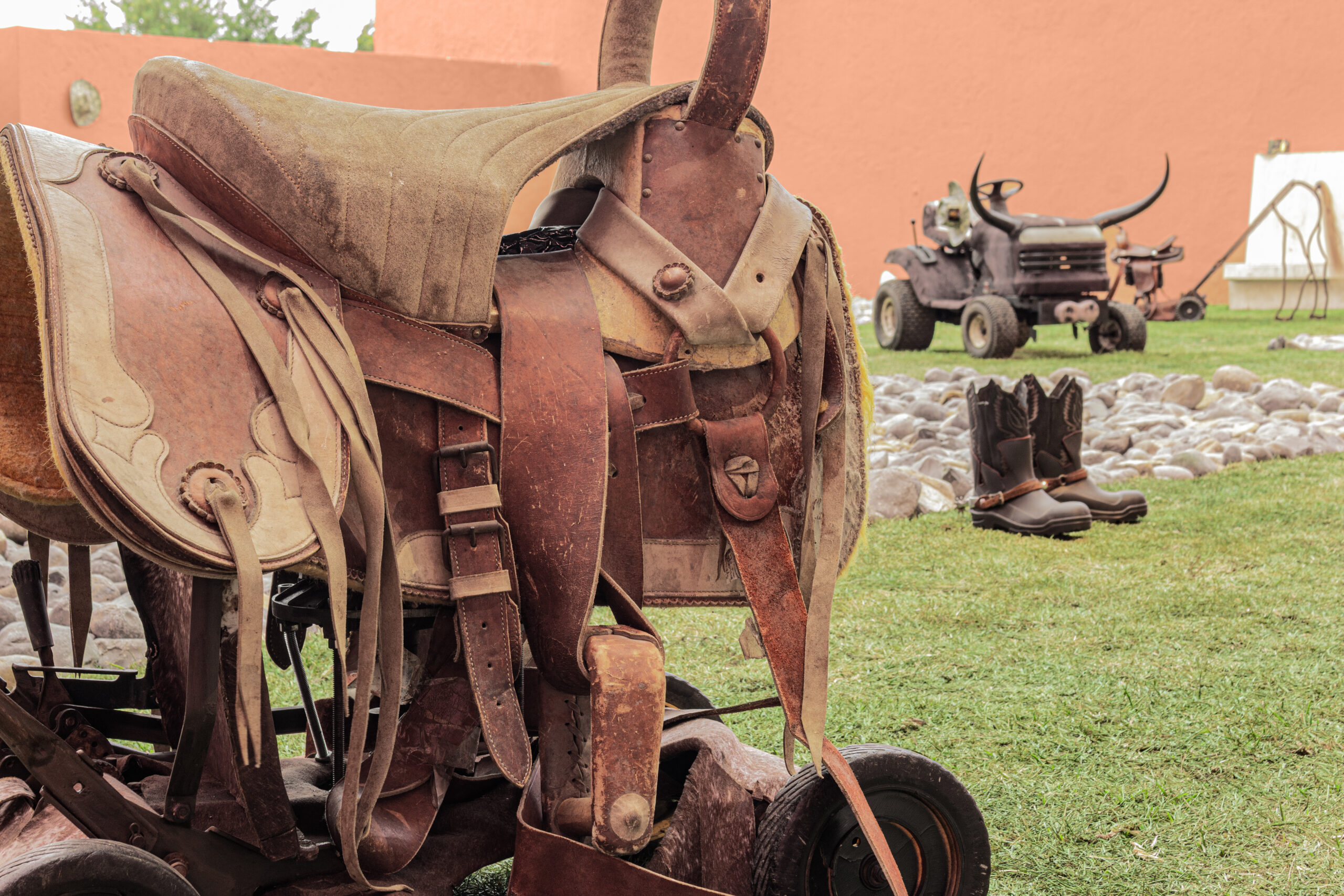
Although several types of ecosystems can be found in Nuevo León, such as the forest, what predominates in the region is the desert landscape. This condition is shared with the southern United States, however, the creation of green areas and gardens has become a social and economic situation that has interested the artist Carlos Lara. This site-specific intervention reflects on the artificial condition of the gardens, despite their natural elements, since around the construction and maintenance of these spaces is the specialized labor that migrated to the United States, during the Bracero Program, and the way in which the trade has moved to Nuevo León over the years. The installation consists of an area with lawn and elements linked to the creation of the gardens, such as a pruner and tools in the shape of animals used in Mexican agricultural work, which are also connected to the work of the land and the modification of the landscape as an economic and historical symbol.
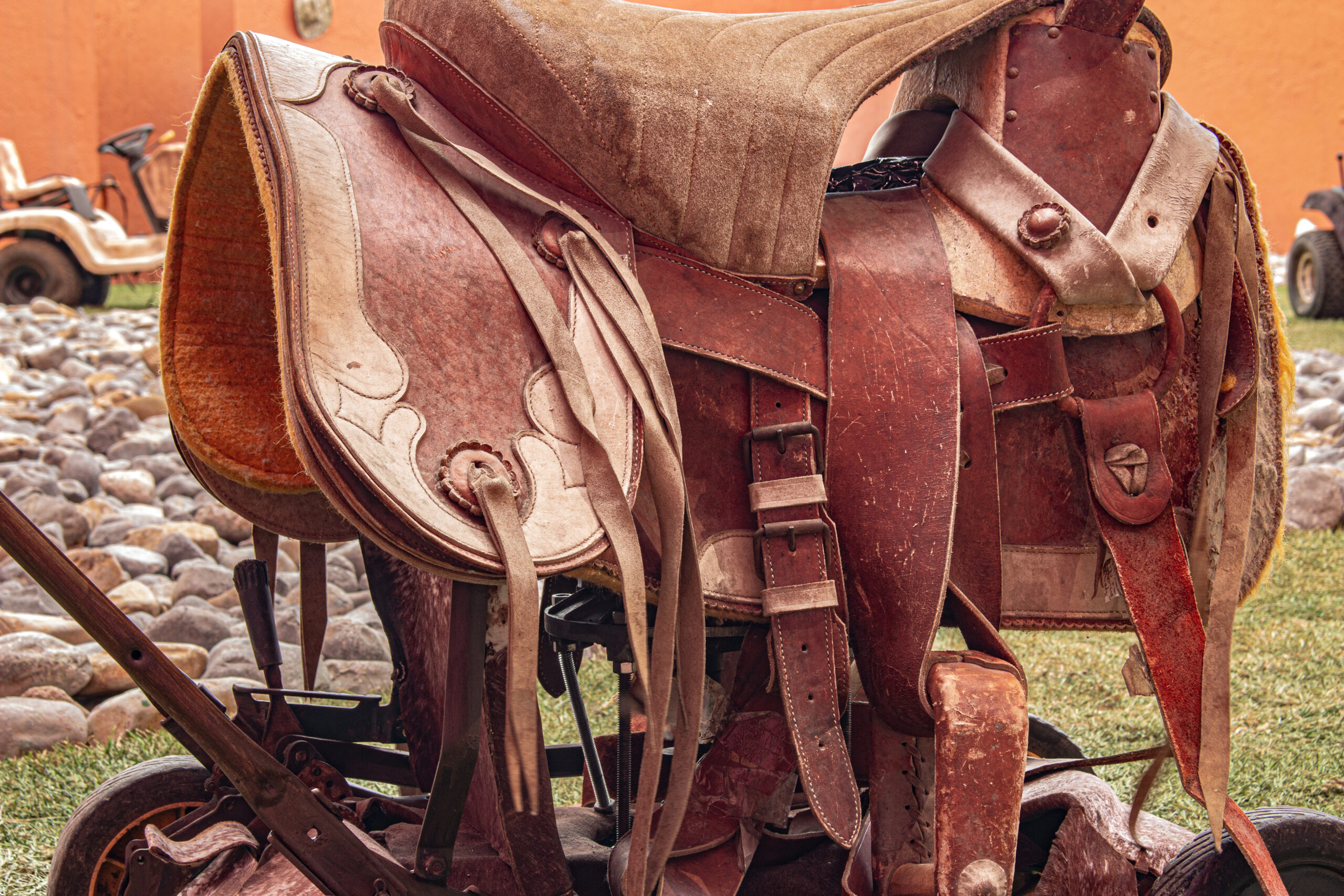
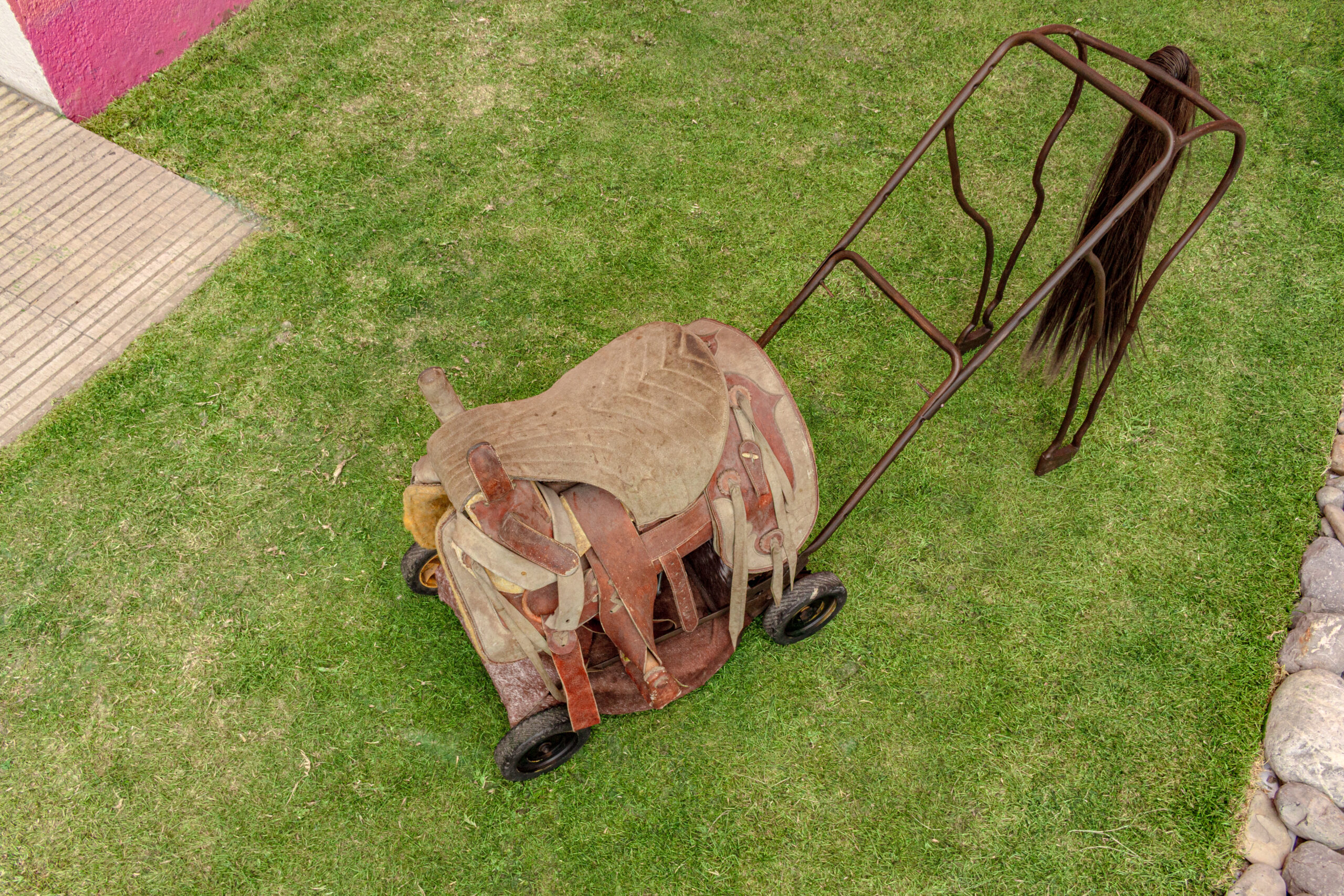
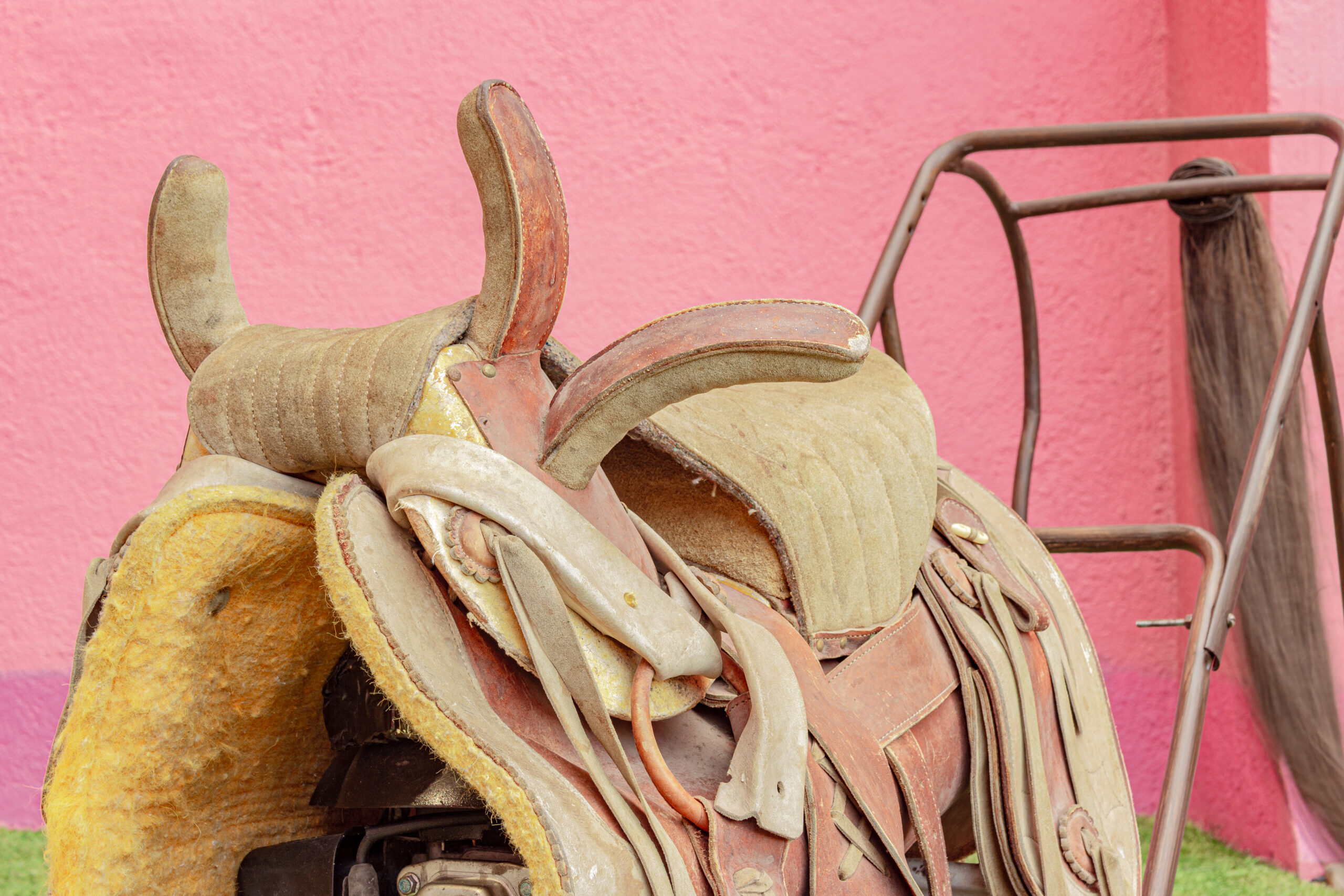
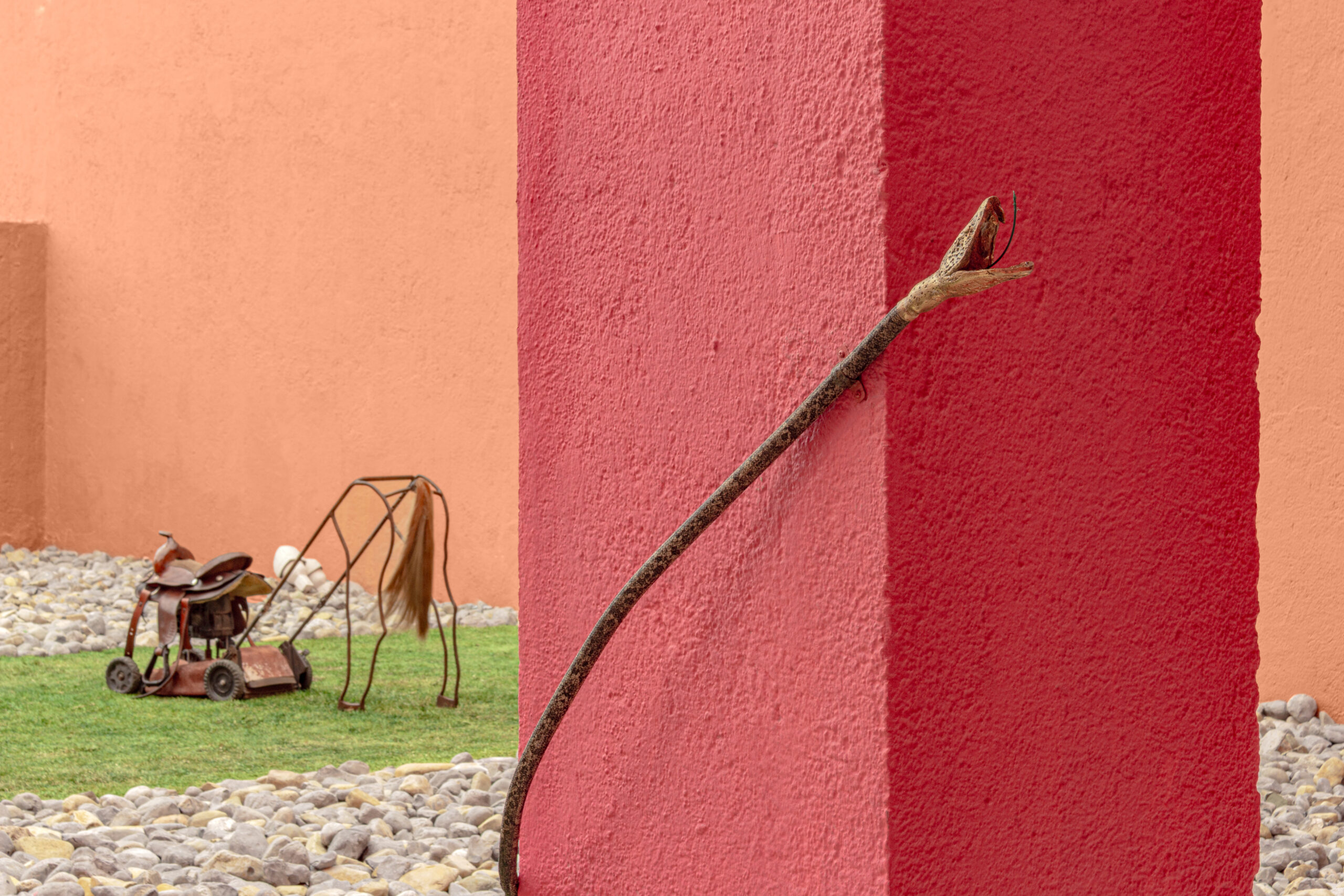
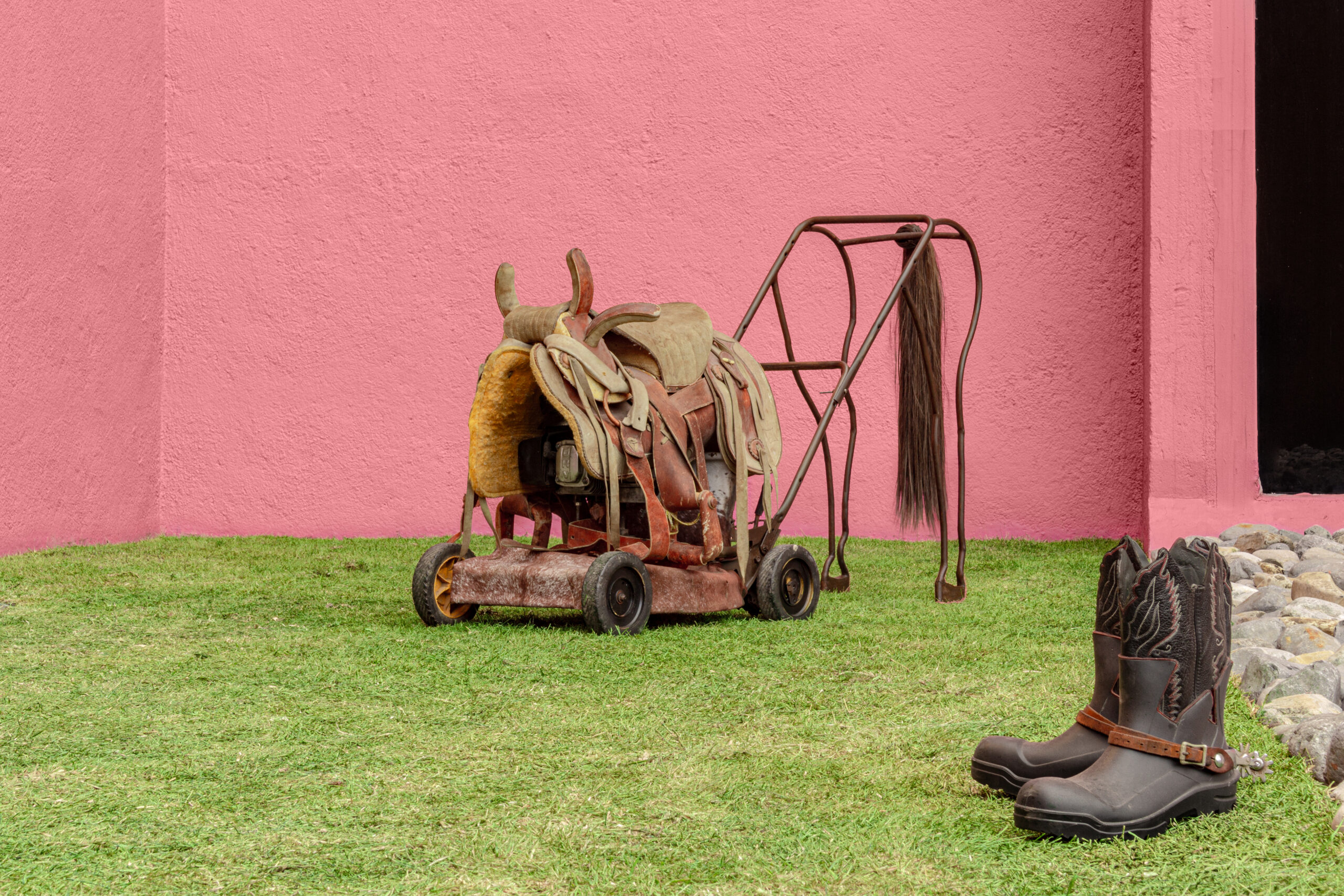
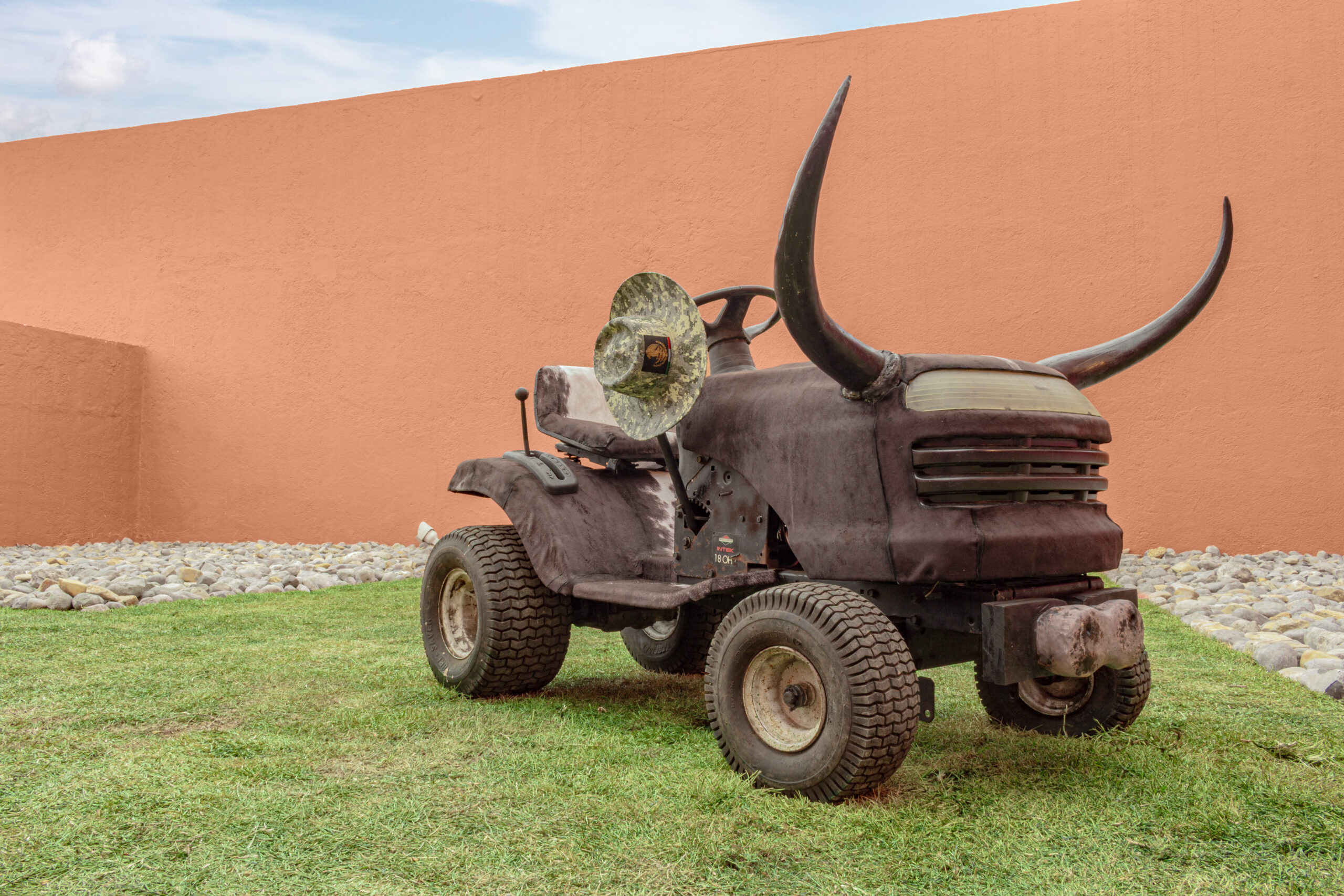
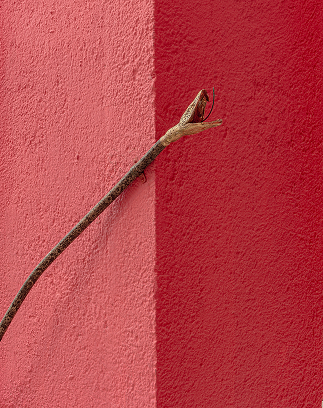
El México que se nos fue is a sculptural essay that reflects on the construction of the landscape as an artificial space where colonial and migrant realities coexist. Based on the memory of the Bracero Program -which took millions of Mexican day laborers to the American countryside-, artist Carlos Lara addresses a particular form of syncretism: how ornamental gardening of European origin, reinterpreted in the suburbs of the United States, ended up influencing the Mexican rural reality.
With the Bracero Program, agricultural work crossed borders and, over time, mutated in form: from the cornfield to the lawn, from the furrow to the garden. The knowledge of the countryside came to sustain the suburbs, where the garden became a symbol of distinction. Then these techniques returned to Mexico: the grass replaced the scrub, and the desert became decorated. Underlying this process is the idea of landscape as conquest, palpable in the green gardens that survive in the arid lands of northern Mexico, invaded by grasslands, exotic species and excessive water consumption.
In the exhibition, this reality takes shape in the non-endemic natural grass, placed on marble, with no soil in which to take root, destined to die and an appearance only maintained when painted green. This gesture of dissimulation and artifice alludes to that domesticated and aseptic scenography.
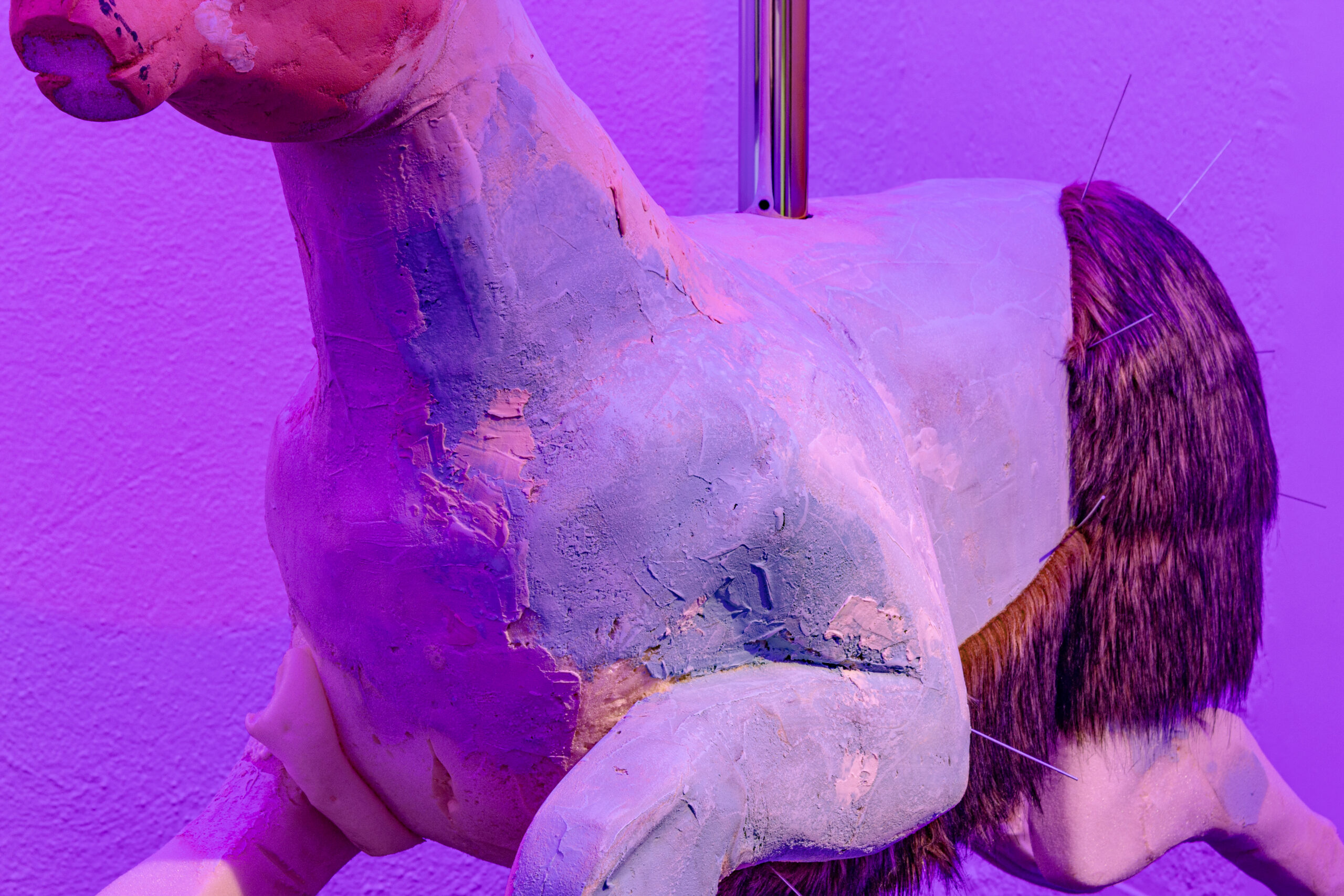
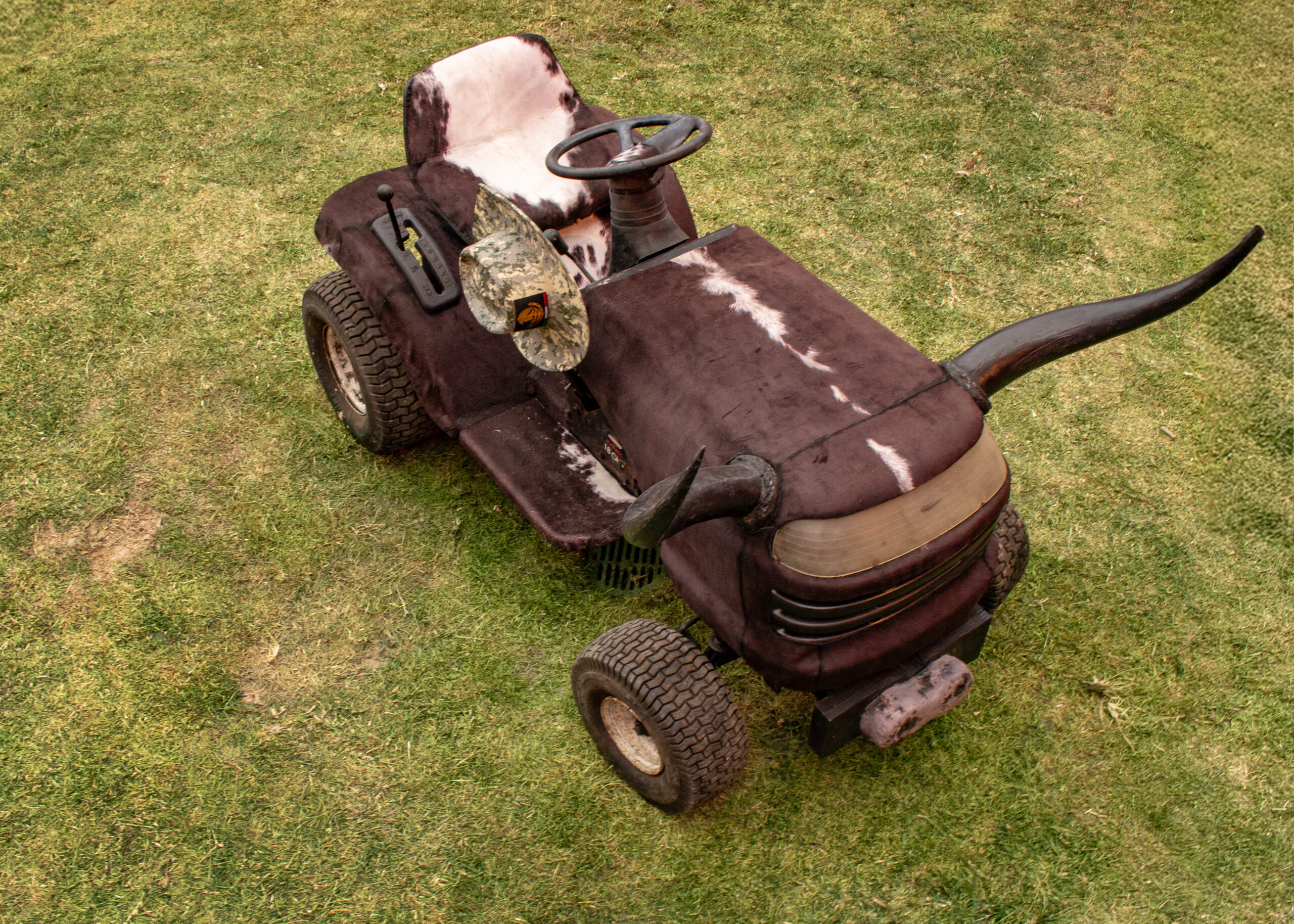
In contrast to this idea, the sculptures in the exhibition, hybrid tools between machine and animal, function as a critique of the narrative of domination over the landscape. As a flaw in that narrative, a snake coiled in a pruning shear or a tractor with ox horns point not only to domestication, but also to the dispute over territory: the syncretisms that emerge from the colonial and migratory process —traditions, knowledge and symbolisms that are mixed and not only subdued— reveal the landscape as a constantly transforming entity of miscegenation.