Date
From October 25, 2024 to February 09, 2025
Area / Gallery
Gallery 1-4
The exhibition reviews four decades of Teresa Serrano’s career, whose conceptual art is closely tied to her biography, exploring issues that stem from personal experience but ultimately relate to the conditions faced by women in a patriarchal society.
Curated by Brenda Fernández Villanueva, the exhibition brings together works ranging from Serrano’s earliest pieces from the mid-1980s to previously unseen compositions created this year, encompassing techniques such as drawing, painting, installation, photography, video, performance, and sculpture.
Born in Mexico City in 1936, Teresa Serrano is a self-taught artist who created her own language in contemporary art. Her personal history is marked by caring for others, having taken responsibility for her siblings and the family she formed at a very young age. At one point in her life, she embarked on a process of introspection and questioning that led her to reject the submissive role imposed on women by patriarchy.
After taking painting classes, a medium in which she worked hard, Serrano decided to start her career as an artist and moved to New York City, where she encountered the vibrant art scene of the 1980s, exploring video, installation, and performance proposals which were not yet so prominent in Mexico. Reflecting on her personal journey, Serrano says she felt like a glove on someone else’s hand until she became the hand herself, a reference to the stage in which she empowered herself and forged her own path.
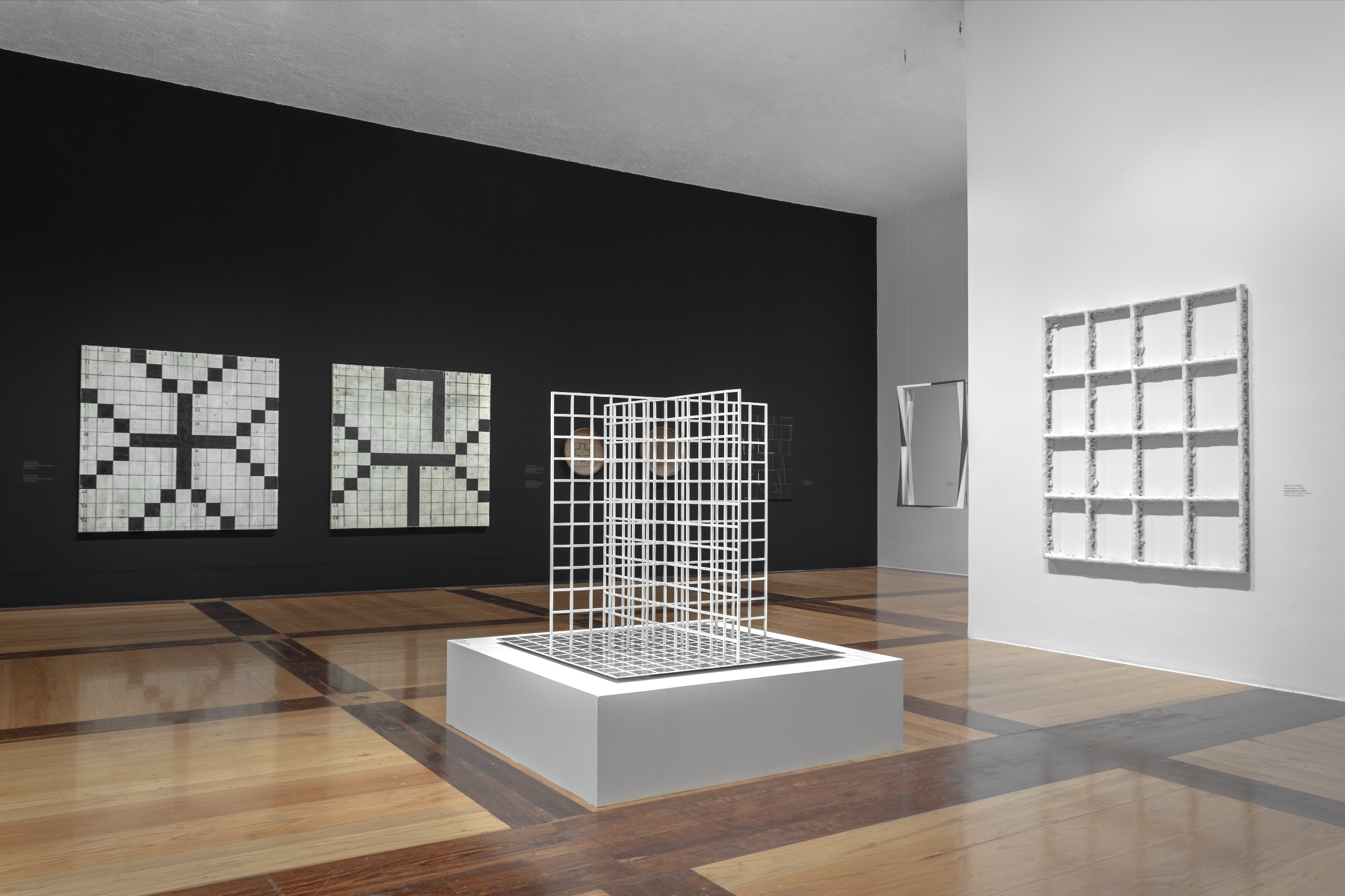
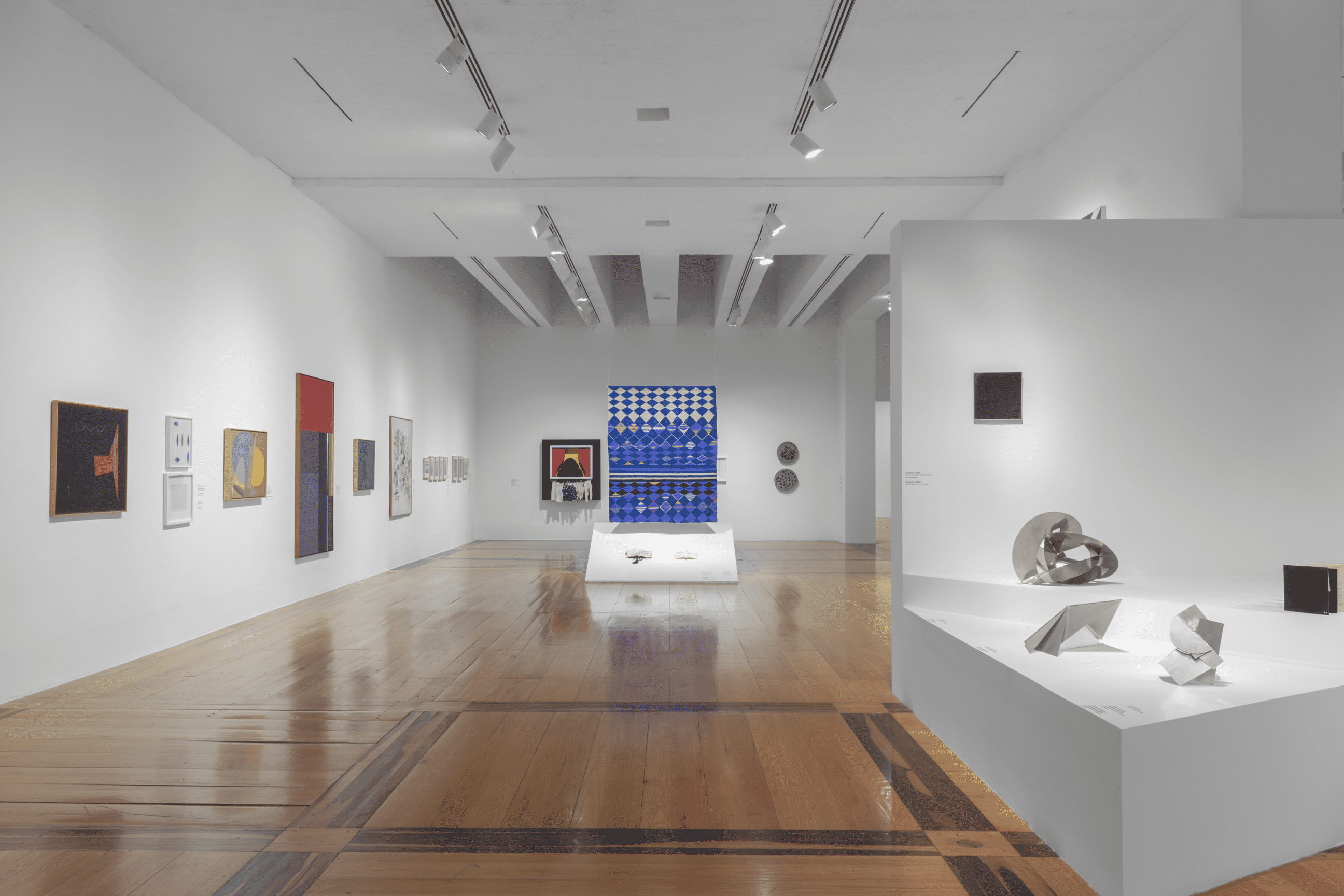
Throughout her career, the artist has explored different techniques, allowing her to explore various concerns. In her early paintings, she reflected on and healed from significant losses of loved ones. Her stay in New York was a transformative experience in which she questioned herself as an individual and began working on sculpture. She revisited minimalism, a male-dominated movement, which led her to create works that contrast the softness of fabric with the rigidity of steel.
Having been connected to cinema since childhood, Serrano’s work explores moving images, addressing issues such as migration, women’s rights, and the challenges surrounding drug trafficking. A notable example is her piece Amapola (2017), in which she creates a short film featuring a poppy she planted in a field in Tepoztlán, a town in the central Mexican state of Morelos. The work focuses on the flower’s poetic image and beauty, despite being stigmatized due to its association with heroin production. In the video, the artist herself sings “Amapola,” a song originally composed by Argentine musician Luis Roldán, with musical arrangements by Santiago Ojeda.
This exhibition is made possible thanks to the support of the Government of the State of Nuevo León, through the Secretaría de Cultura del Estado, as well as the Municipality of Monterrey and the companies Arca Continental, Cemex, Femsa, Xignux, Frisa, Cydsa, Arte Expuesto, VMediaGroup, TV Ruta, Exgerm, and Terza.
Consisting of over 70 artworks, the show is organized into four thematic sections: Desplazamientos (Displacements), Poder (Power), Temores y obsesiones (Fears and Obsessions), and Aceptación (Acceptance).
The conceptual frameworks of Teresa Serrano’s work are closely tied to her experiences as a woman. She challenged her self-taught origins, forged her own language, and found a space for resistance and emotional reconstruction from her earliest pictorial works in art. As her career progressed, her work became an incisive critique of power dynamics and gender roles.
Teresa personally rejected the subordinate role assigned to the female figure by patriarchal society. She took refuge in New York, where she formed a critical view of the role of art in everyday life and in seeing habits, although she never stopped spending time in Mexico. Exposed to installation, video art, and performance—abundant in 1980s New York—she transitioned from working in the second dimension to exploring moving images and sculpture, where her subversive spirit manifested in her examination of sculptural minimalism and the tradition of the petos in bullfighting, environments dominated by men.
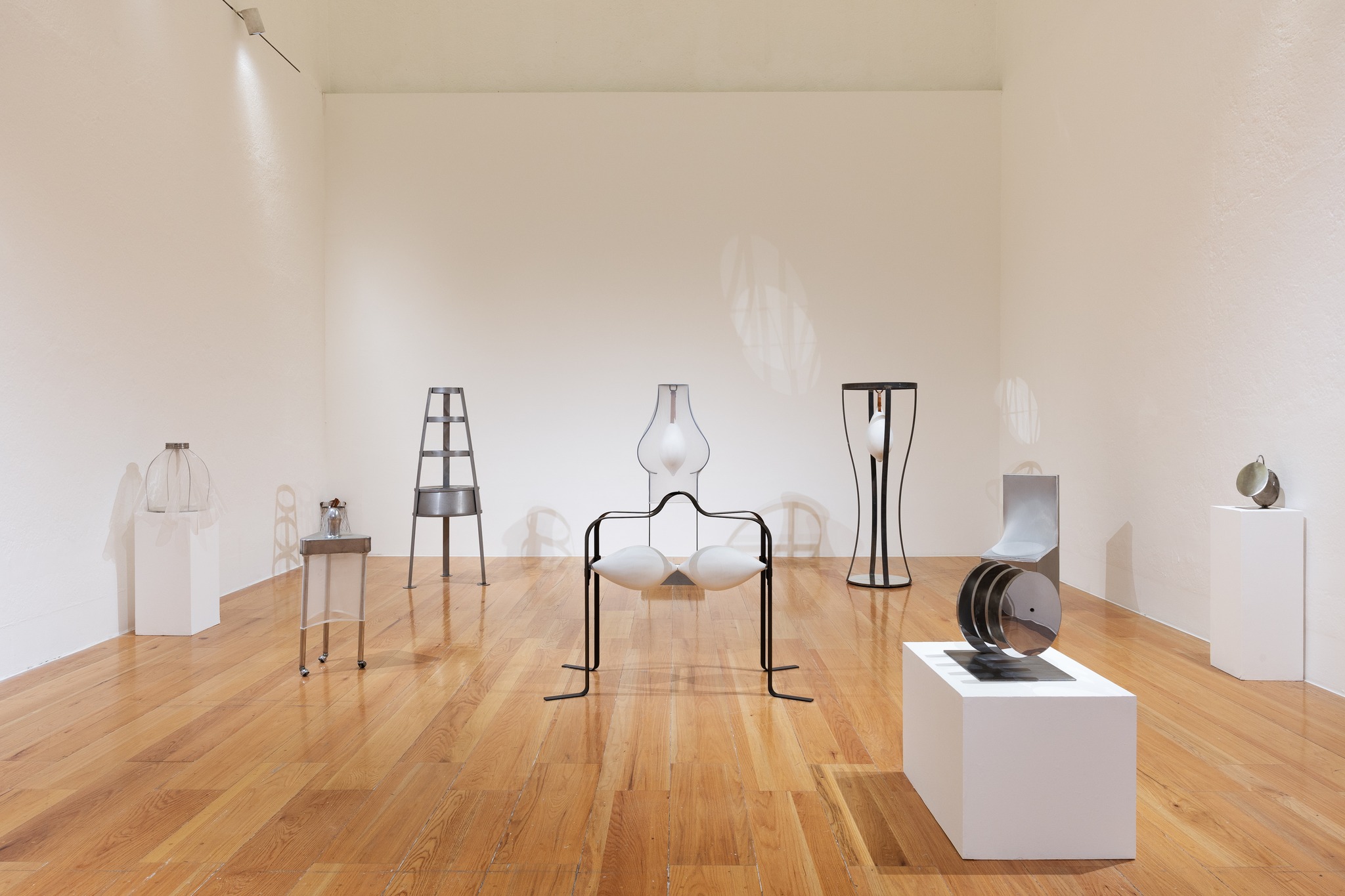
By dislocating these hegemonic discourses, she employed materials and forms associated with minimalism, such as steel bands, combining them with delicate and soft elements like fabric, lace, and leather associated with skin. In the second case, she relied on male labor from bullring artisans to create works that addressed the supposed problem of femininity, perceived as fragile and protective.
In her videos, the artist has appropriated television and cinematic codes. In other instances, she has used the bolero from the Latin American popular tradition to question social norms and encourage their reconfiguration, highlighting various types of violence and political, labor, and interpersonal domination.
This retrospective, spanning over 40 years of work, reveals Teresa’s concerns about breaking the complex apparatus between power, body, and identity.
Brenda Fernández Villanueva,
Associate Curator
Displacement, both geographical and emotional, has been crucial in Teresa Serrano’s work and artistic development. Born in Mexico, Serrano found her creative identity in New York in the early 1980s after moving to the city at a pivotal moment in her life. It was not simply a change of physical location but a personal transformation that allowed her to escape the social restrictions and traditional roles associated with her previous life. This context connected her with a generation of women artists who, inspired by the feminist movement, challenged conventional expectations to find their own voice in the artistic world.
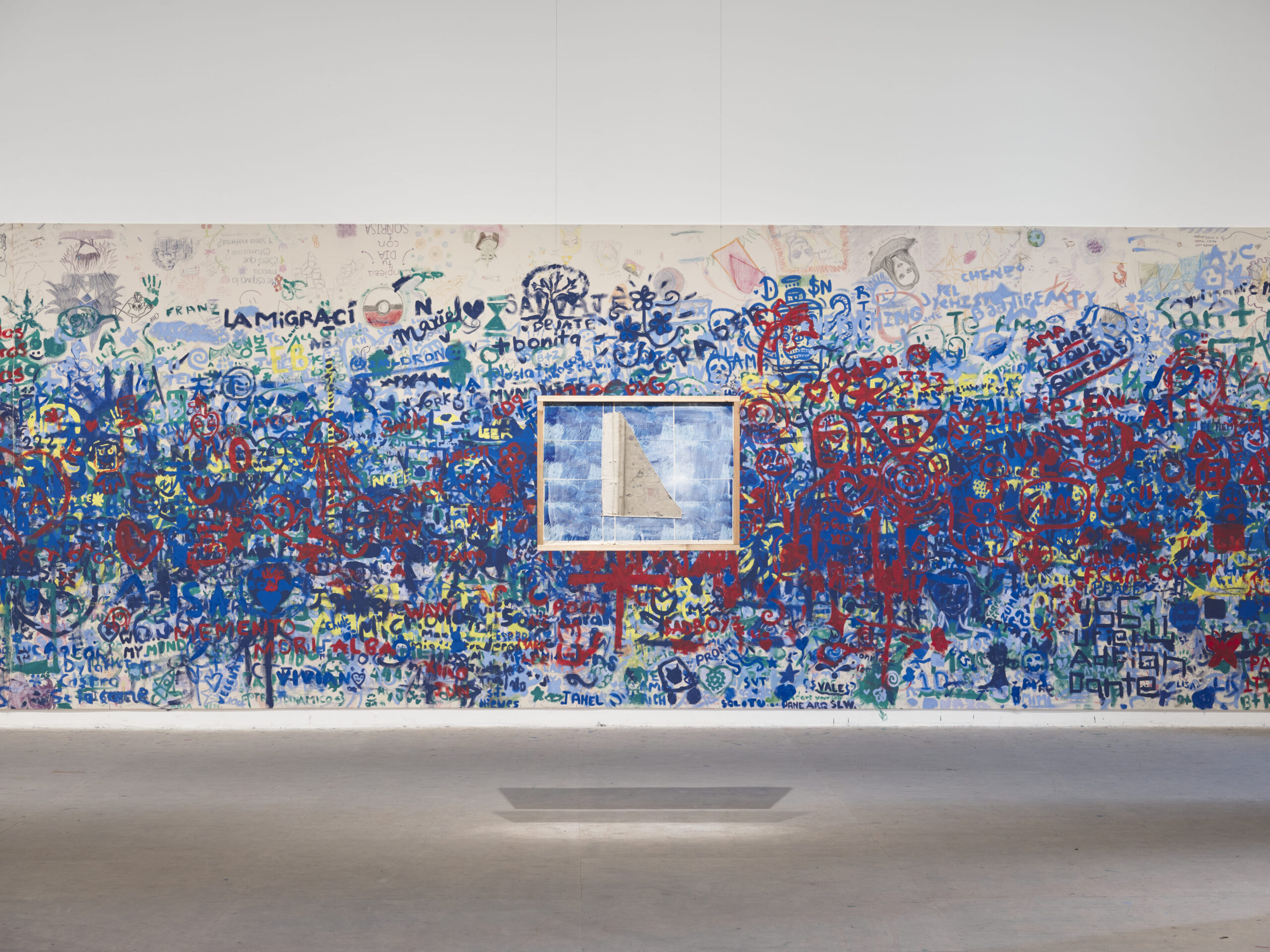
The works presented in this section explore the theme of displacement as a physical change and a process of personal renewal and autonomy-building. Pieces such as The Grass is Always Greener on the Other Side of the Fence (1997) and 52 Weeks, 52 Years (1997) delve into the emotional impacts of displacement, both symbolic and real and examine how movement, whether of place or emotional state, allows for a reconstruction of identity and the pursuit of freedom.
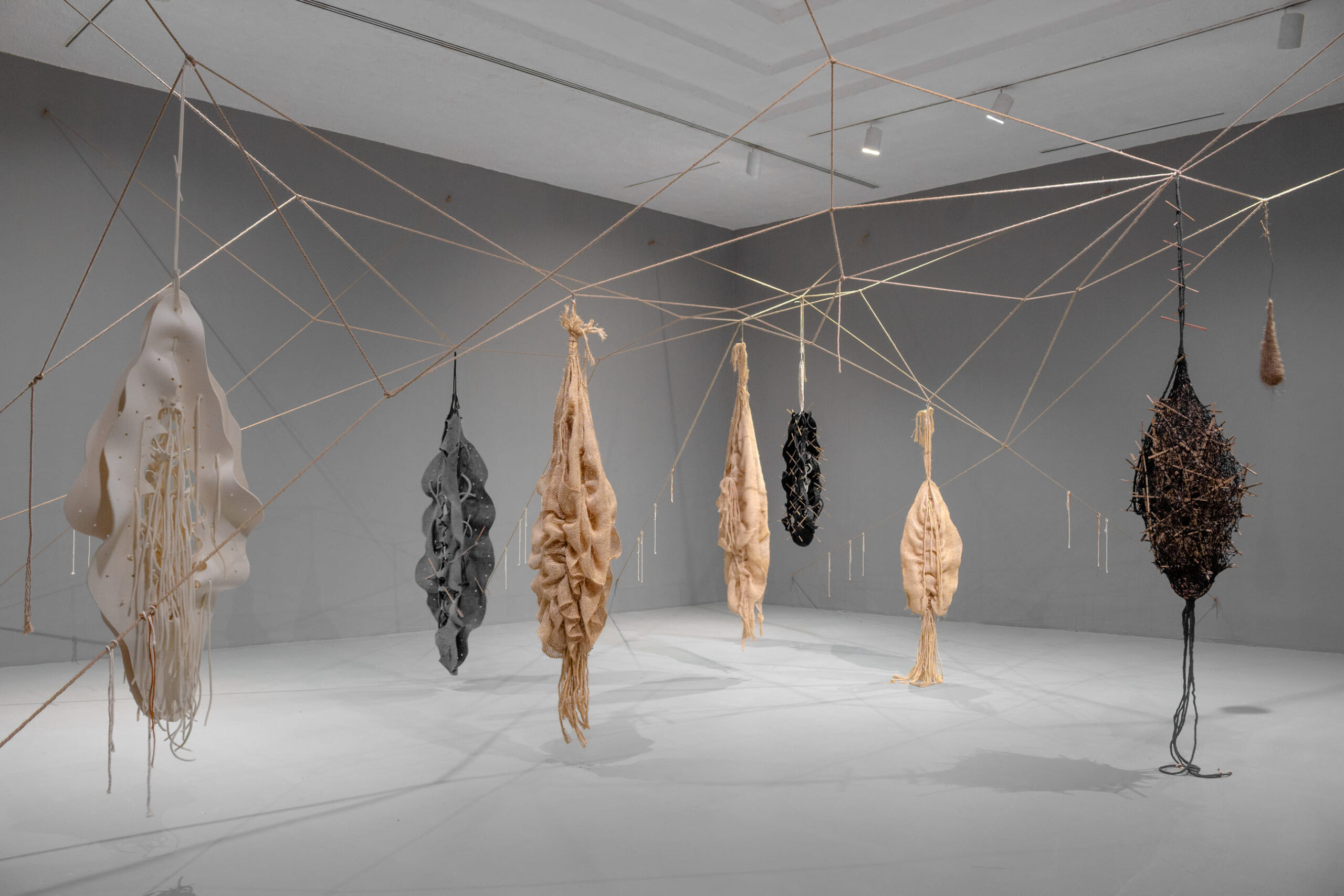
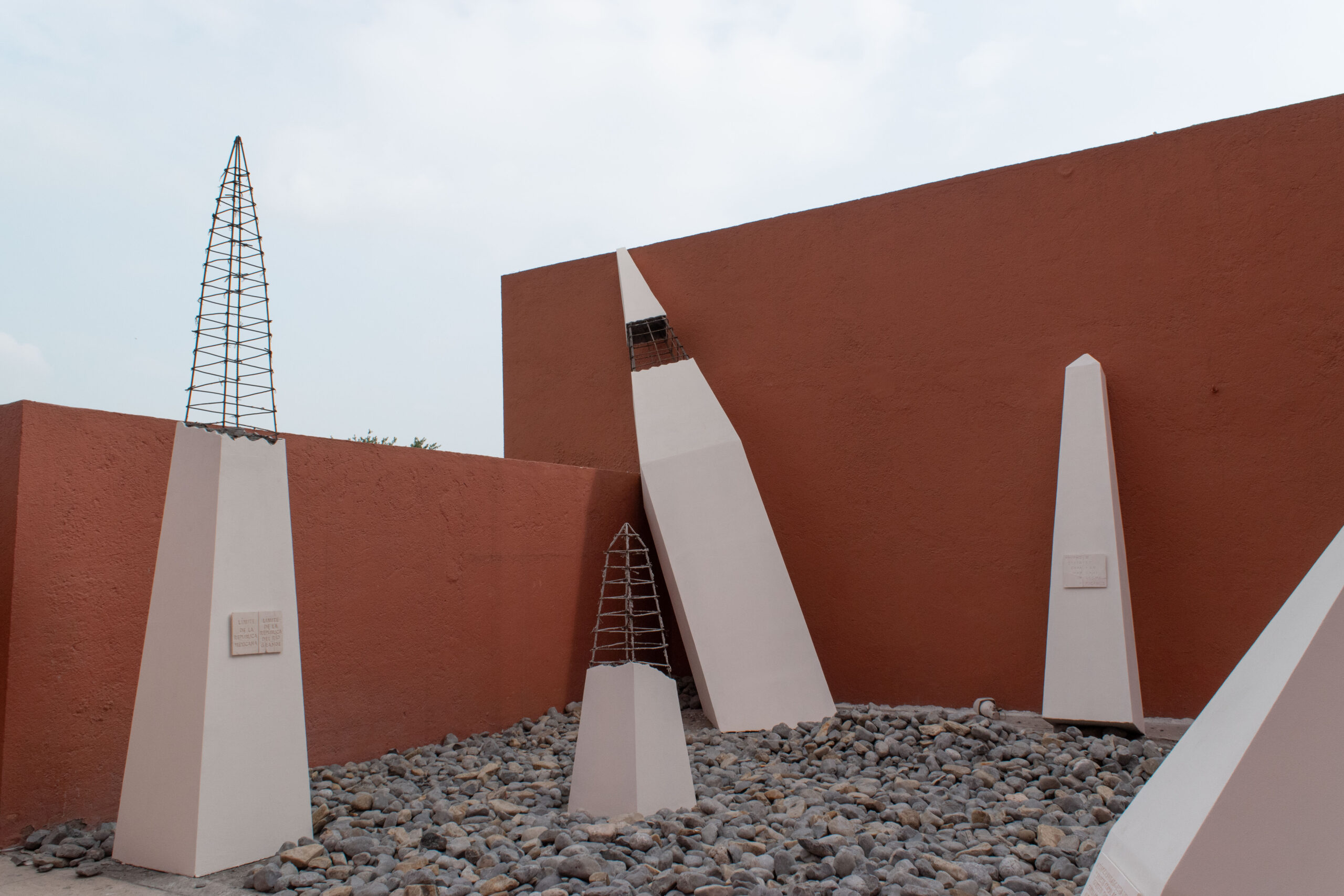
Other works, such as those evoking rivers, mountains, and volcanoes, are inspired by Serrano’s childhood memories in bullfighting arenas. Through these pieces, the artist evokes the bullfighting world she knew well, exploring the textile tradition of the petos, a domain exclusively male. She addresses the disparity in nature, which for the artist is feminine: protective, strong, and at the same time, fragile. By employing male labor to represent the feminine, the artist transforms and recontextualizes this traditionally patriarchal space, challenging its boundaries and reconfiguring it as a feminine domain as well.
Through migration and memory, Serrano creates a narrative about transformation, where displacement becomes a journey toward self-discovery and the possibility of creating new narratives.
The works of Teresa Serrano that make up this block explore different forms of control, resistance, and transformation in social and intimate contexts. Serrano examines the dynamics of domination and the barriers, both visible and invisible, that affect women, bodies, and freedoms. In this sense, nature also becomes a symbol, where elements such as the poppy, stigmatized for its relationship with drug trafficking, are recontextualized to question structures of violence and domination. Other pieces delve into themes such as systemic oppression that restricts women’s advancement in the workplace and the subtle tensions manifested in domestic spaces and intimate relationships.
In her works, nature, the body, and everyday objects are reconfigured, challenging patriarchal norms and proposing new interpretations of resistance and individual autonomy. Through her work, Serrano invites us to reflect on how power structures shape our human experience, not only in public spheres but also in the most private spaces of life.
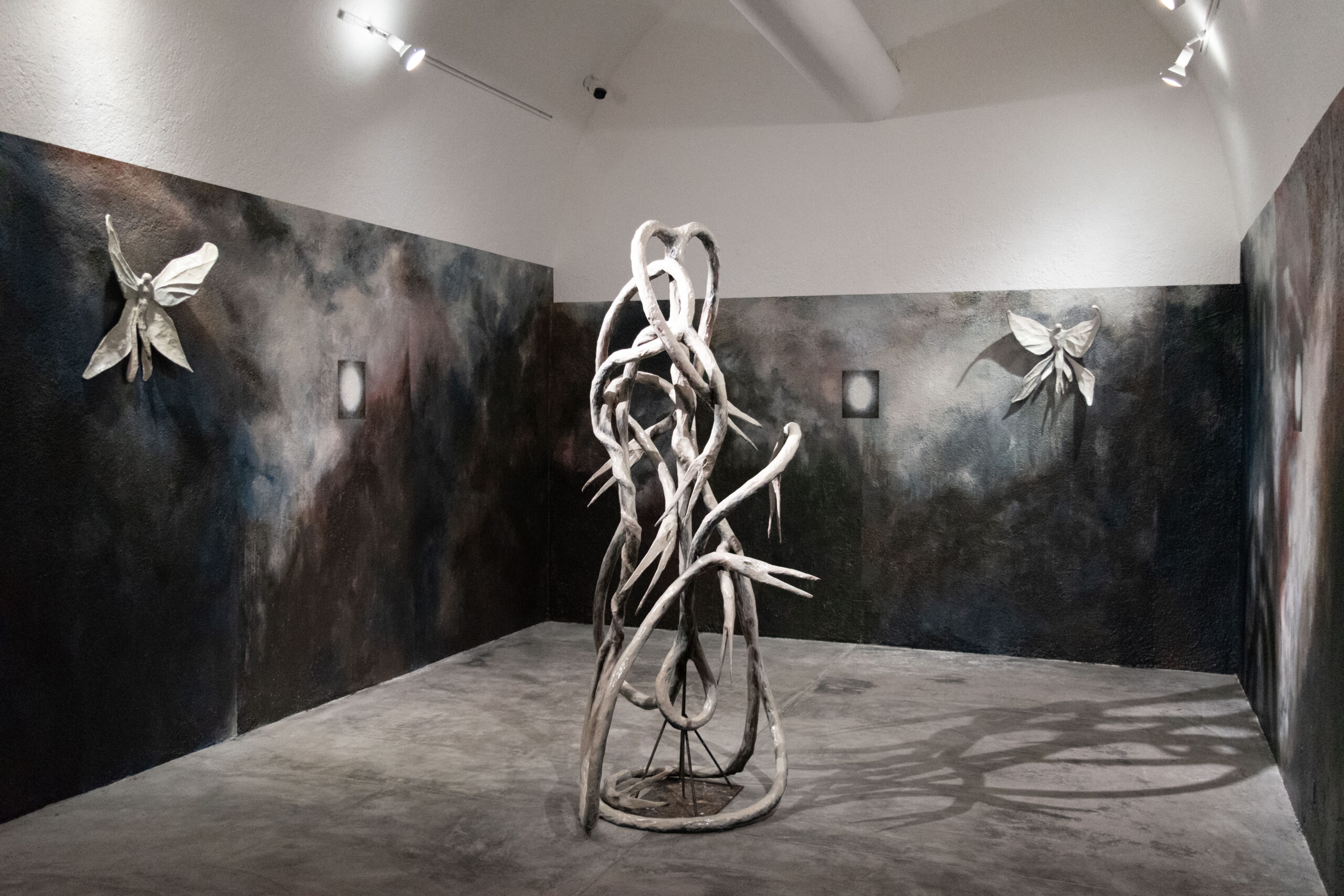
This section explores the darker emotional landscapes, where fear, anxiety, and obsessions take center stage. Through visual and sensory experiences, these works confront the complex psychological states that arise in moments of personal crisis. By revealing the tensions between the inner and outer worlds, they offer a pathway toward understanding, transformation, and overcoming internal conflicts. Introspection becomes a key tool to transcend the sinister, opening space for certainty and self-reconstruction.
The Acceptance section is divided into two blocks, interrupted by the videos Wooden Mouth (2007) and A Room of Her Own (2003-2004) from the Fears and Obsessions section. This part explores the deep understanding that it is impossible to be a “superwoman” or aspire to an idealized wholeness. Through these works, Teresa Serrano confronts us with the condition of being a woman in a world that demands perfection, power, and inexhaustible resilience but does not recognize fragility as an essential part of being. The pieces invite reflection on the importance of accepting one’s limits with tenderness, facing grief, and navigating pain as a necessary process to emerge renewed with a deeper and more sincere understanding of one’s desires.
Here, the act of acceptance is not presented to us as a surrender but as a form of liberation: letting go of unreachable ideals and reconciling with vulnerability. Serrano leads us to recognize that strength lies in acknowledging our fragility, in knowing that “my house is me,” and that within this acceptance lies the capacity to rise above, far from the standards that bind us to the ephemeral and the superficial.