Date
From November 27, 2025 to March 31, 2026
Area / Gallery
Gallery 5
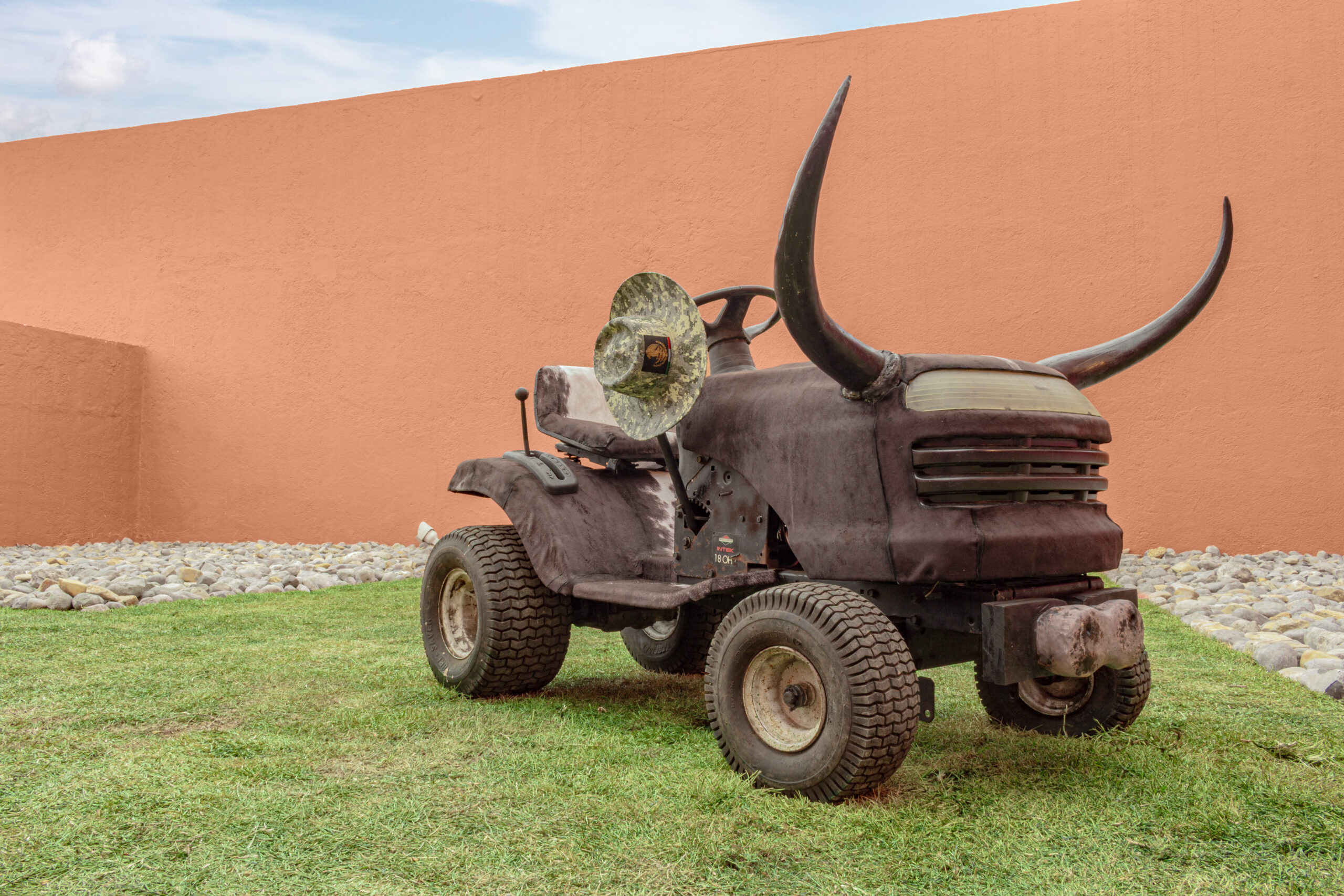
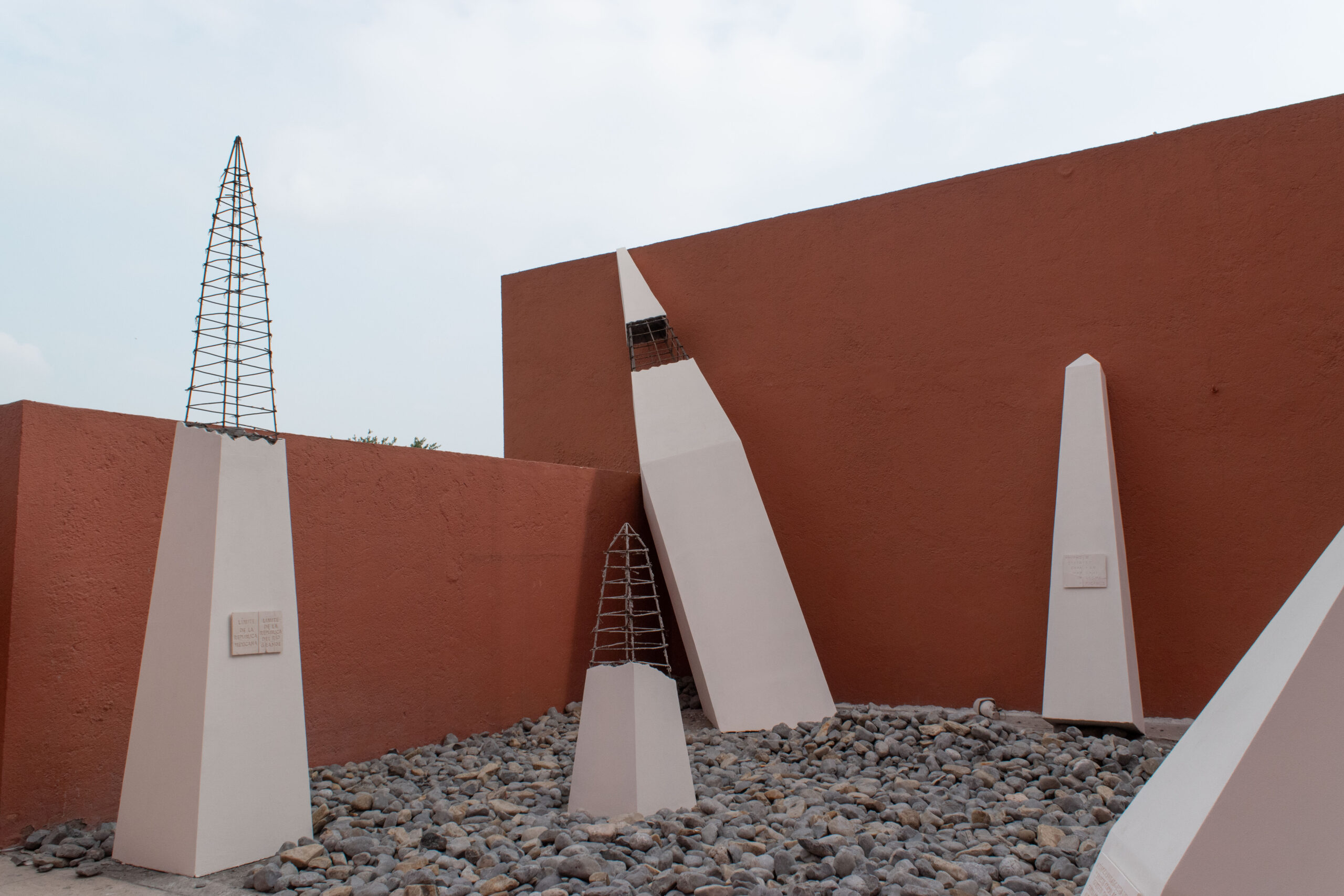
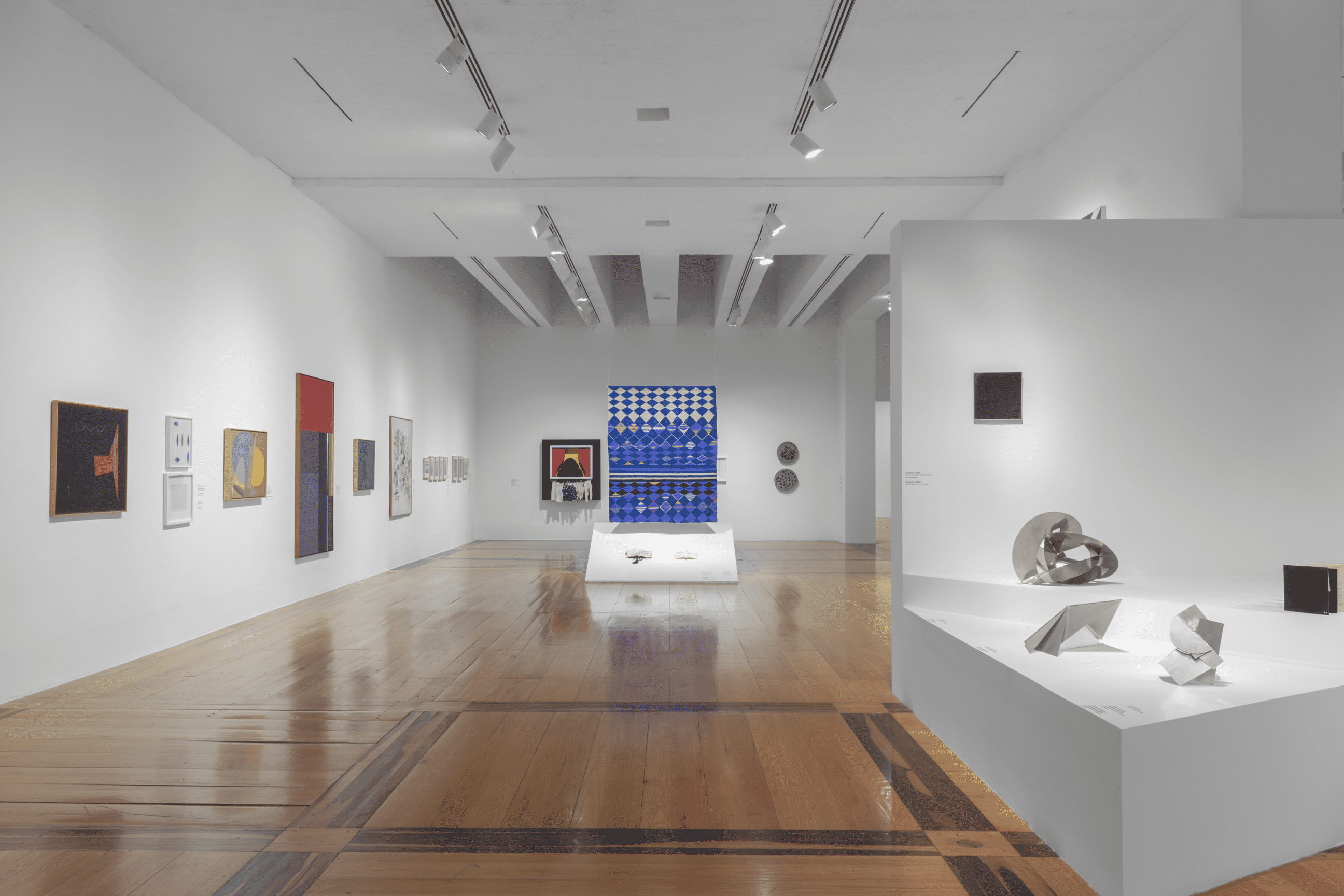
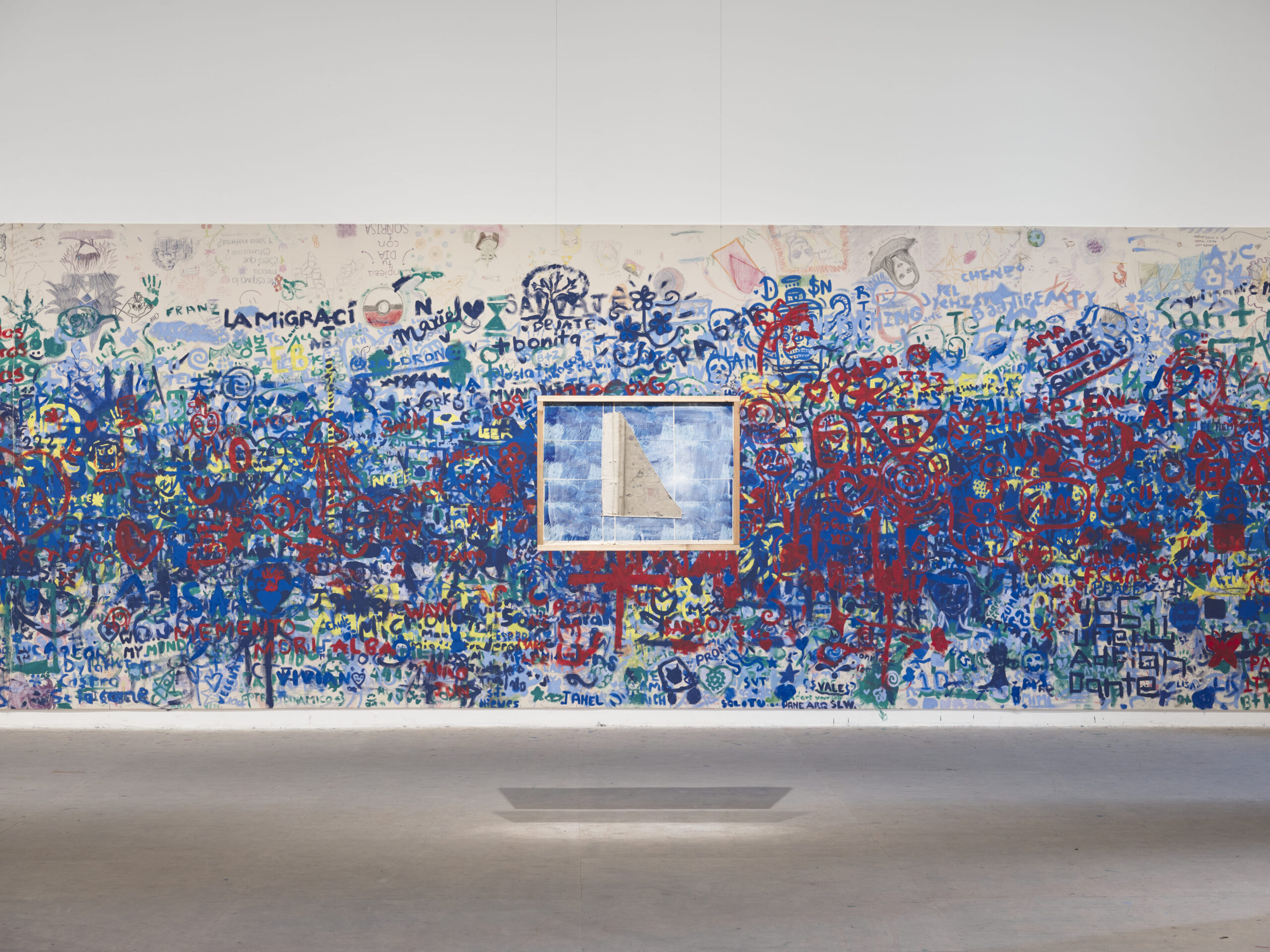
This exhibition proposes a journey through three ways of understanding creation as a weaving between worlds. From the knotting of rope in the work of Amor Muñoz, to the crossroads as an identity marker in the corpus of Daniel Guzmán, and the mutating materiality of skin in the pieces by Lucía Vidales, the bodies of work gathered here explore the power of gestures that connect the human, respectively, to the material, the mythical, and the apparent.
The exhibition’s three sections unfold as autonomous yet resonant territories. Each traces its own genealogy of the body as an intersection of matter and language, but together they configure a shared cartography: one of gestures that bind, invoke, or transform. Thus, the knotting rope of Dedo Macramé finds its symbolic mirror in the bindings of Ohmáxac and its shadow in the pictorial metamorphoses of Arriba el inframundo.
In this way, the exhibition traces a constellation of practices that, rather than offering certainties, invite us to follow the thread that links making with thinking, memory with invention, and night with its promise of revelation. It is, in a sense, an inquiry into how the human becomes blurred when entering into relation with other materialities—revealing the non-human dimensions that traverse and sustain our lives.
In the Thread of the Night, the Weft of the World ultimately invites a rereading of the sacred in profane times—as Giorgio Agamben suggests—where what is lost or no longer has a place returns as a form of energy and possibility. In manual labor, in reconfigured myth, in the painted body, an overlooked potency is restored: that of creating bonds amid uprootedness.
Curated by: Mariana Mañón
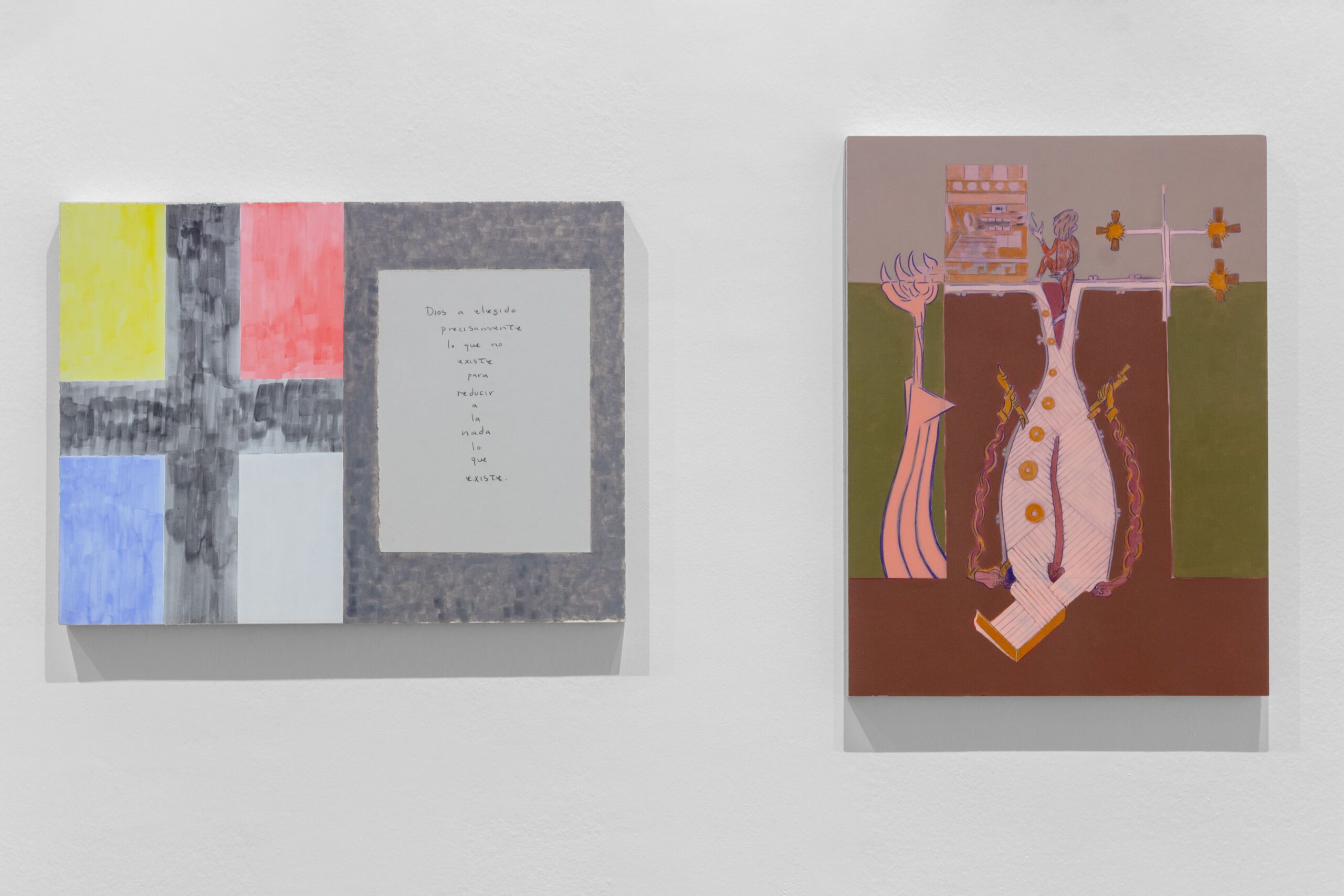
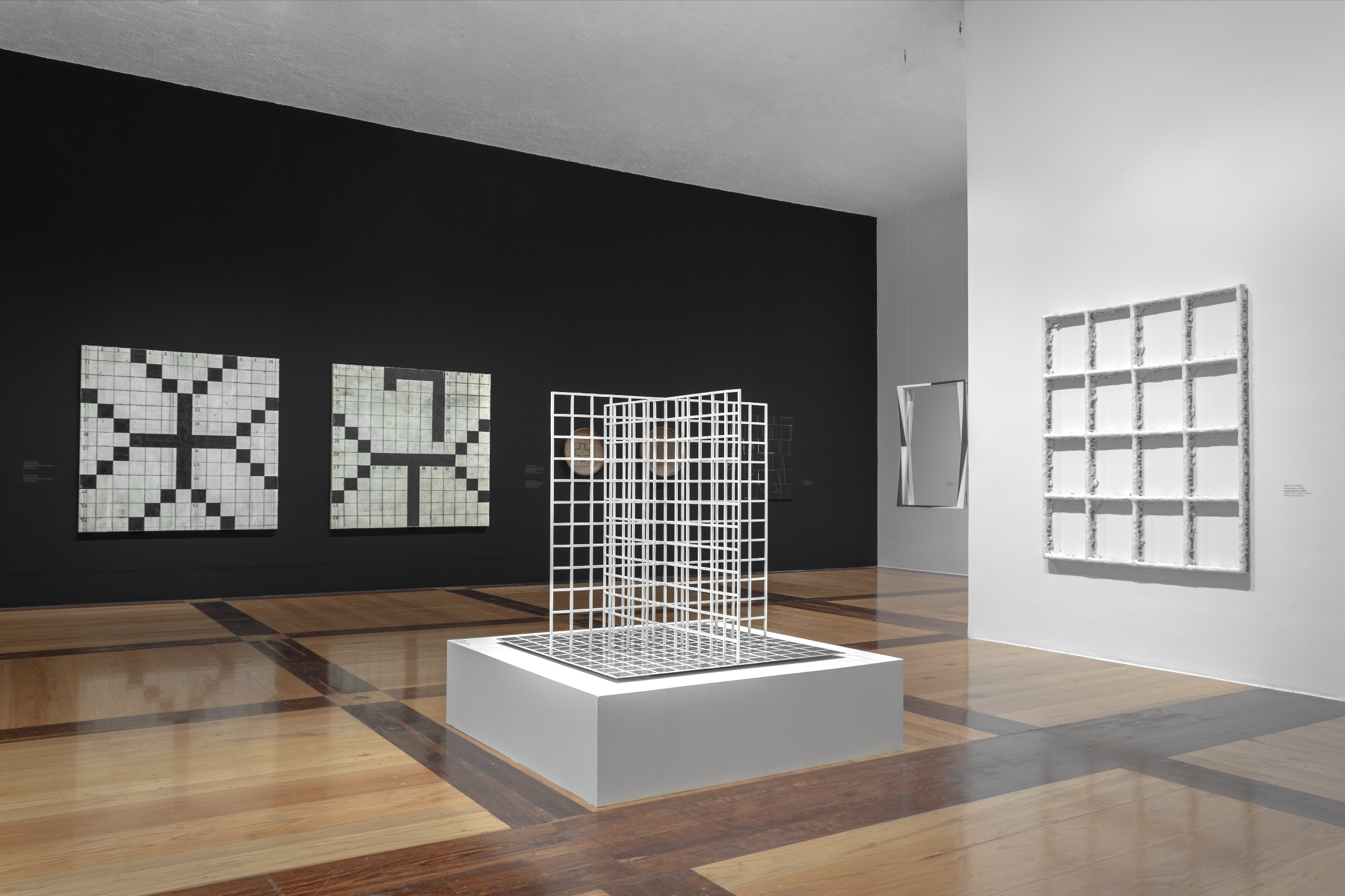
Daniel Guzmán. The Man Who Should Be Dead / Ohmáxac–Crossroads: To Which God Is Blood Offered?
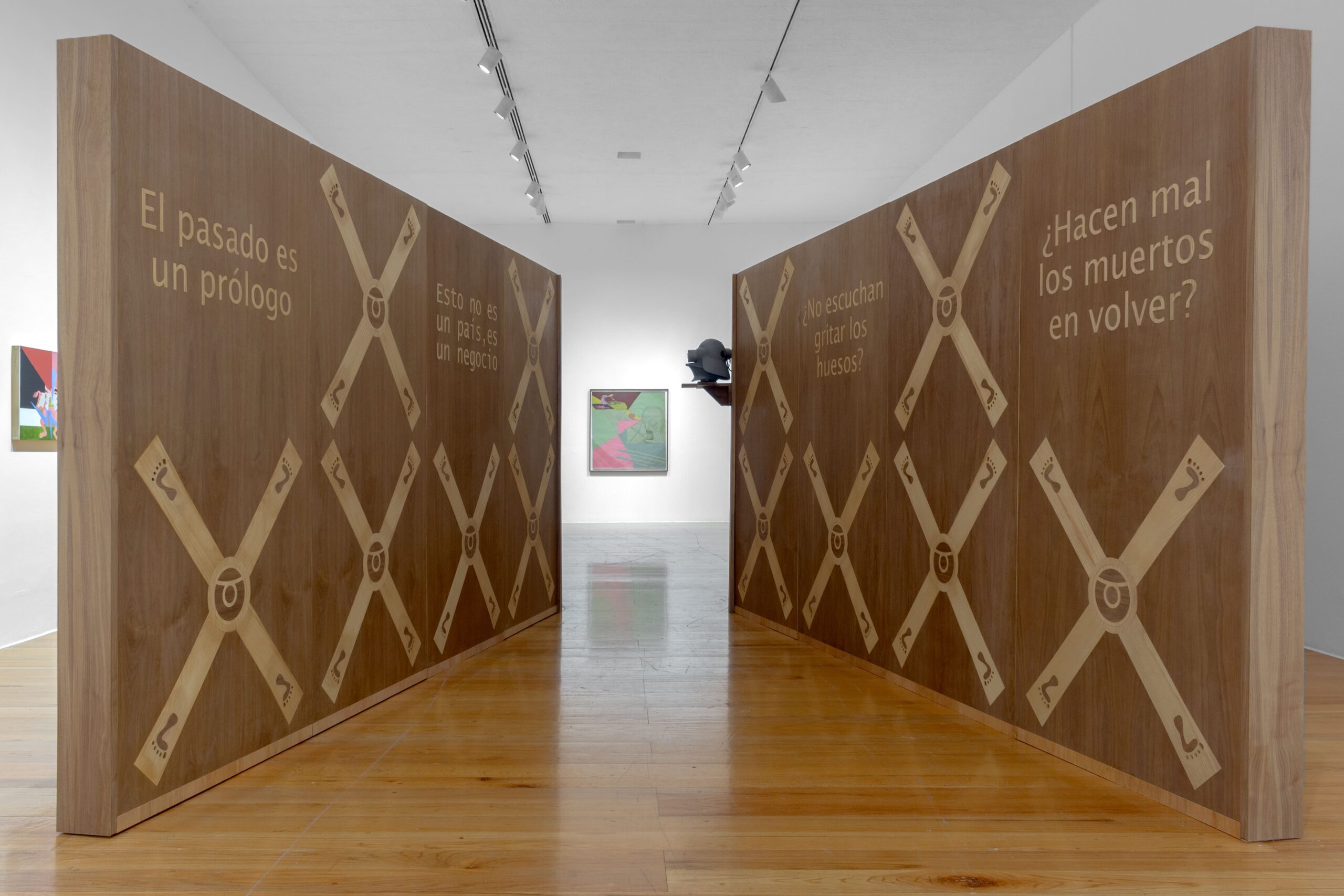
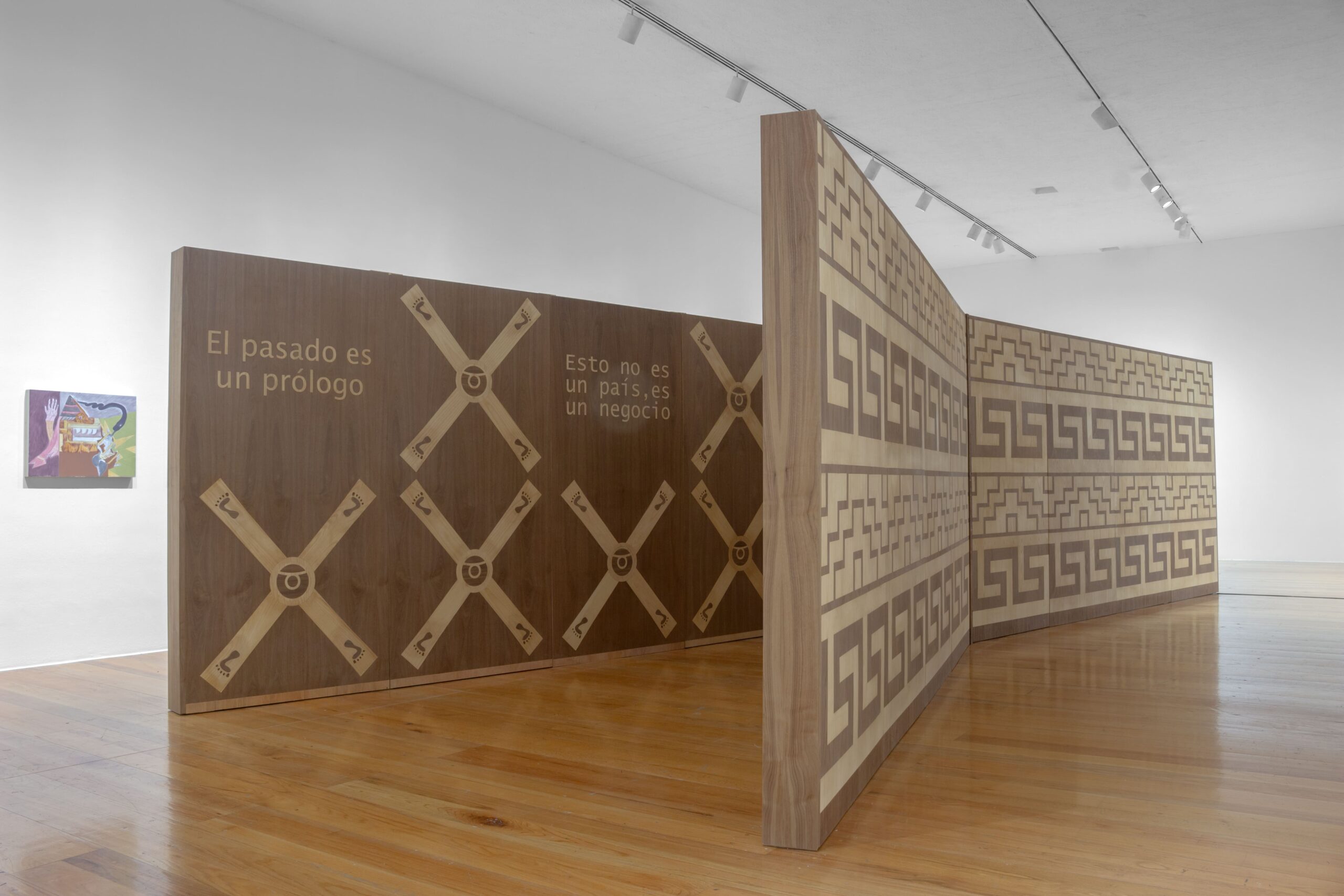
Daniel Guzmán’s work inhabits the interstices of myth, history, and music. In this new chapter of his ongoing project The Man Who Should Be Dead, the artist focuses on the figure of the crossroads: the meeting point of paths as a site of collision and decision, where the sacred and the profane intertwine.
The term Ohmáxac—from the Nahuatl othli (path) and maxactli (bifurcation)—designates both the point of intersection and the binding that joins what was once separate. Guzmán reactivates this concept from a symbolic and political perspective, connecting Mesoamerican worldviews with the myths of the blues and the contemporary crises of the global world: the collapse of neoliberal capitalism, resurgent nationalisms, and the violences of media and war.
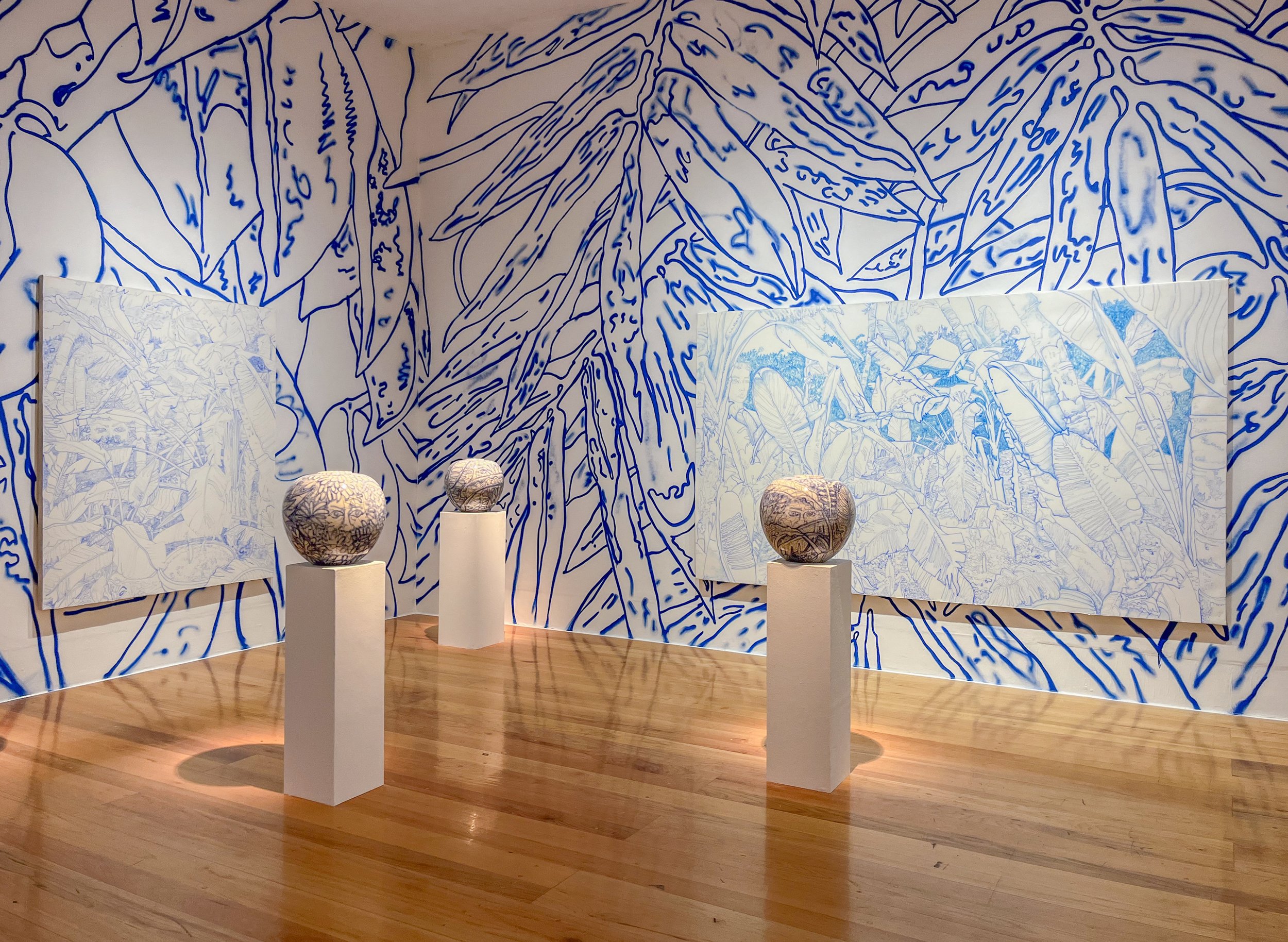
In his installation—composed of drawings, video, and an architectural structure that functions as both corridor and lattice—the artist constructs a liminal space where spirituality, visual culture, and historical memory intersect. His work invokes the central question of both myth and politics: what force, what god, what system still demands blood? Here, the crossroads becomes both ruin and possibility, a zero point from which to imagine the union of what has been split apart.
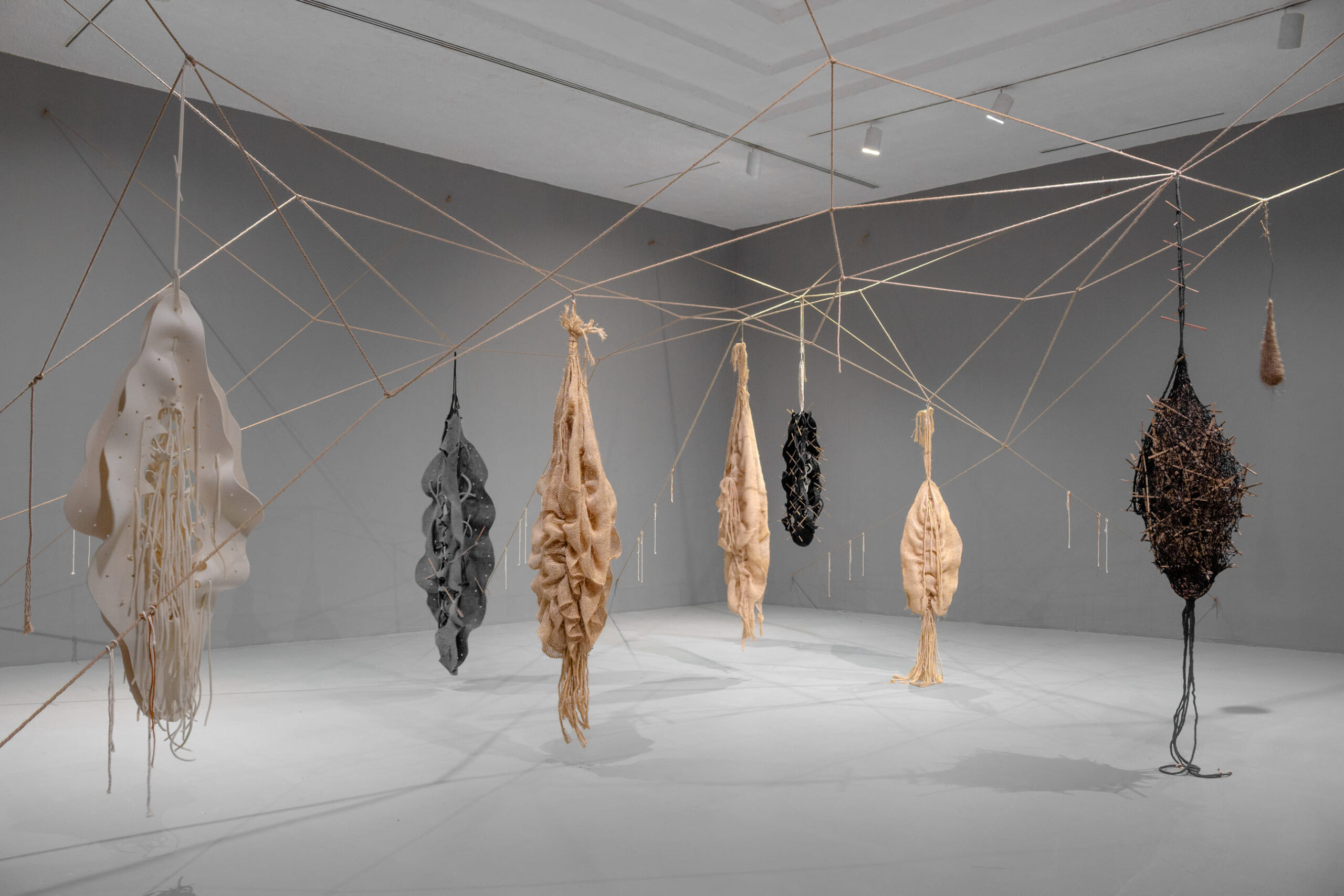
Amor Muñoz. Dedo Macramé
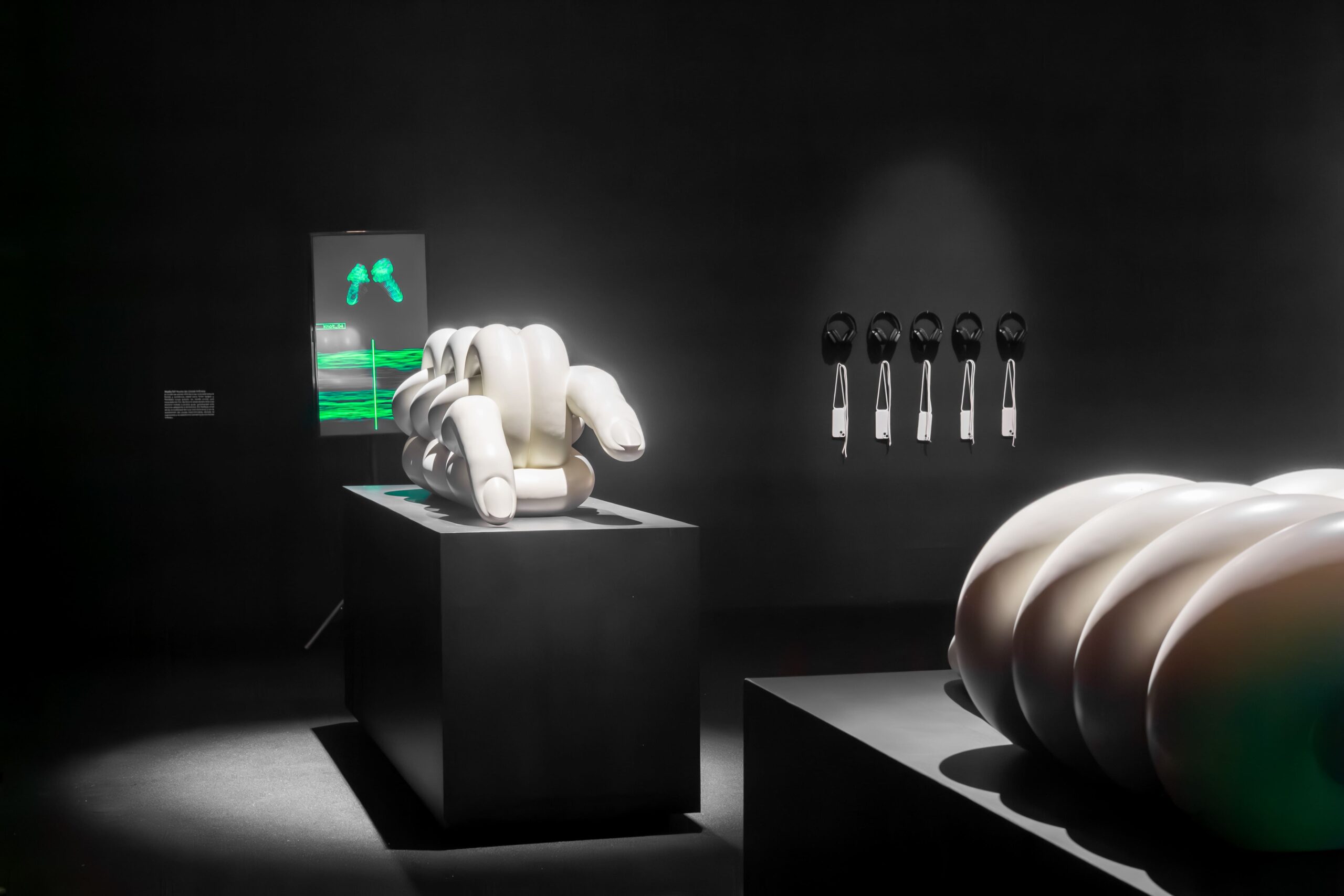
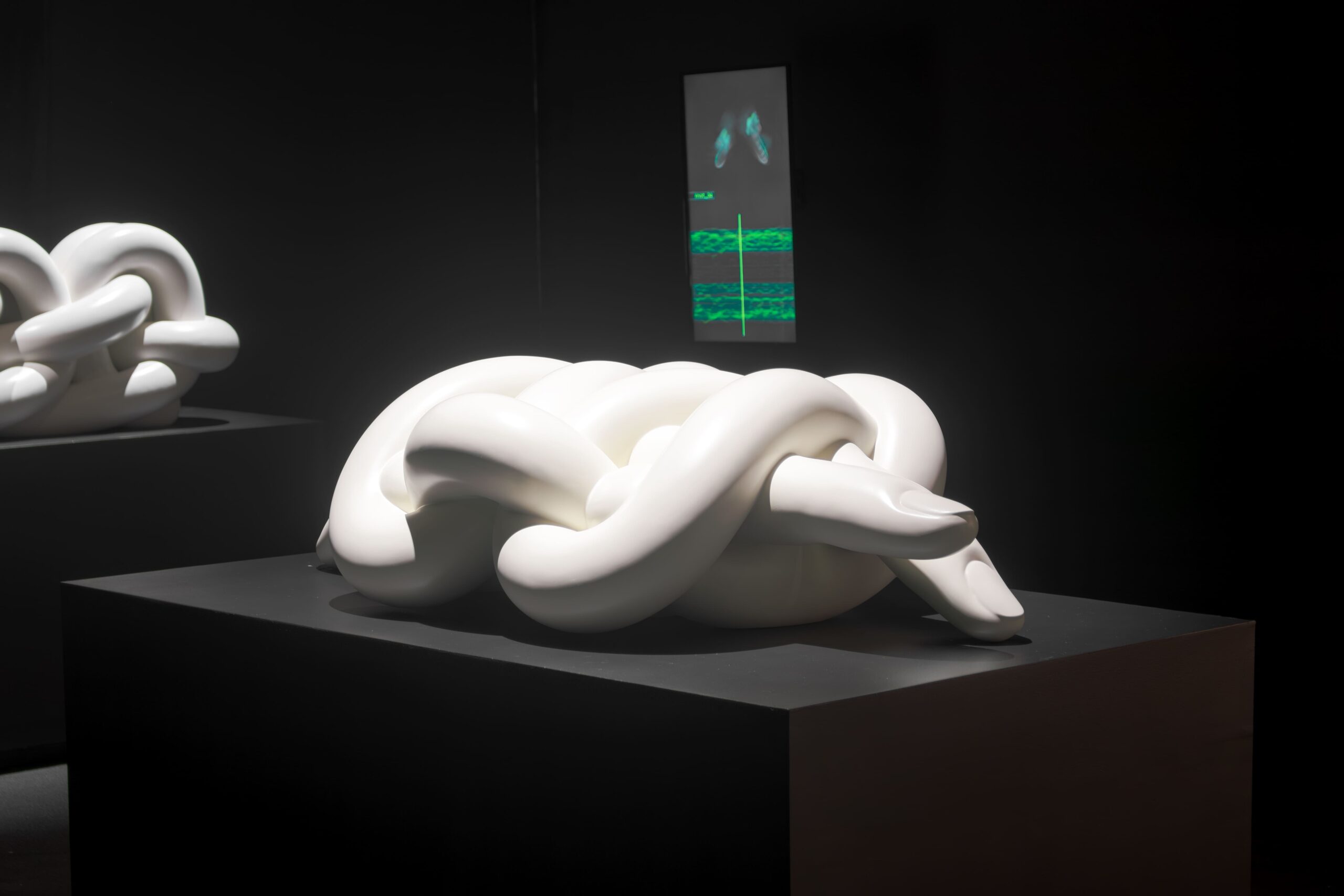
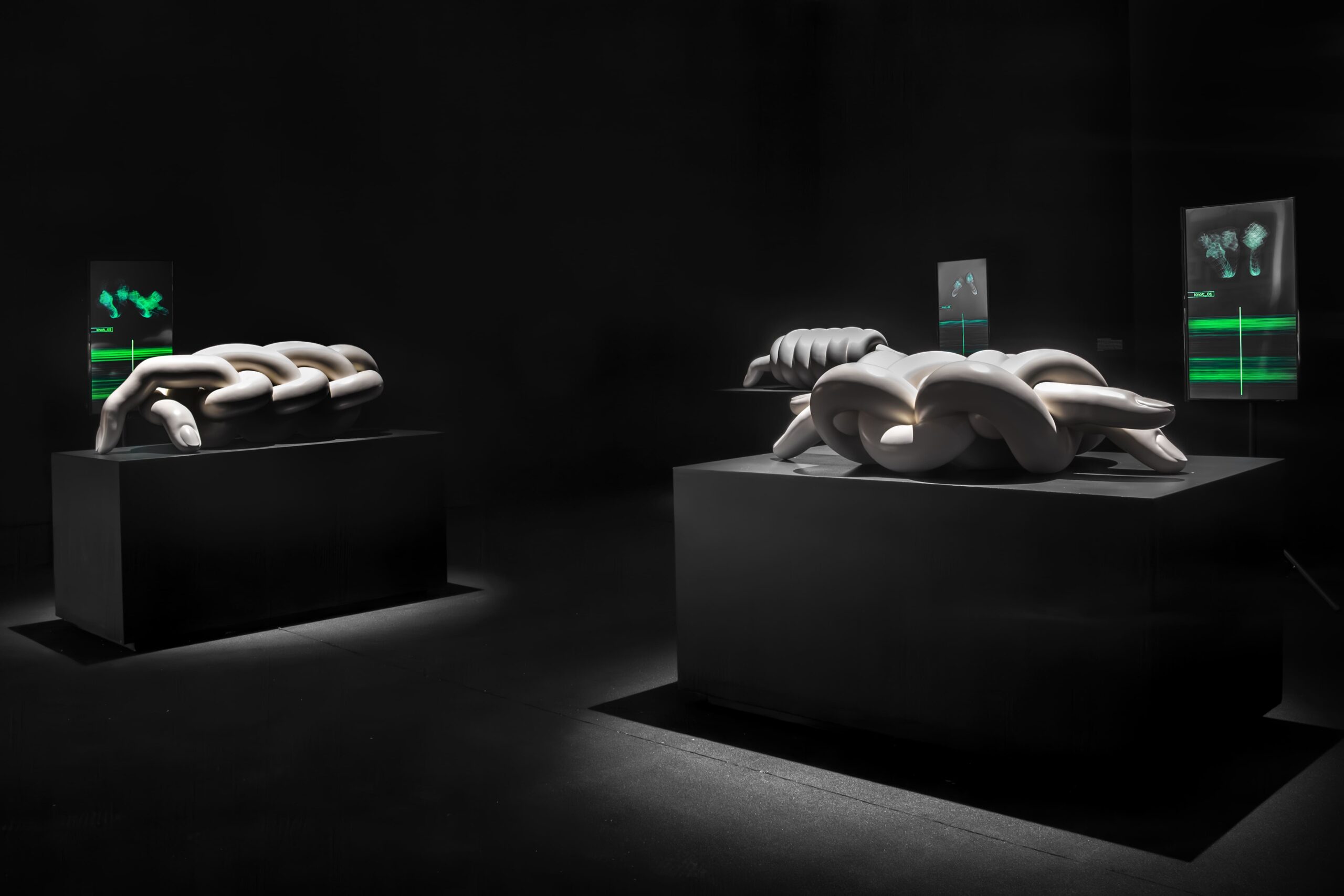
In Dedo Macramé, Amor Muñoz transforms the ancestral act of weaving into a contemporary system of coding. Her work—situated between experimental electronics and craft—turns the movements of the hand, traditionally the primary tool of making, into an interface for data, sound, and light. Each knot is recorded through motion-capture gloves and translated into information that an algorithm reinterprets as multichannel rhythms and musical compositions, developed in collaboration with Mexican composer Pablo Silva.
The series consists of five sound sculptures shaped like woven, articulated fingers, each constructed from different macramé patterns. Through augmented reality—activated via mobile devices and wireless headphones—the pieces unfold soundscapes generated from the very action of weaving. In doing so, the artist challenges the presumed distance between binary code and artisanal textile work, proposing a continuity between ancient and contemporary systems of information.
The result is a powerful reflection on memory and the value of manual labor in the era of automation: matter and algorithm blend to produce new forms of meaning and presence. Echoing the Andean Quipus, the installation operates as a synesthetic score in which manual labor becomes composition, language, and archive. The hand—an organ of knowledge, creation, and relation—emerges here as a primordial technology: calculation, gesture, invocation. By exposing her own woven fingers and translating them into sound, Muñoz reactivates our tactile imagination and reminds us of the profound interdependence between body, technique, and thought.
AR Programming: Francisco J. Peregrina
Translation–Sound Design: Pablo Silva
3D Modeling & Renders: Luis Bolaños
Sculpture Production: Yunque Fábrica de Arte
This research was carried out during the artist residency at Reality Labs Research, Meta (Redmond).
Acknowledgments: Galería Colector, Lele Barnett, Douglas Carmean, Bitforms Gallery, and Owen Brimijoin.
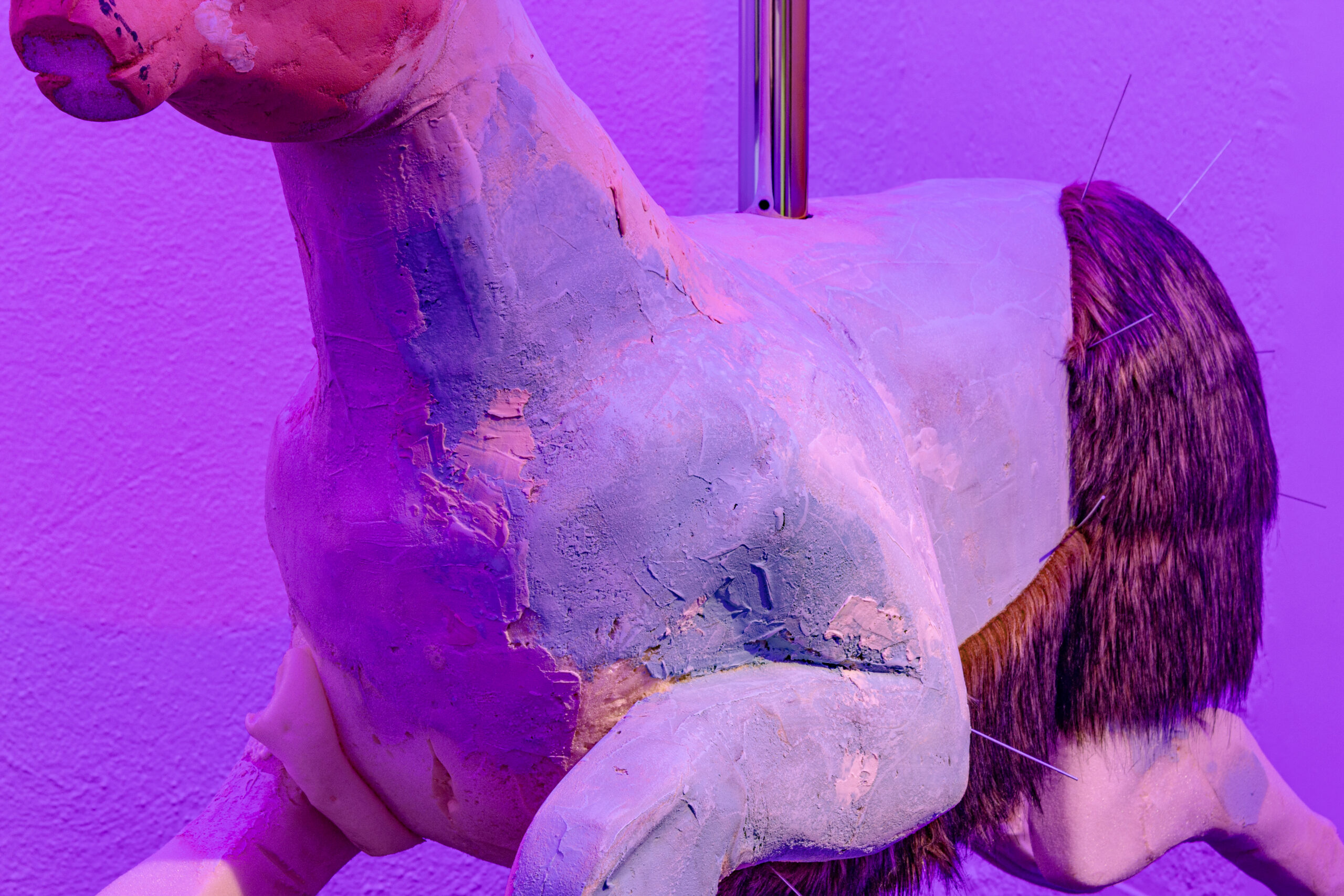
Lucía Vidales, Above the Underworld
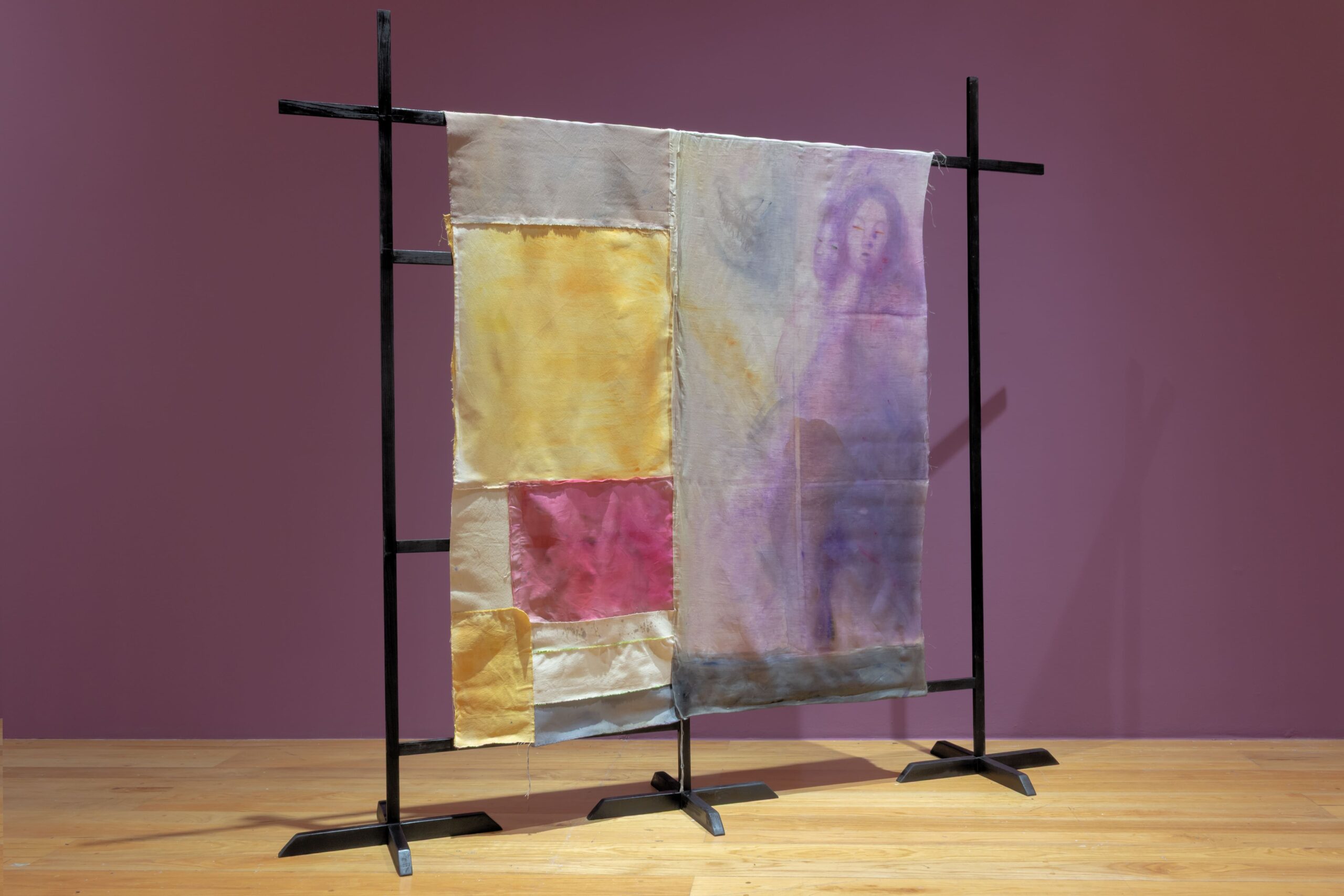
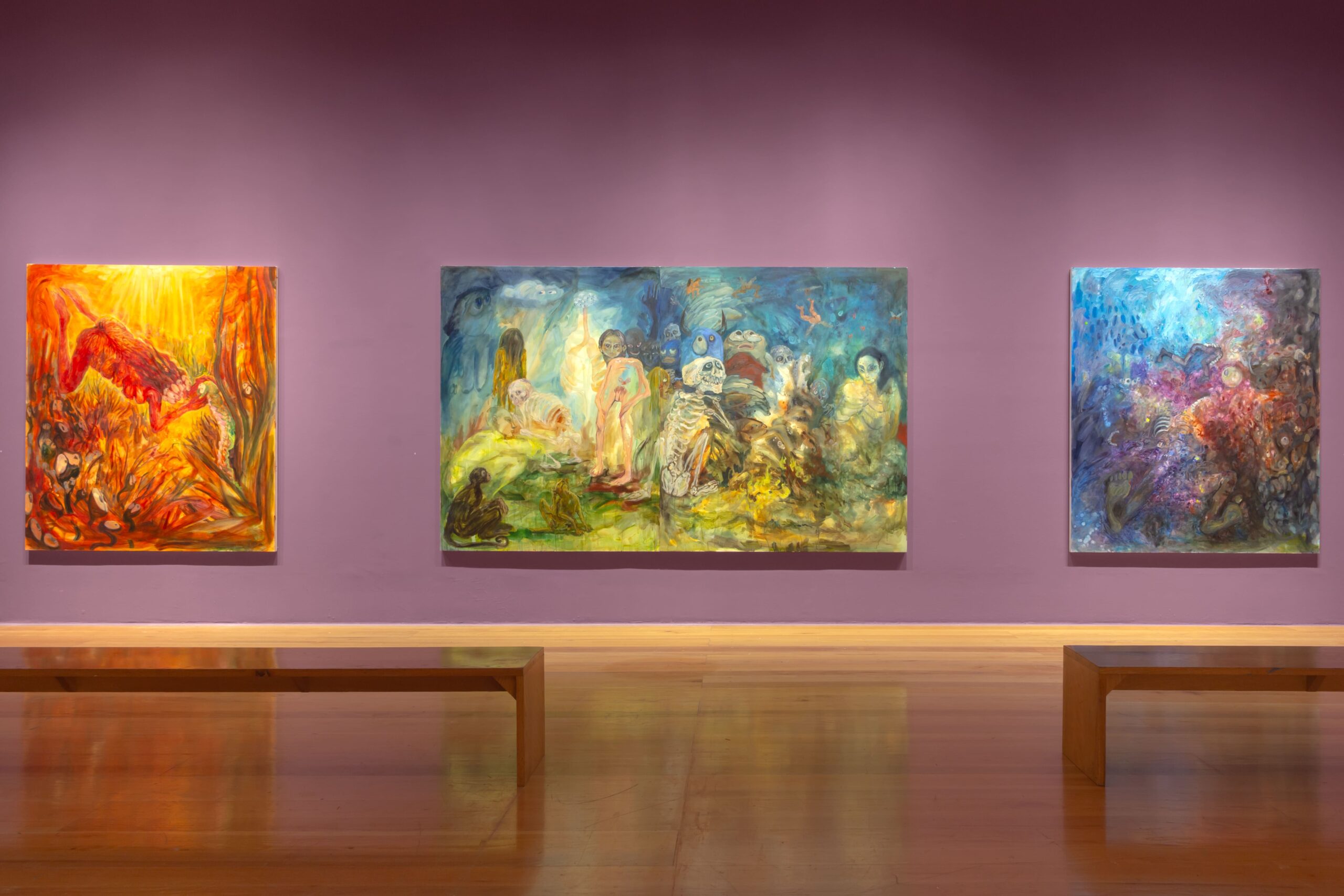
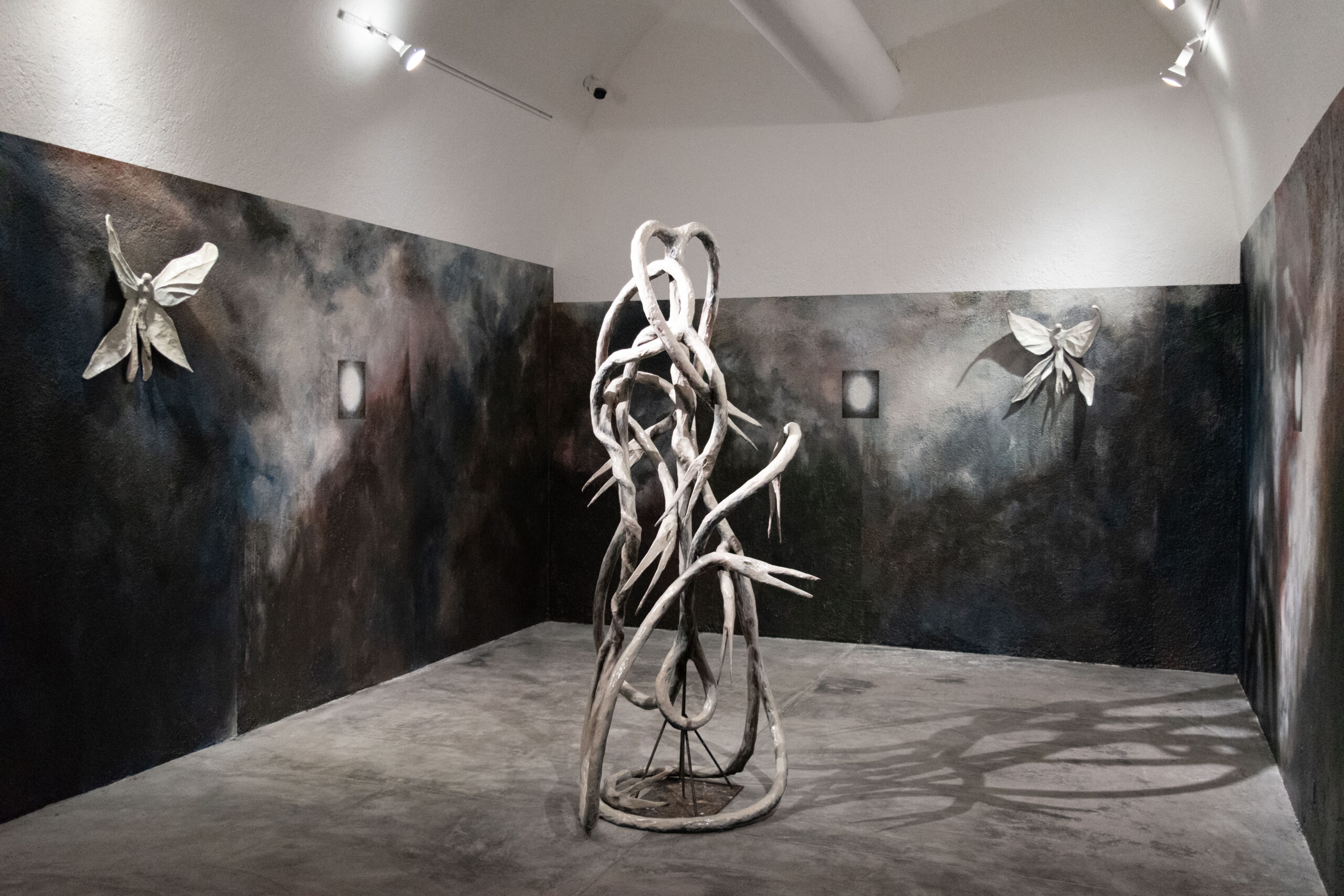
Lucía Vidales’s painting moves between the visible and the spectral, between historical density and present carnality. Her work does not seek to represent bodies but to become them: her figures are processes of constant transformation, porous thresholds between the human, the animal, and the mineral. In her painting, the body is a living surface where time, violence, and desire blur together.
In the first room, four folding screens represent the seasons of the year, accompanied by three large canvases inhabited by ambiguous beings—bats, moths, vultures—creatures of the chiaroscuro and the underworld. Drawn from the landscape of Nuevo León, these figures embody what drags, lurks, or crawls along the edges: vermin as metaphors for the natural cycles of decomposition and vital transit.
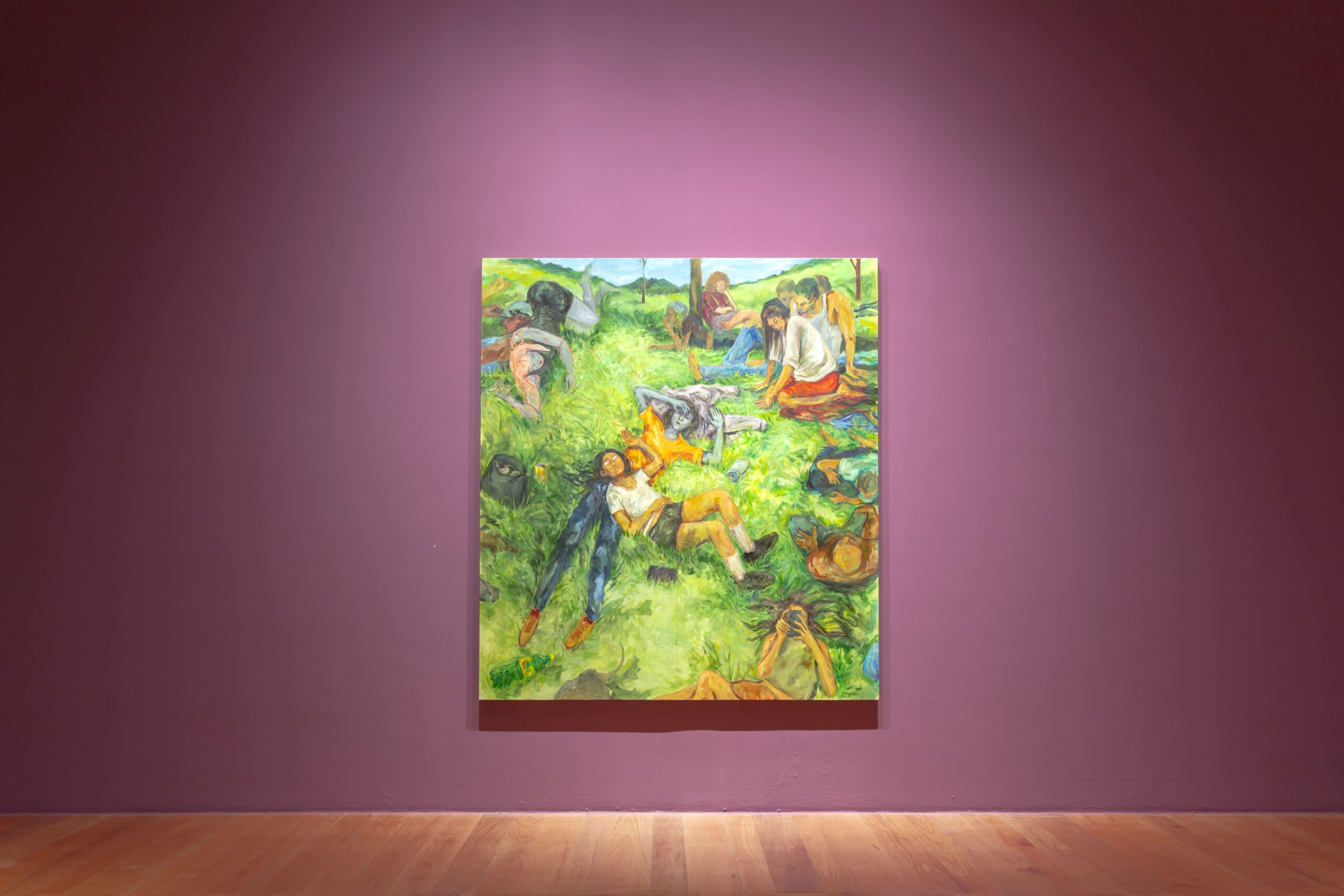
In the second room, the artist returns to the history of painting in order to twist it from within. She reinterprets Luncheon on the Grass (Manet) and presents a diptych on beginnings and endings, alongside a scene of a witches’ sabbath—bodies invoking the forces that give and take life. Painting, both in this room and in Vidales’s work as a whole, becomes a field of metamorphosis where eroticism, death, and regeneration coexist.