Date
From January 26, 2024 to May 12, 2024
Area / Gallery
Espacio uno
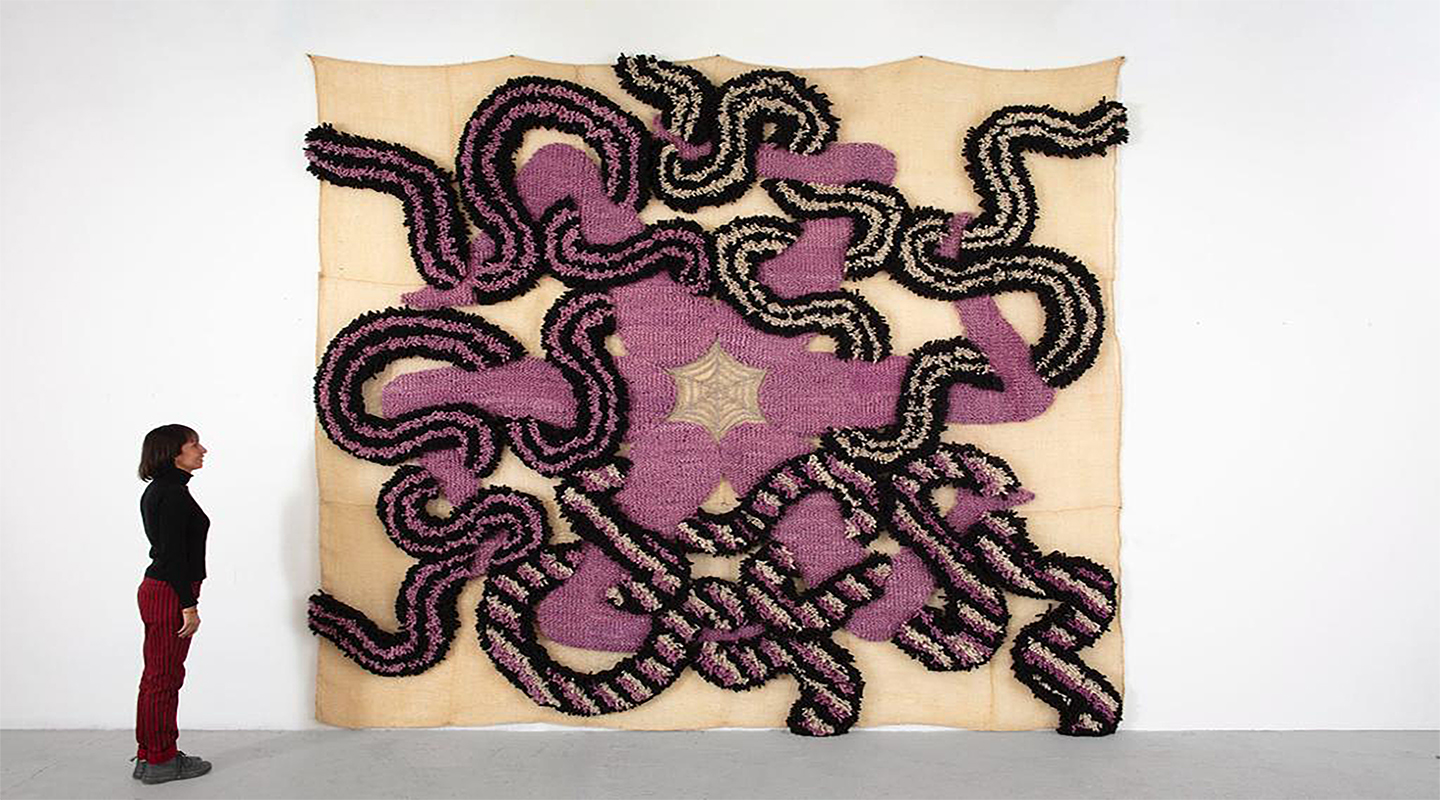
Gorgona is an intervention consisting of a 3.45 by 3.58 meter work formed by nine ayates joined together, a pre-Hispanic garment made of maguey fiber spun by hand on a backstrap loom. As a whole, the ayates function as warp for the wool fabric in brown, black, gray and white, dyed with natural substances, for example, white with grana cochinilla, also following pre-Hispanic processes still present in indigenous communities. The work completely covers the access to Espacio Uno, allowing the public to observe it from the Museum’s lobby.
For her work, the artist starts from the gorgons, mythological figures that possessed snakes instead of hair with the power to petrify with their gaze. In Greek mythology, the gorgons were three sisters: Steno, Euriale and, the only mortal, Medusa, one of the most represented throughout the history of art, as in Caravaggio’s Medusa or in the flag of Sicily, which also has this figure on its shield, surrounded by three legs in a square. In the case of the exhibition at MARCO, the artist is inspired by the relief of the Temple of Artemis in Corfu, Greece, considered the first building of its kind in stone and dating from 580 BC. In the pediment, an architectural element that is kept in the Archaeological Museum of Corfu, the Gorgon of three meters high is in the center wearing a snake as a belt, symbol of fertility, in addition to those in her hair. Her legs open and bent at a 90-degree angle are taken up by Pellizzi for the loom.
Snakes have different meanings in several ancient cultures, such as fertility and protection in Ancient Greece. On the other hand, the figure of gorgons in architecture was represented in reliefs and other techniques to ward off dangers. Pellizzi takes up the serpent as an element in this project at MARCO as well as in other of his previous works precisely because of its associations to the feminine, to fertility, to birth and rebirth, to the subconscious and the occult. Returning to that function in the architectural ornaments where they challenged those who were about to enter, the gorgons are now found in a contemporary version in the so-called Legorriana Chapel.
With Gorgona, the artist questions how powerful female figures have been associated with danger throughout history, with monstrous and bestial qualities. These representations of wild and untamable figures are found in different cultures, such as the fertility goddess Coatlicue in Aztec, Kali Durga, the goddess of death in Hindu culture, or the biblical character Eve.
“By representing the female body in an active and procreative state and not in a passive, submissive and objective state, it is perceived as destructive and threatening and acquires little visibility within the hegemonic culture,” analyzes the Mexico City-based artist.
“I approach the figures of the gorgons to better understand them and to question their negative associations: What is the danger they represent? What is the fear they evoke? What aspects of nature and femininity do they represent? What are the superstitions they awaken? I seek to question the shame, fear and superstitions associated with women in their most powerful and creative state.”
Throughout her career, Pellizzi has worked with textiles, a medium culturally associated with the trades assigned to women and frequently used in clothing. In this medium, the artist manages to combine millenary techniques with pictorial and sculptural elements, thus finding a natural medium to explore the knowledge, practices and representations of the feminine in the history of man and art.
The ayate has been a material previously used by Pellizzi in her work; it is a pre-Hispanic weaving with agave fibers that had a versatile use, both to carry the harvest of the milpa and for newborns. For Gorgona, the ayate was made with henequen, known as the “green gold” because of the economic boom it meant for Mexico at the international level in the 19th century until the arrival of synthetic fibers. The strength, durability and flexibility of the ayate allow it to support the 20 kilos that weighs the weaving work produced in the artist’s workshop in Mexico City, and in Ibeth Melitón’s weaving workshop in Temoaya, State of Mexico, an Otomí town where women have produced textiles on looms for centuries.
Gorgona represents a syncretism of both knowledge and ancestral techniques through the production of the loom, which the artist recovers in a contemporary proposal to question current concerns about one of the inequalities that the female gender has carried for centuries: the rejection of the empowerment of women in representation.
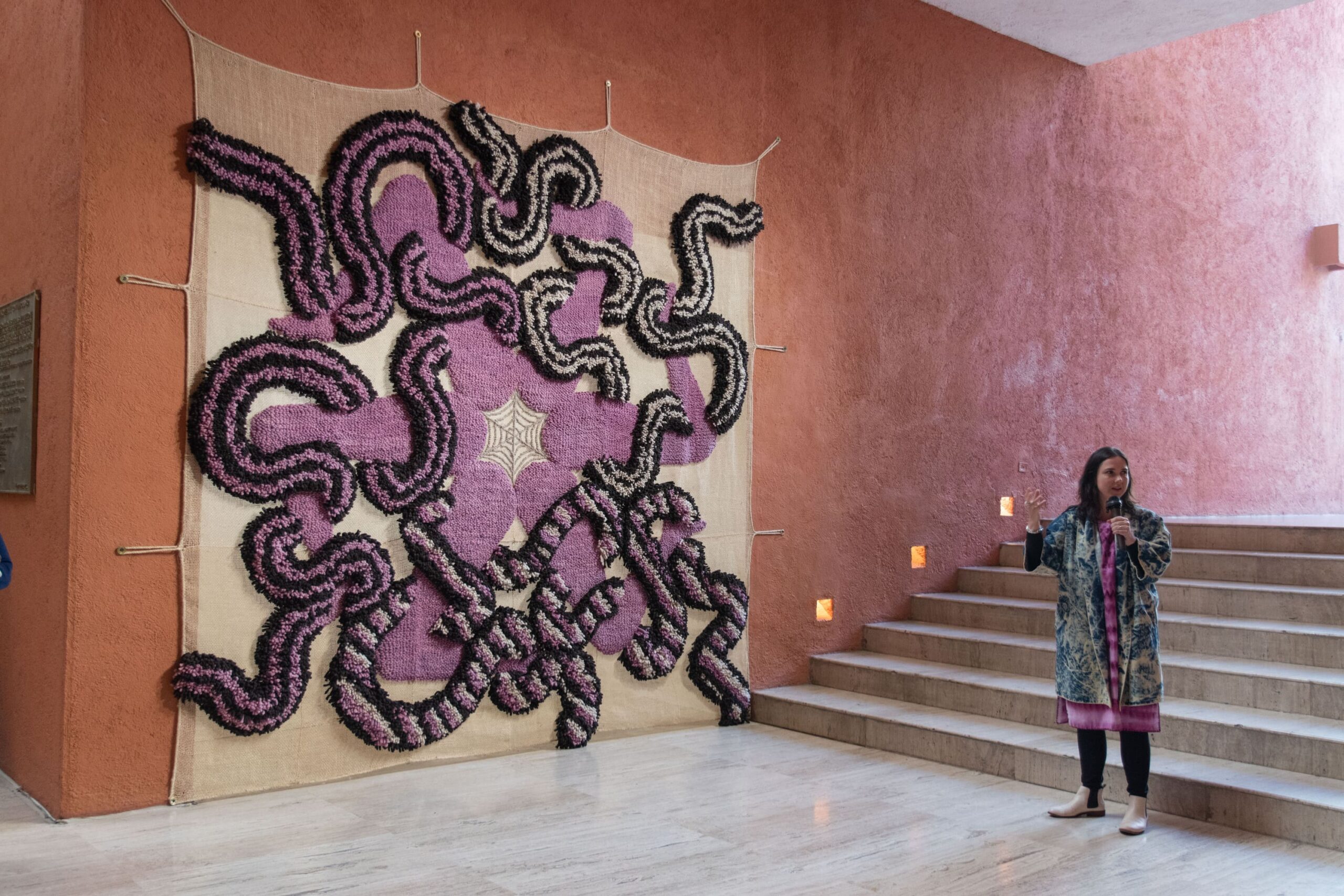
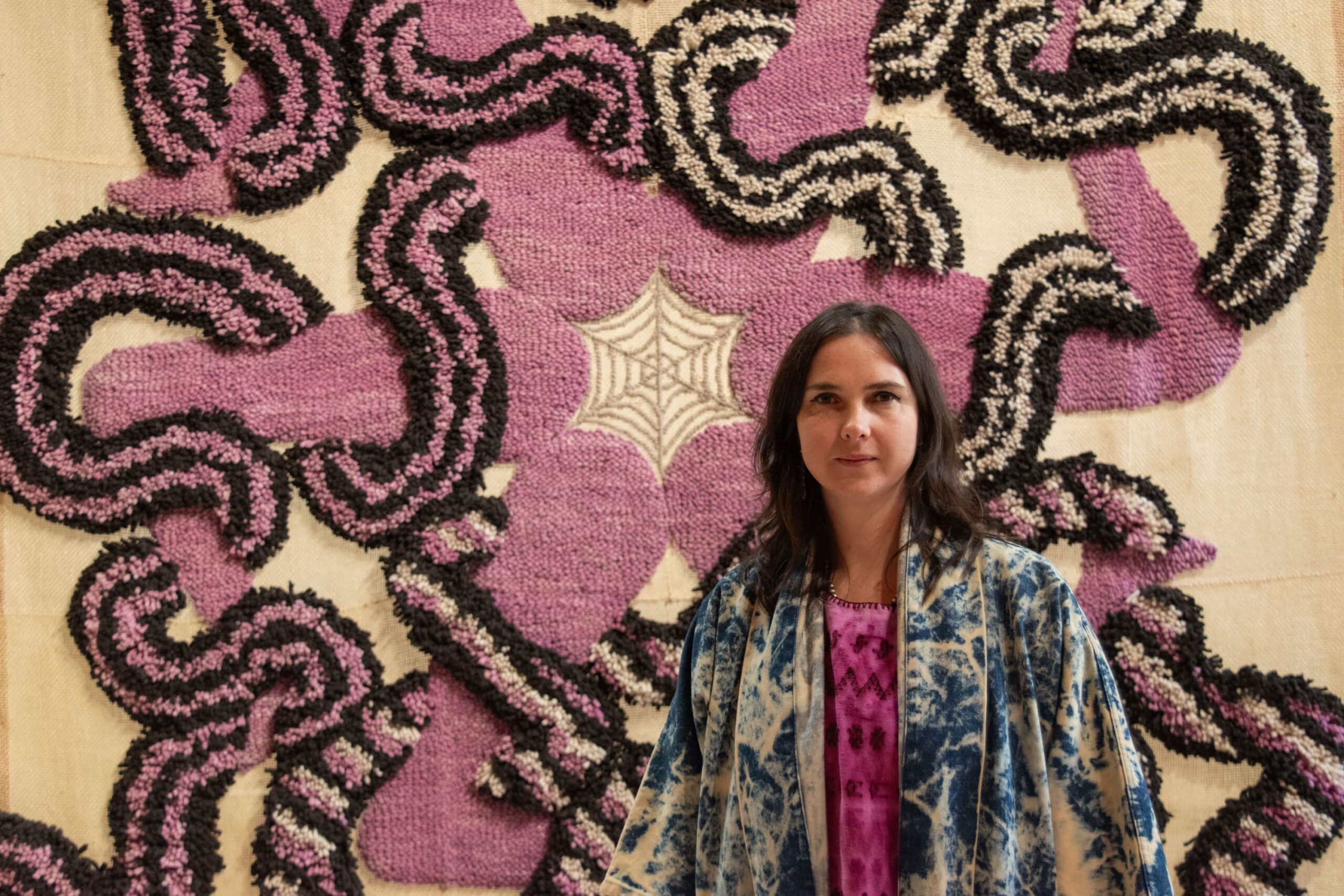
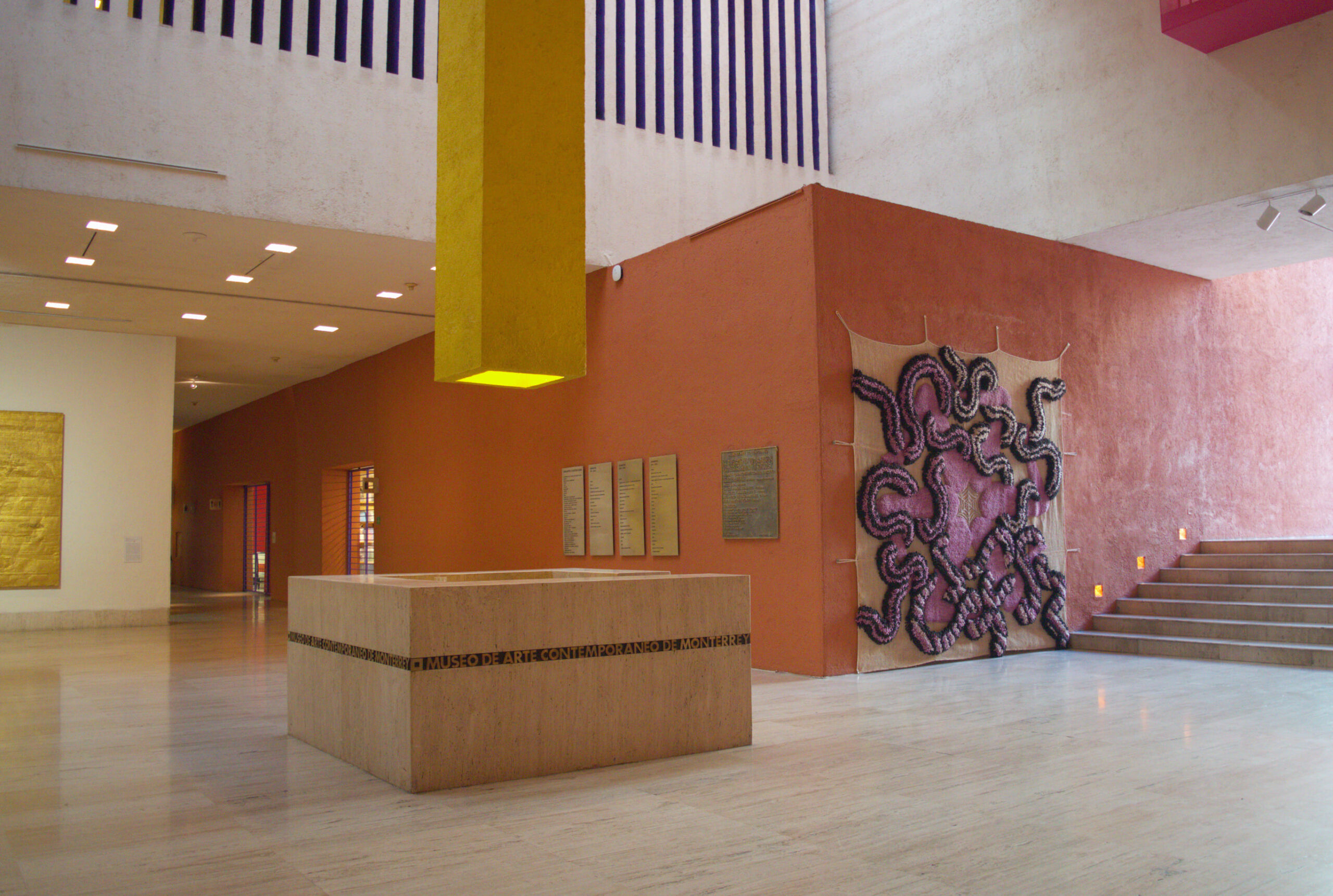
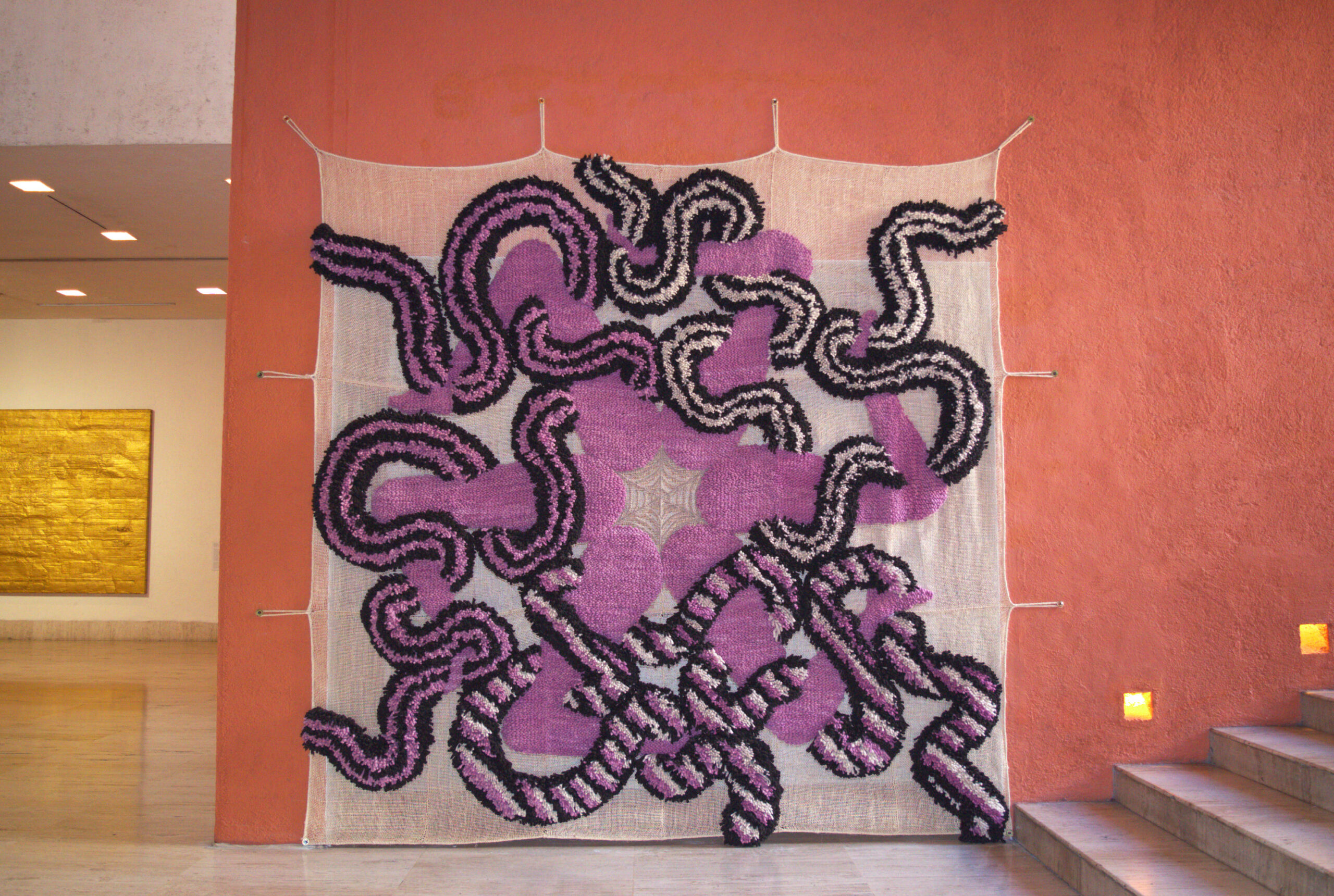
Aurora Pellizzi (Mexico City, 1983) combines formal precepts of painting and sculpture with artisanal weaving techniques, redefining the gallery space by completely blocking access to it in Gorgona (2024). Exalted as a symbol of creative force, the choice of the gorgon as a central figure underscores the intercultural depth of the concepts that encompass her practice, including the revaluation of archaic feminine powers, often misunderstood in Western culture. Likewise, the gesture of obstruction, as challenging as it is meaningful, dialogues with the concepts of the intimate, domestic, and esoteric, commonly associated with textile practices, now intertwined with the mythological chimera made of wool and natural pigments.
Aurora Pellizzi focuses on pre-industrial textile materials and processes, offering us a new perspective on ancient production methods in conversation with post-conceptual thinking. La Gorgona (2024) emerges as an emblem of empowerment, taking the symbols of its former repression as elements of aesthetics and political action. This approach emphasizes a commitment to textile craftsmanship, giving it new relevance in the contemporary art scene.