Date
From March 01, 2025 to June 15, 2025
Area / Gallery
Espacio uno
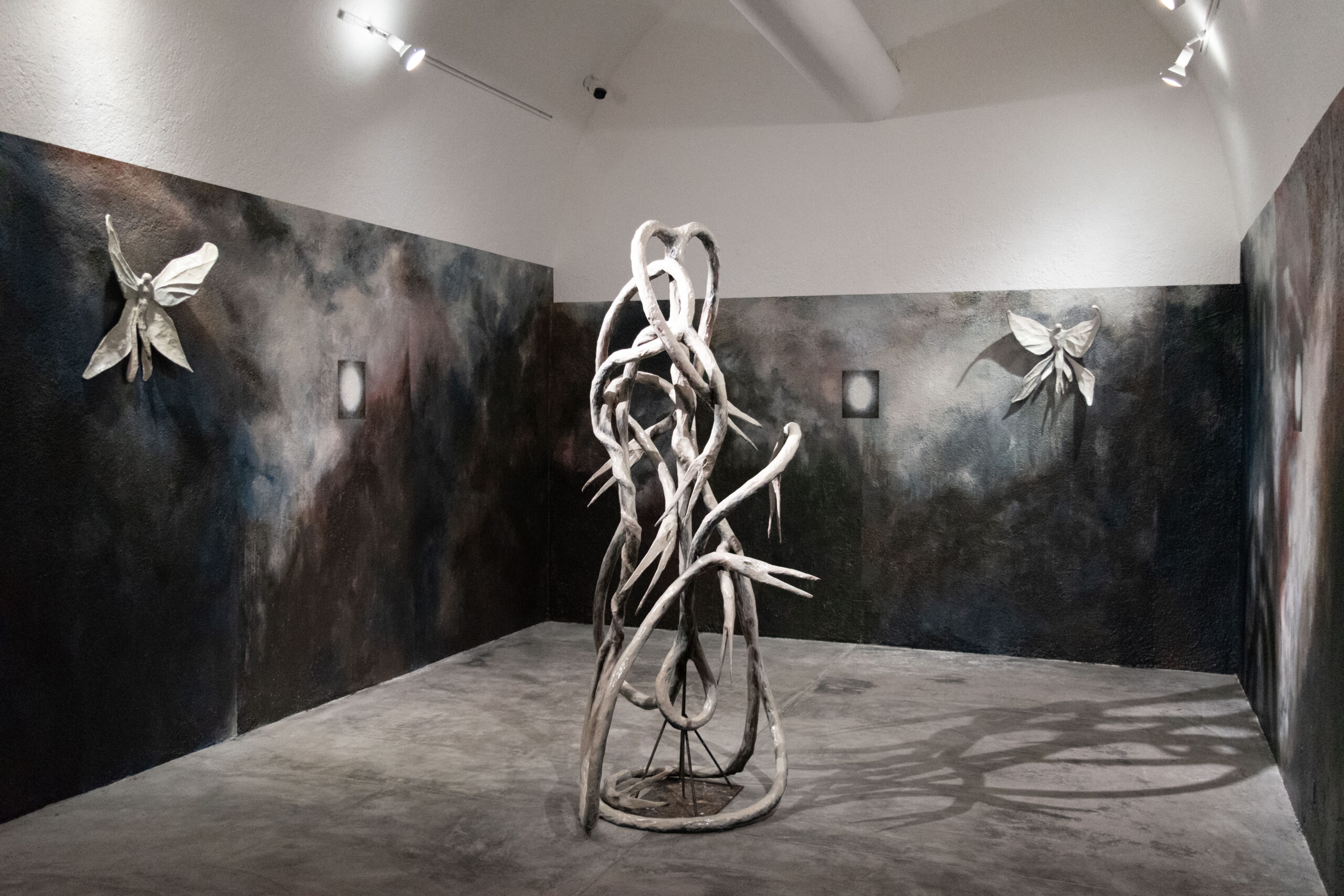
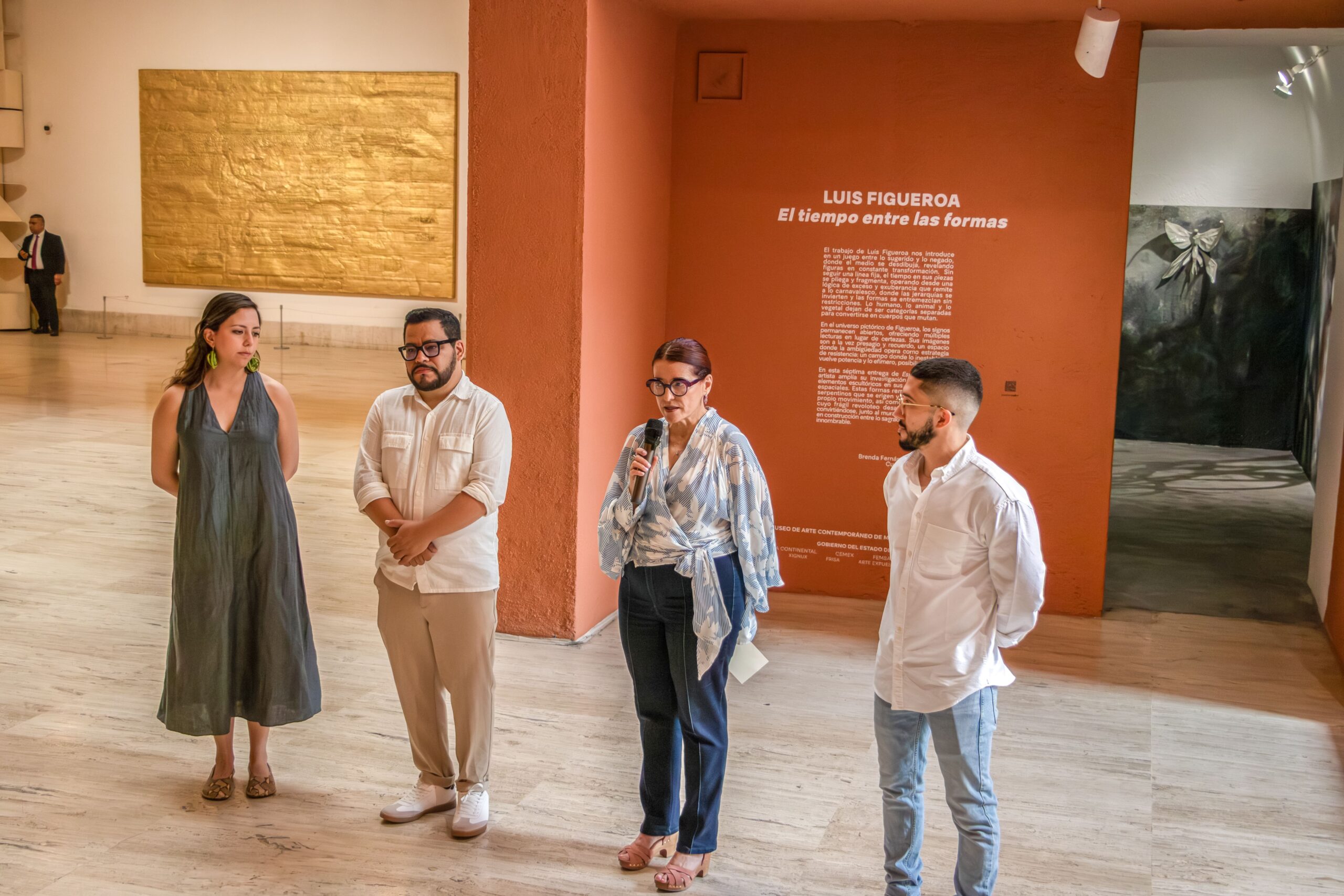
In the Capilla Legorriana, as Espacio Uno is known, El tiempo entre las formas is on display. The artist Luis Figueroa (Venezuela, 1993) focuses on the concept of time as a creative act, as well as on how it has served as a measure of movement and change -crucial notions for understanding the world.
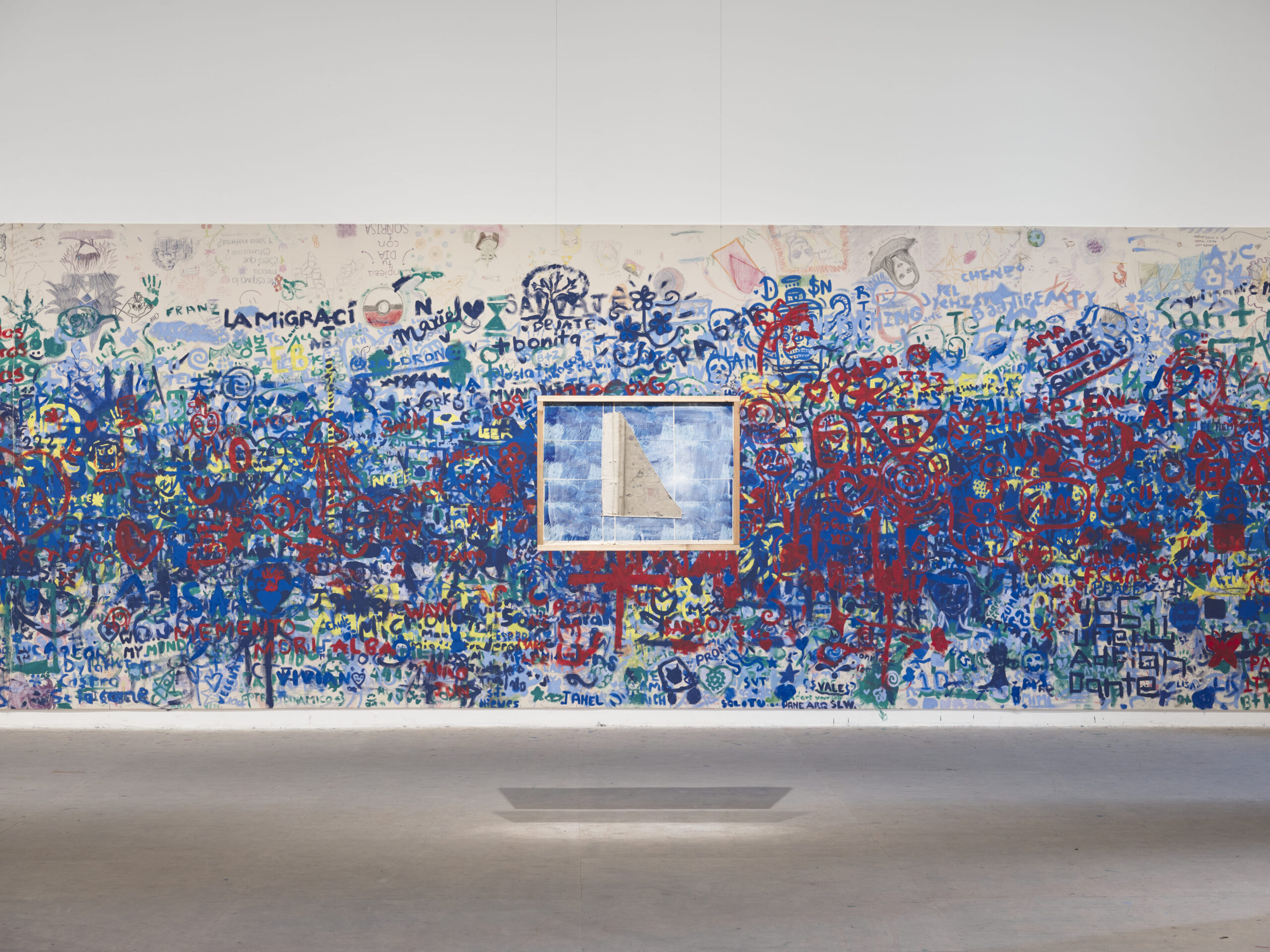
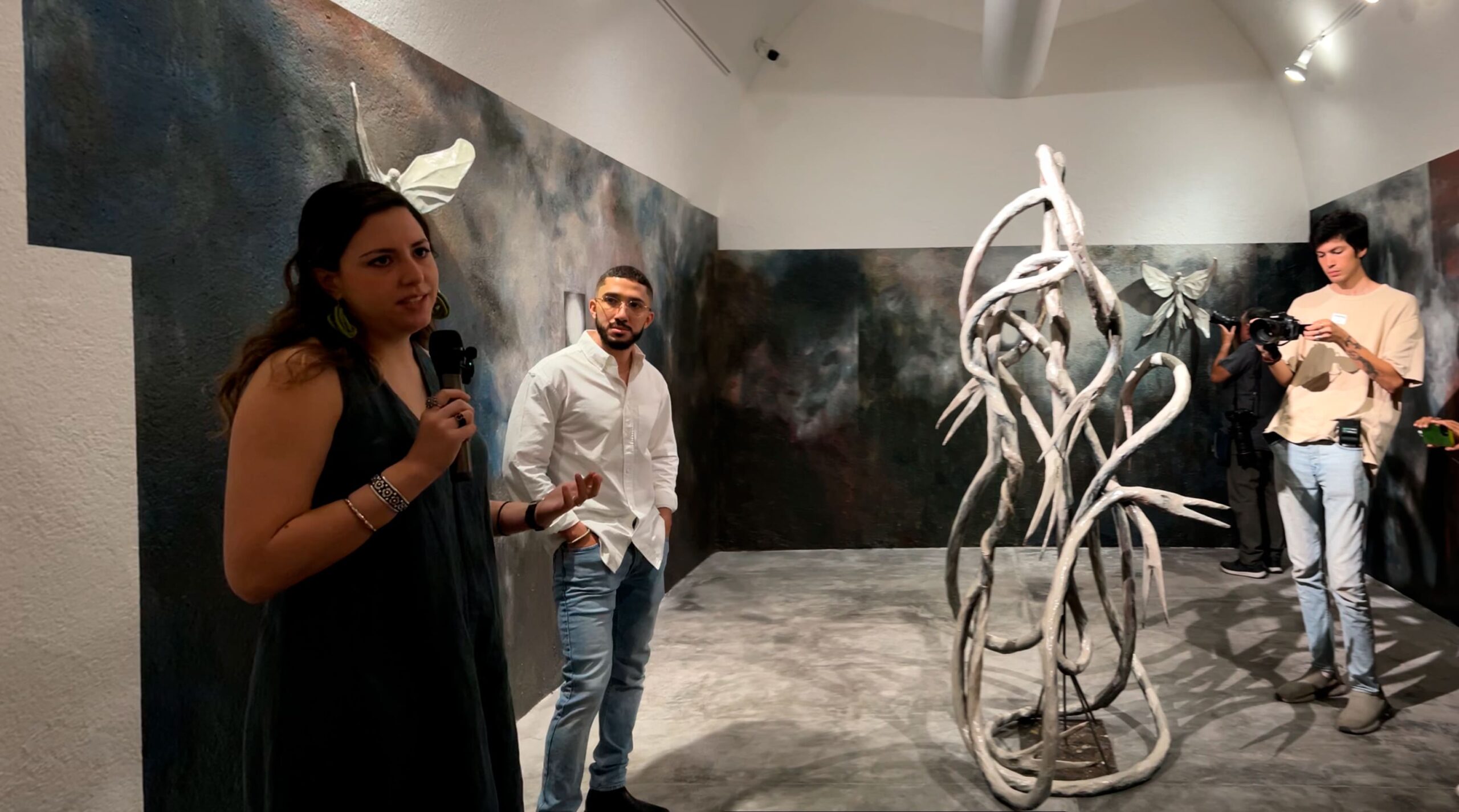
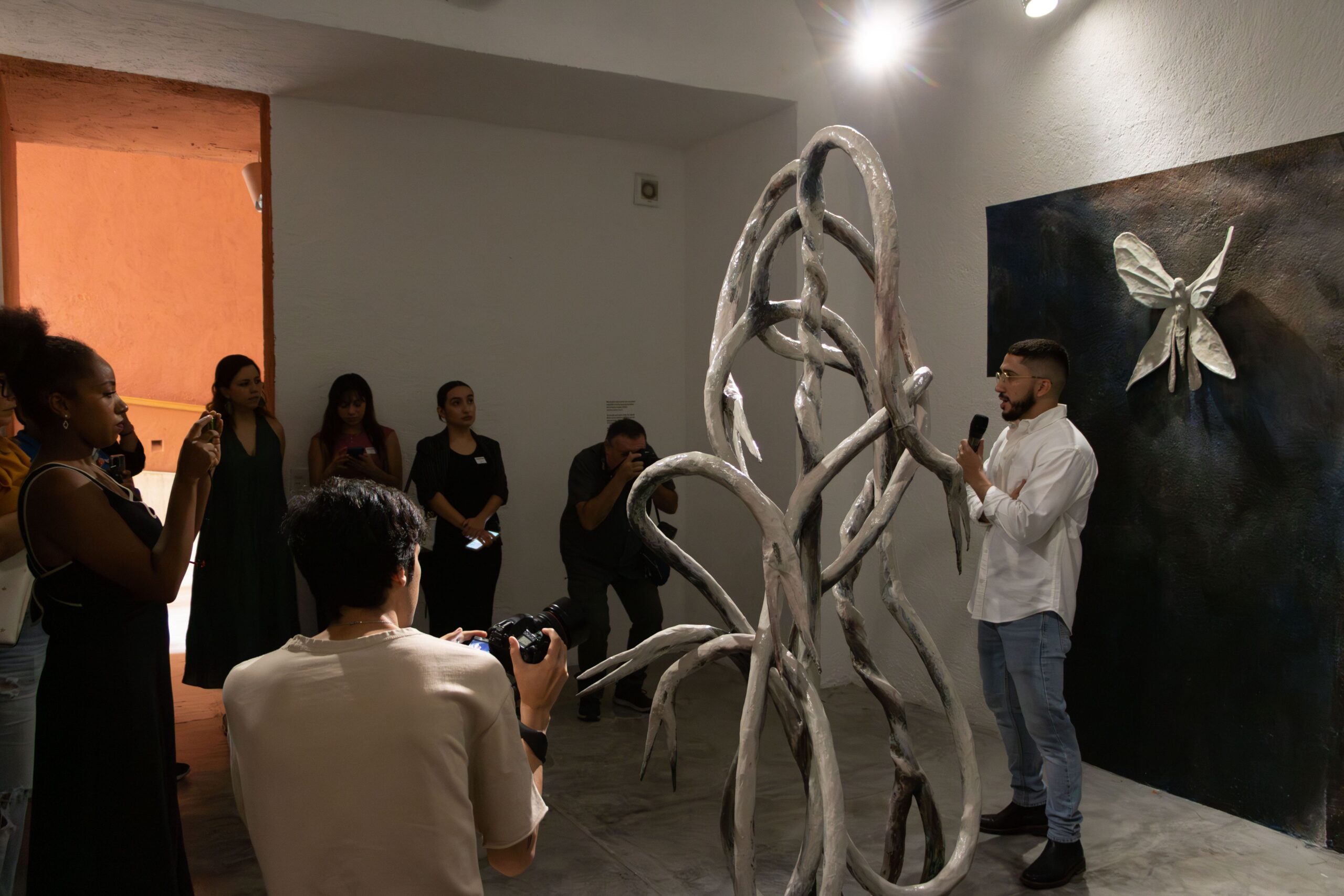
The artist intervened the walls of Espacio Uno with the work No podía convertir en su ideal aquella calma que no existeía en ningún lugar (2025). Through colour, the artist uses blues, greys and earth tones and gradient effects without defined forms to suggest a landscape, resulting in an image that could be reminiscent of a night sky.The mural is combined with sculptural elements made of modelled and polychrome paper. The main sculpture is Motivo vuelve a veces (2025), located in the center of the room, a kind of tower whose forms are inspired by snakes, alluding to mythological skeletal animals. The two sculptures that make up the work Ante el océano de tu amor, soy un río III and IV, have ambiguous forms, similar to those of a butterfly, although they are not. For the artist, the sculptures are associated with life cycles, transformation, and the sacred.
In both the mural and the sculptures, the artist explores the link and tension between time and the creative process, combining concepts such as transformation, as well as the creation of undefined forms that in their ambiguity, manage to refer to nature.
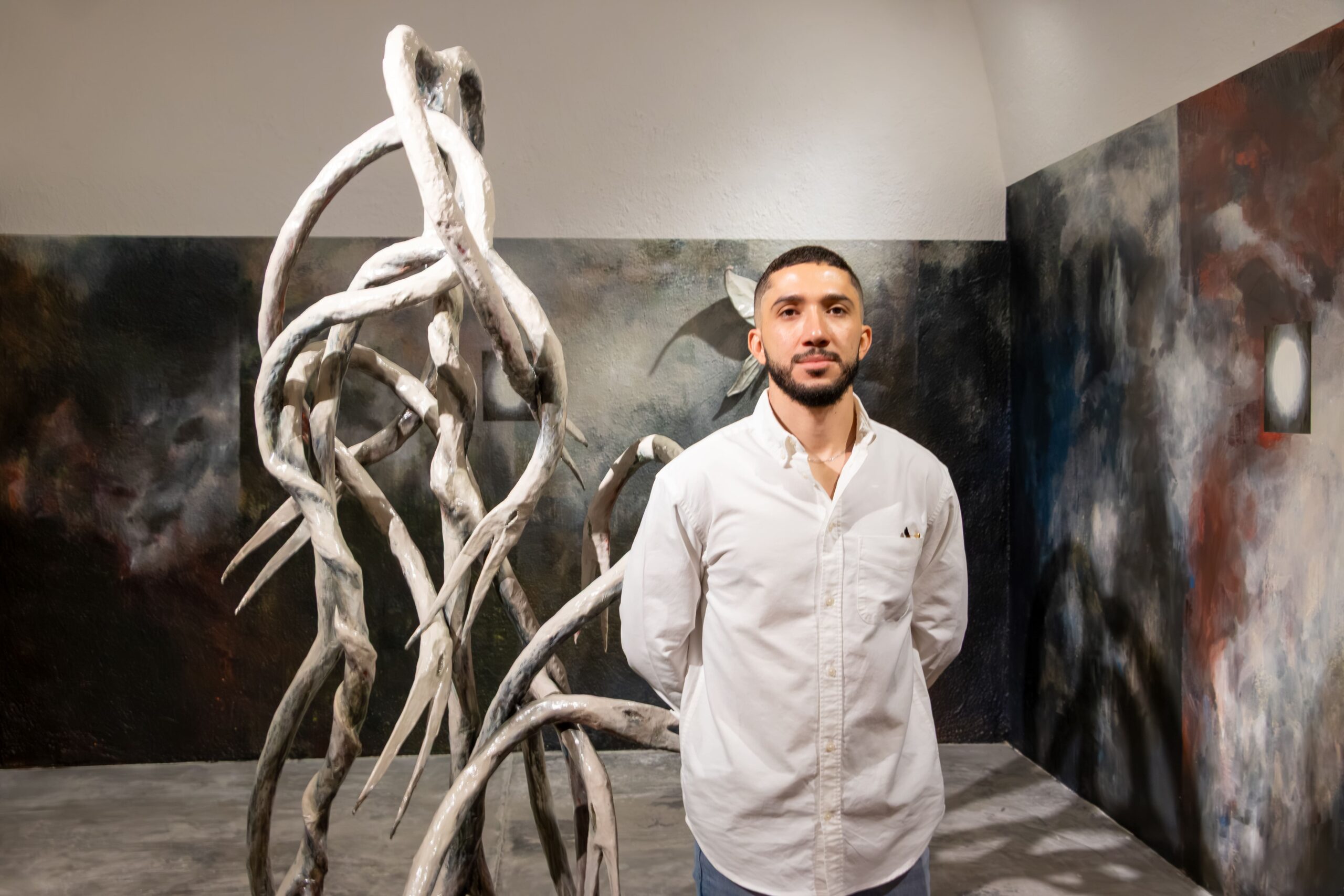
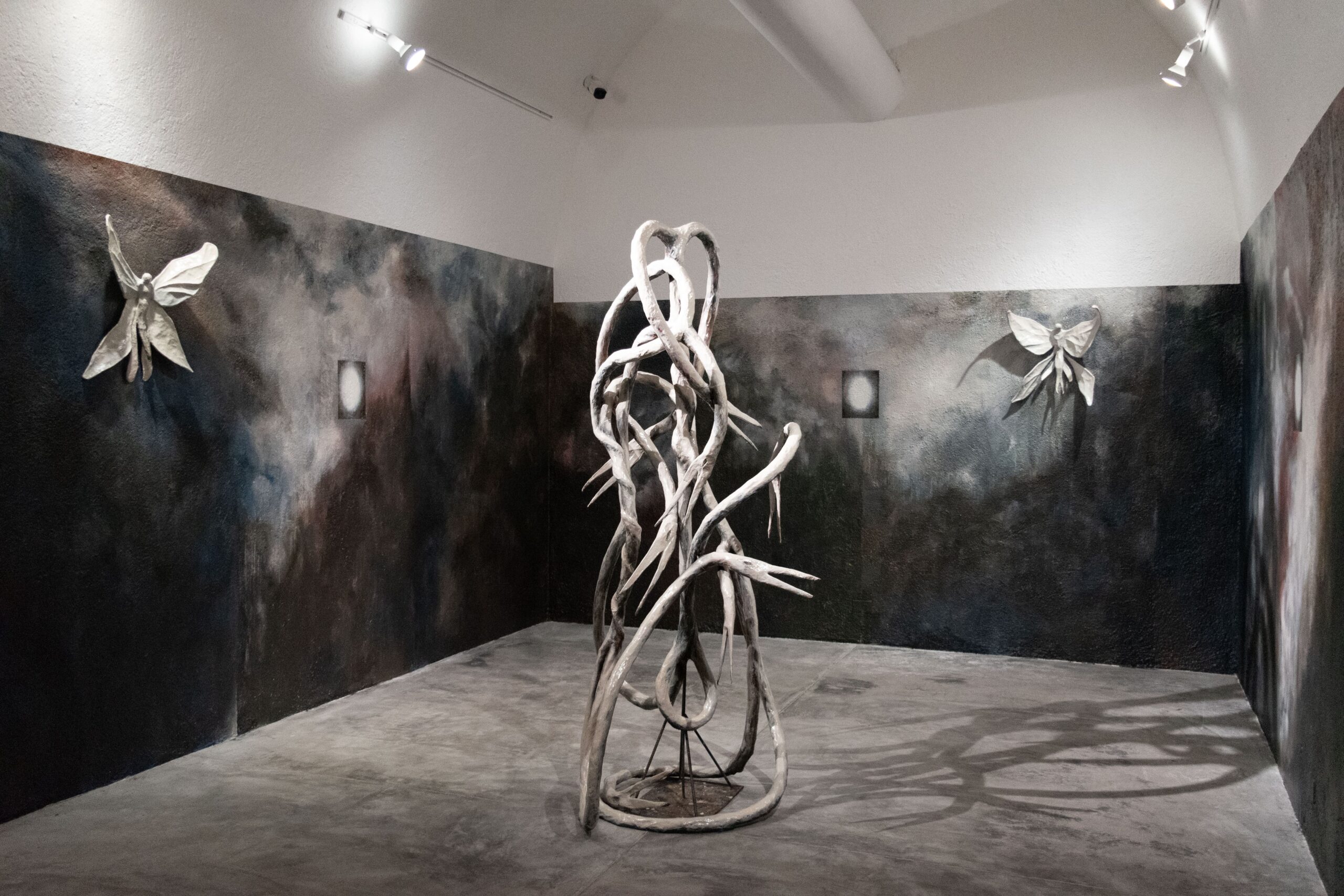
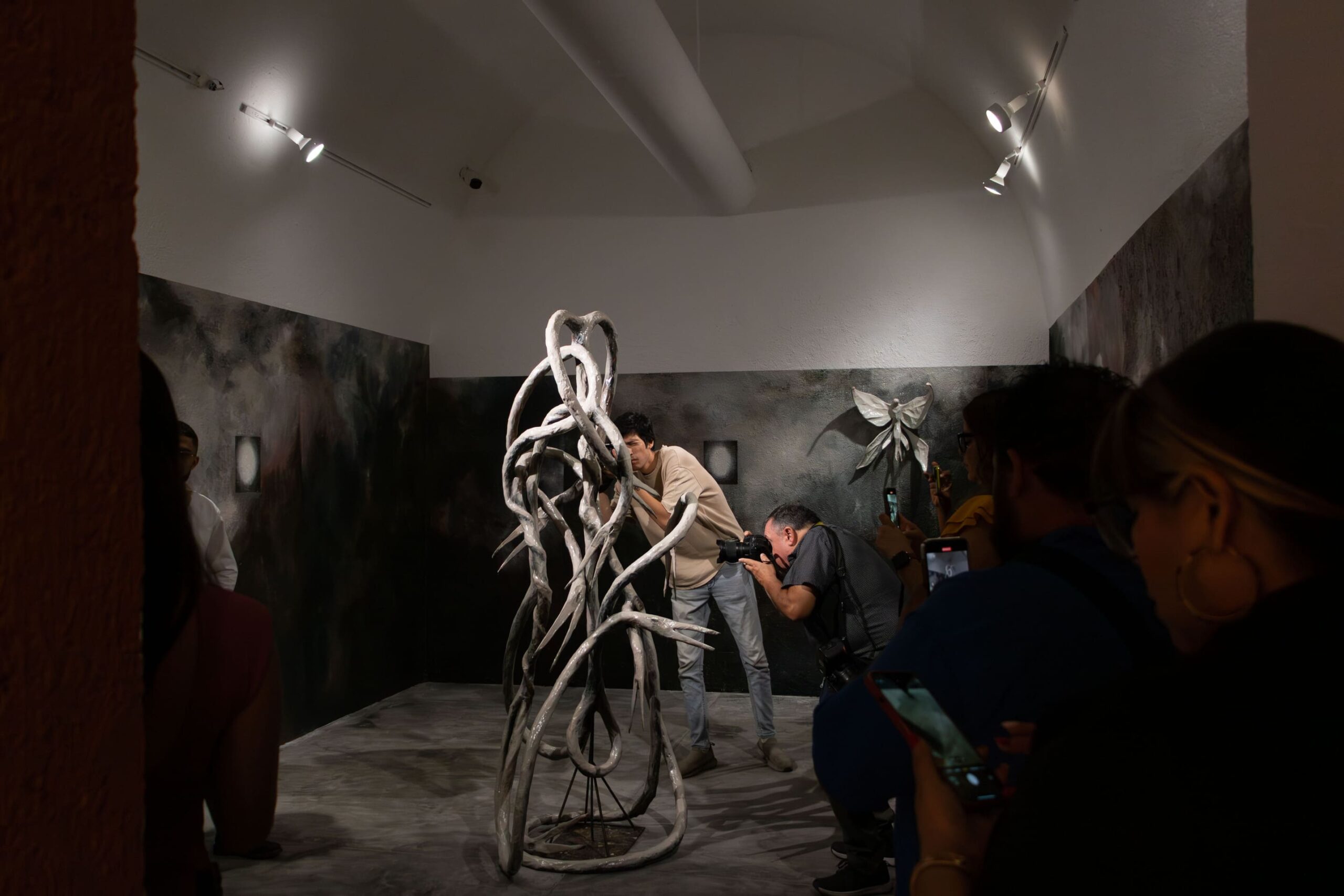
Luis Figueroa’s work draws us into a game between the suggested and the denied, where the medium dissolves, revealing figures in constant transformation. Time in his pieces folds and fragments without following a fixed line, operating from a logic of excess and exuberance that evokes the carnivalesque, where hierarchies are inverted, and forms intertwine without restrictions. The human, the animal, and the vegetal cease to be separate categories and become bodies that mutate.
In Figueroa’s pictorial universe, signs remain open, offering multiple interpretations rather than certainties. His images are both omen and memory, a space where ambiguity operates as a strategy of resistance—a field where instability becomes potential and the ephemeral possibility.
In this seventh edition of Espacio Uno, the artist expands his research by incorporating sculptural elements into his spatial compositions. These forms recall serpentine bodies that rise and collapse in their own movement and winged beings whose fragile flutter defies gravity, becoming, along with the in situ mural, narratives in progress between the sacred, the profane, and the unnamable.
Brenda Fernández Villanueva
Associate Curator