Date
From March 14, 2024 to August 31, 2025
Area / Gallery
Gallery 6-11
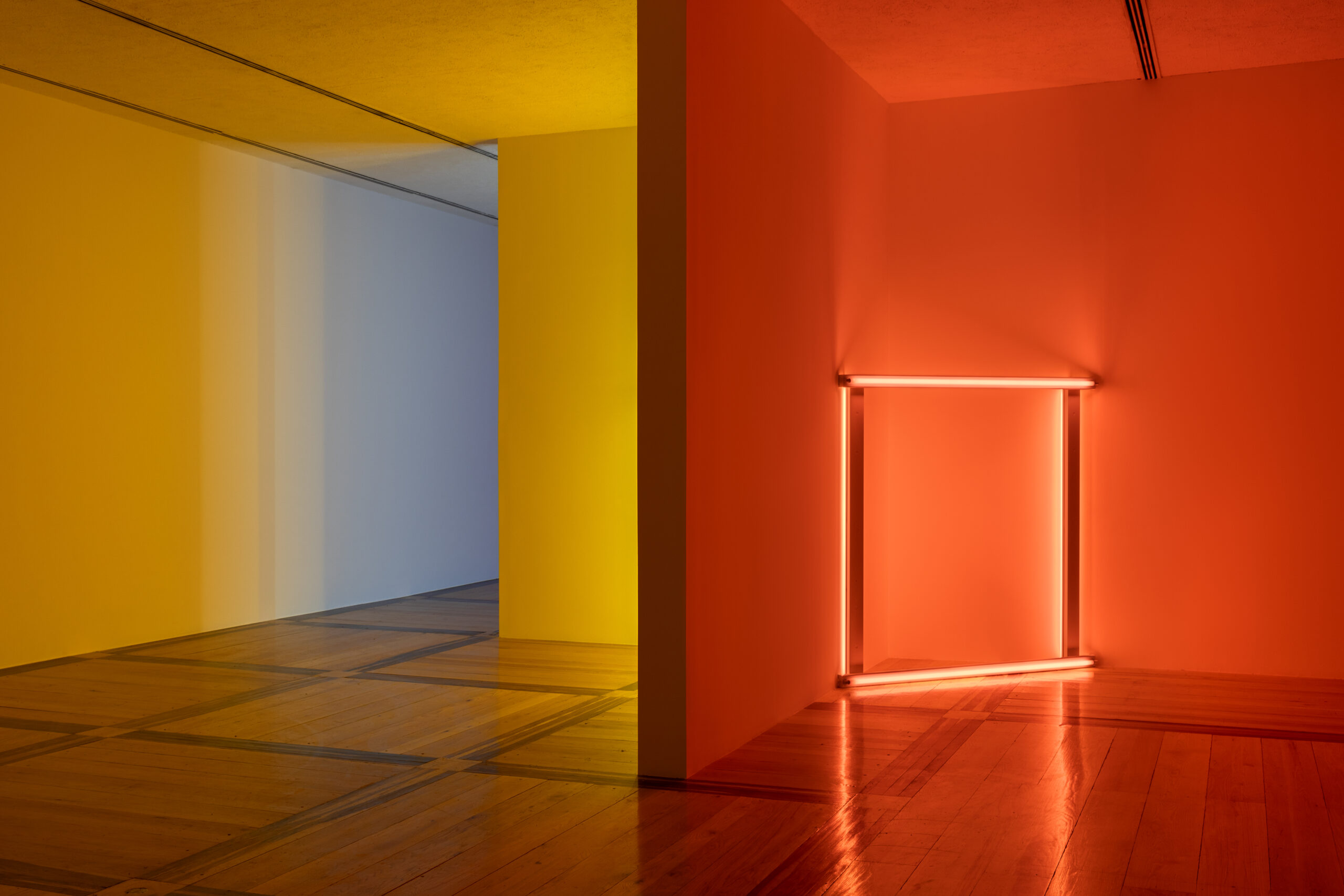
Dan Flavin: Works from the Dia Art Foundation Collection is the first exhibition in Mexico dedicated to analyzing the production of a key figure in North American minimalism, although in life he rejected any label, he is a pioneer in the incorporation of fluorescent light in artistic production and whose installations envelop the viewer in multicolored containers.
The exhibition brings together 24 of the most outstanding works in Flavin’s production, created between 1962 and 1974, from the Dia Art Foundation’s collection, curatorially selected by Humberto Moro, director of the institution’s program. They range from the first works in which he used light to series that he made for several years.
Dan Flavin, who died in 1996, was the first artist to use light as a means of artistic production, transforming space and the public’s perception through color and the effects of fluorescent light.
The presence of Flavin’s work in the country is the result of MARCO’s synergy with Dia Art Foundation, an institution established in New York since 1974, initially dedicated to supporting artists in large-scale projects and production, from site-specific installations to solo exhibitions. In this sense, the organization produced and integrated to its collection an important part of Flavin’s work, becoming an important actor in the preservation of his legacy.
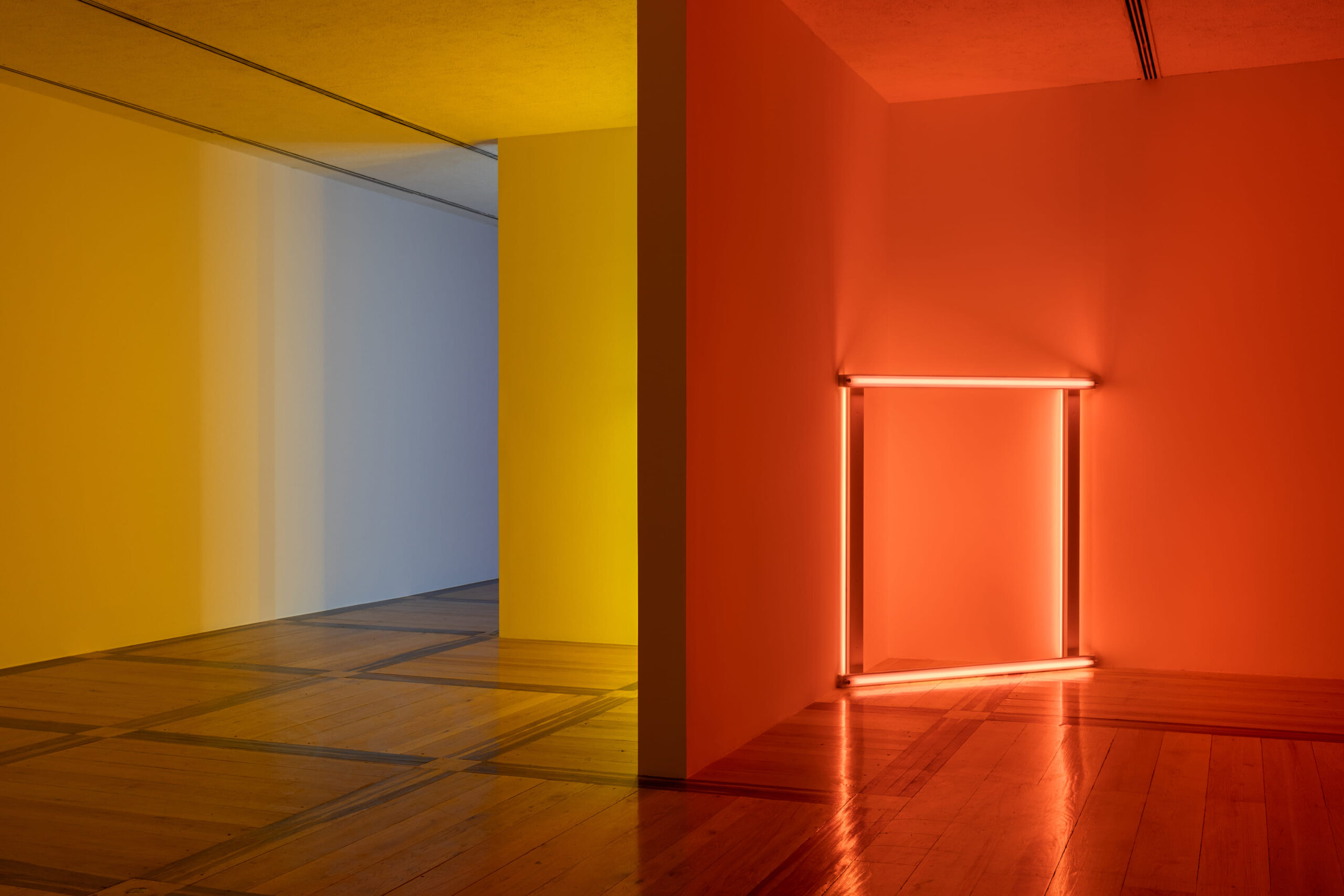
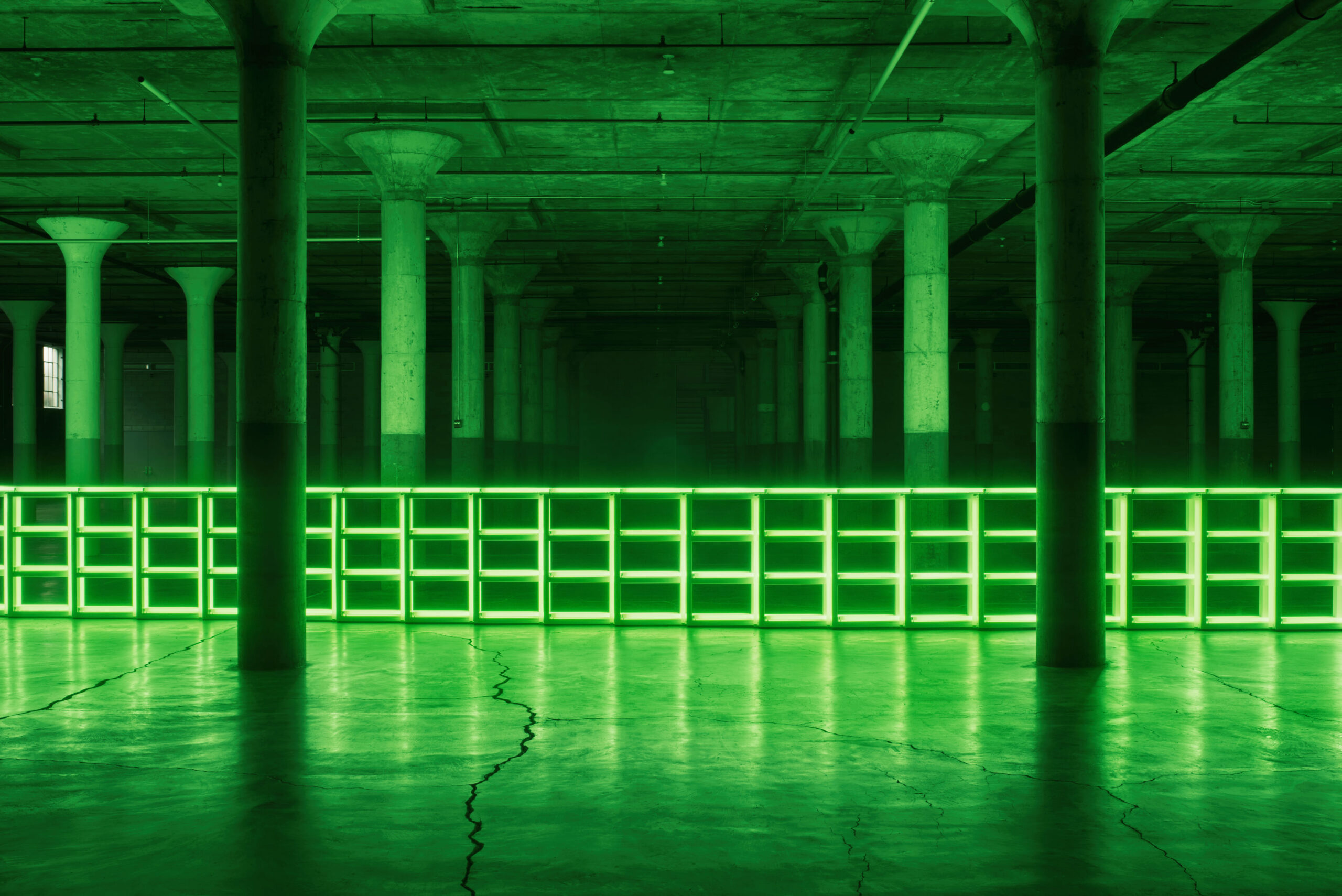
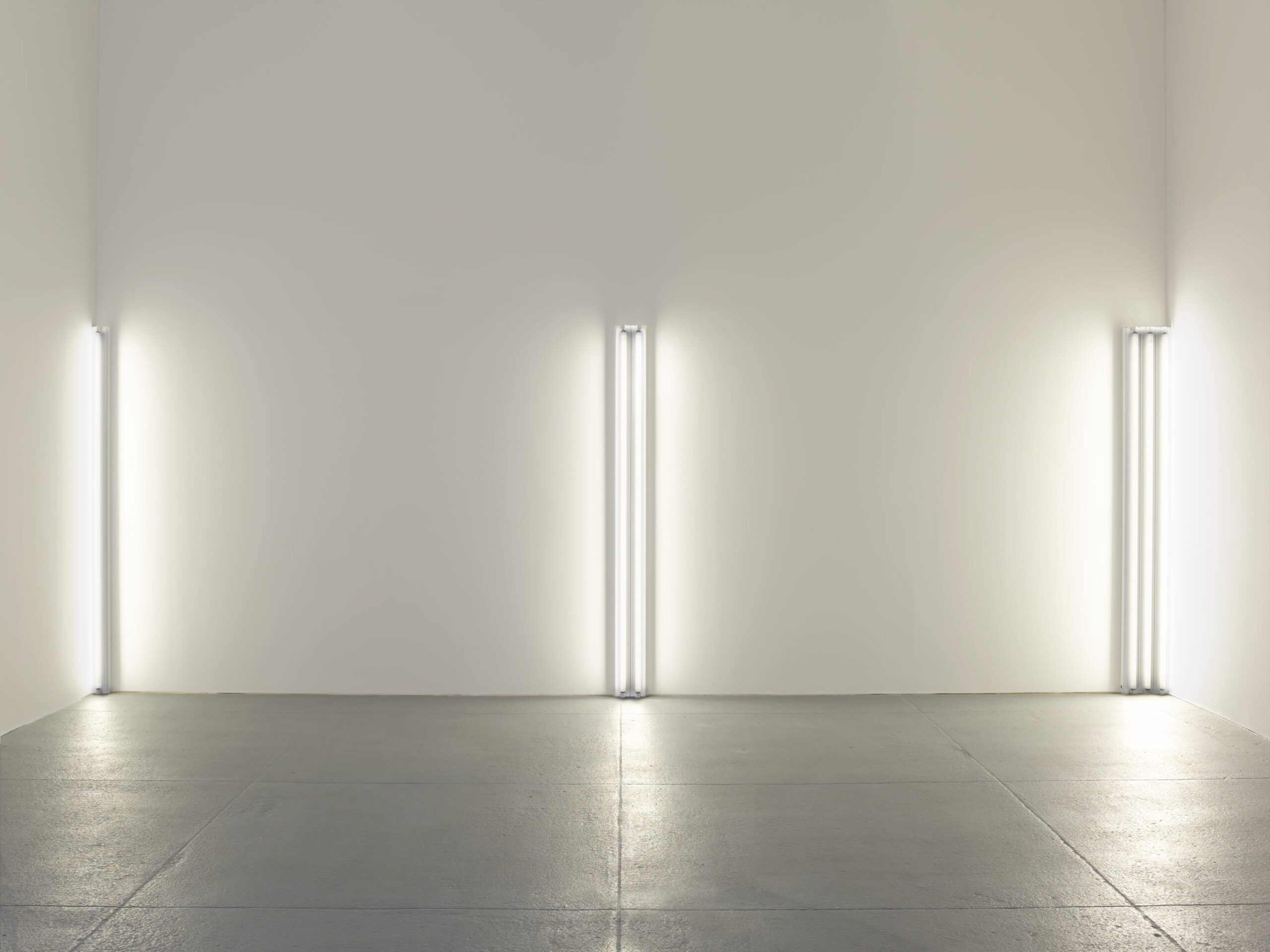
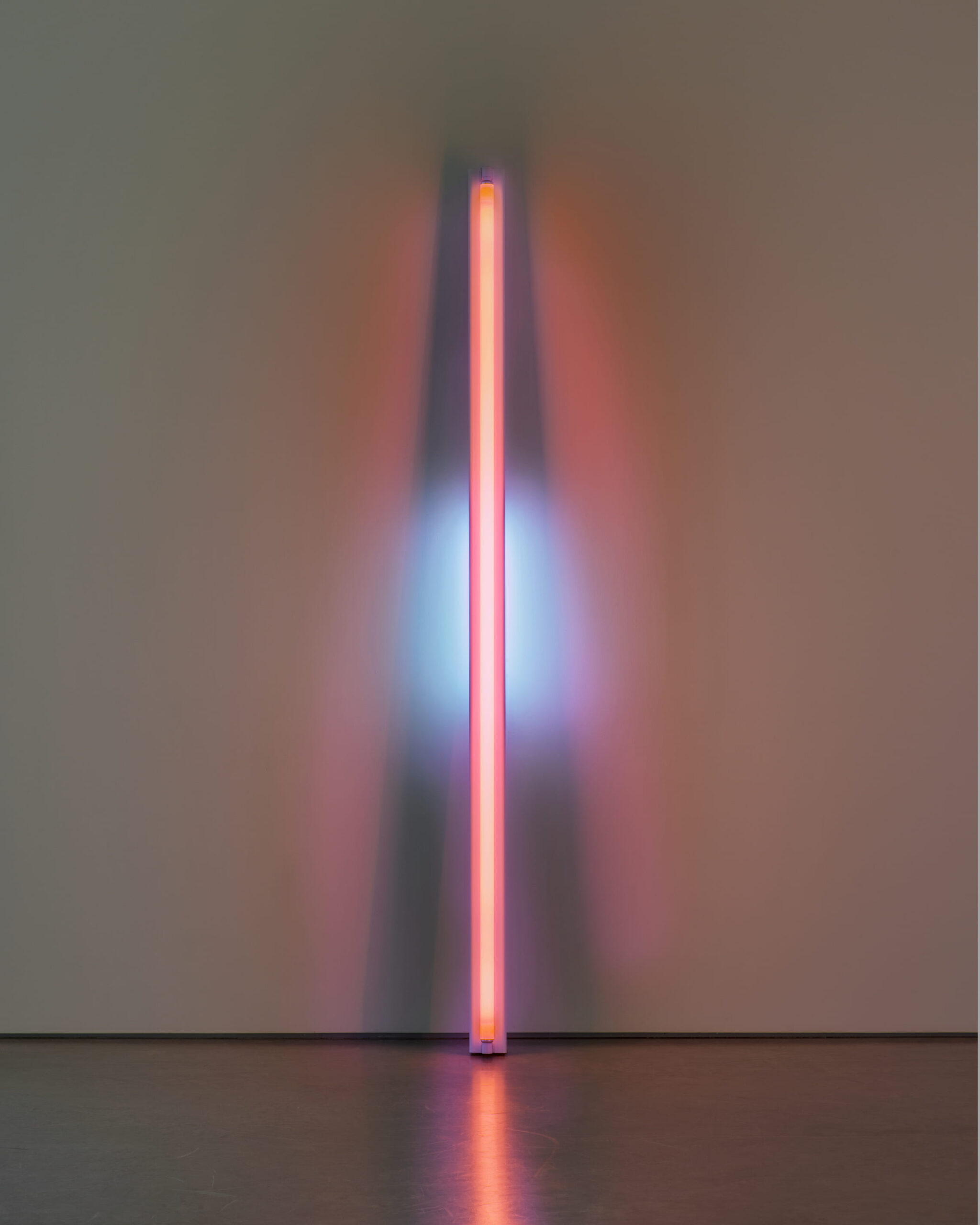
The exhibition Dan Flavin: Works from the Dia Art Foundation Collection is a review of the work of American artist Dan Flavin (1933, Jamaica, New York; 1996, Riverhead, New York) and the artist’s first solo exhibition in Mexico, featuring more than twenty works from the Dia Art Foundation collection. This constellation of works made between 1962 and 1974 represents key moments and series in Flavin’s work, while also bearing witness to a long-term relationship between the institution and the artist.
Flavin, one of the most important artists of American minimalism (despite the artist actively rejecting the label “minimal”), established a simplified formal vocabulary consisting of interactions between light and space in 1963, after spending time in the seminary, in Korea as an observer for the United States Air Force weather service, as well as at the Hans Hofmann School of Fine Arts, the New School for Social Research, and Columbia University.
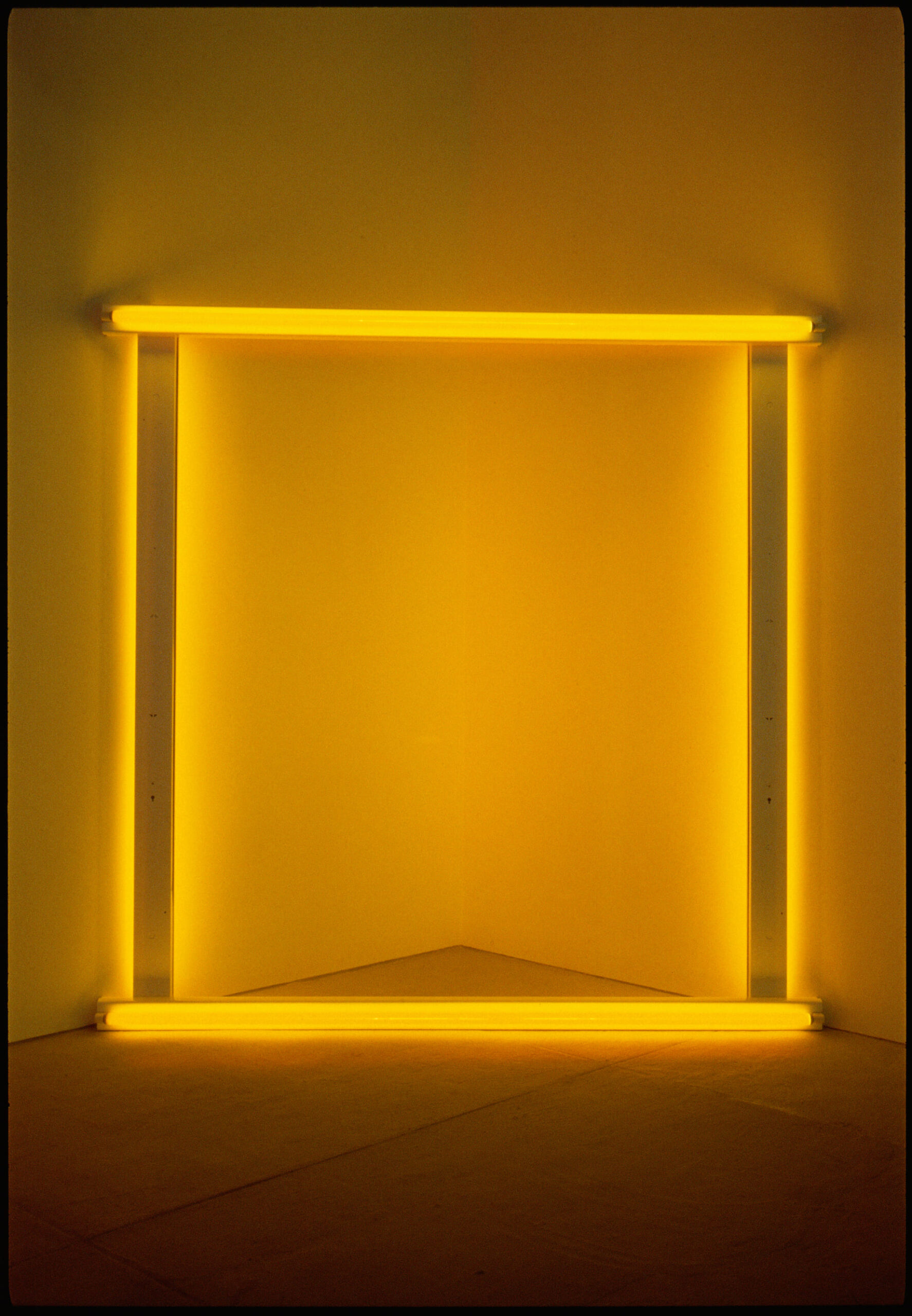
Calling the use of light in space a “situational” phenomenon, the artist generated a system of material and conceptual parameters through which his works could exist. Through the use of what were at the time industrially produced lamps in widespread commercial use, the artist determined four lengths, 66, 132, 198, and 264 centimeters, as well as a light palette of nine colors: blue, green, pink, red, yellow, and four varieties of white. In this “limited” configuration of materials, the artist found a vocabulary of infinite possibilities and variations. Like many of his contemporaries in the early 1960s, Flavin turned to ready-made industrial materials as an antidote to the predominance of gestural painting.
For his light works, he never modified the dimensions or colors of standard fluorescent bulbs. Irony is another inherent aspect of the artist’s work, who challenged not only the formal notions of modernist painting and sculpture, but at the same time, the artist questioned broader concepts such as the ideas of monumentality, permanence, and supposed contemplative relationships of the work, through the radical gesture of works that are explicitly open, linked to the phenomenological dimension of being present in a given time and space—or in the artist’s words, “art so flat, so open, so direct, as you will never find.”
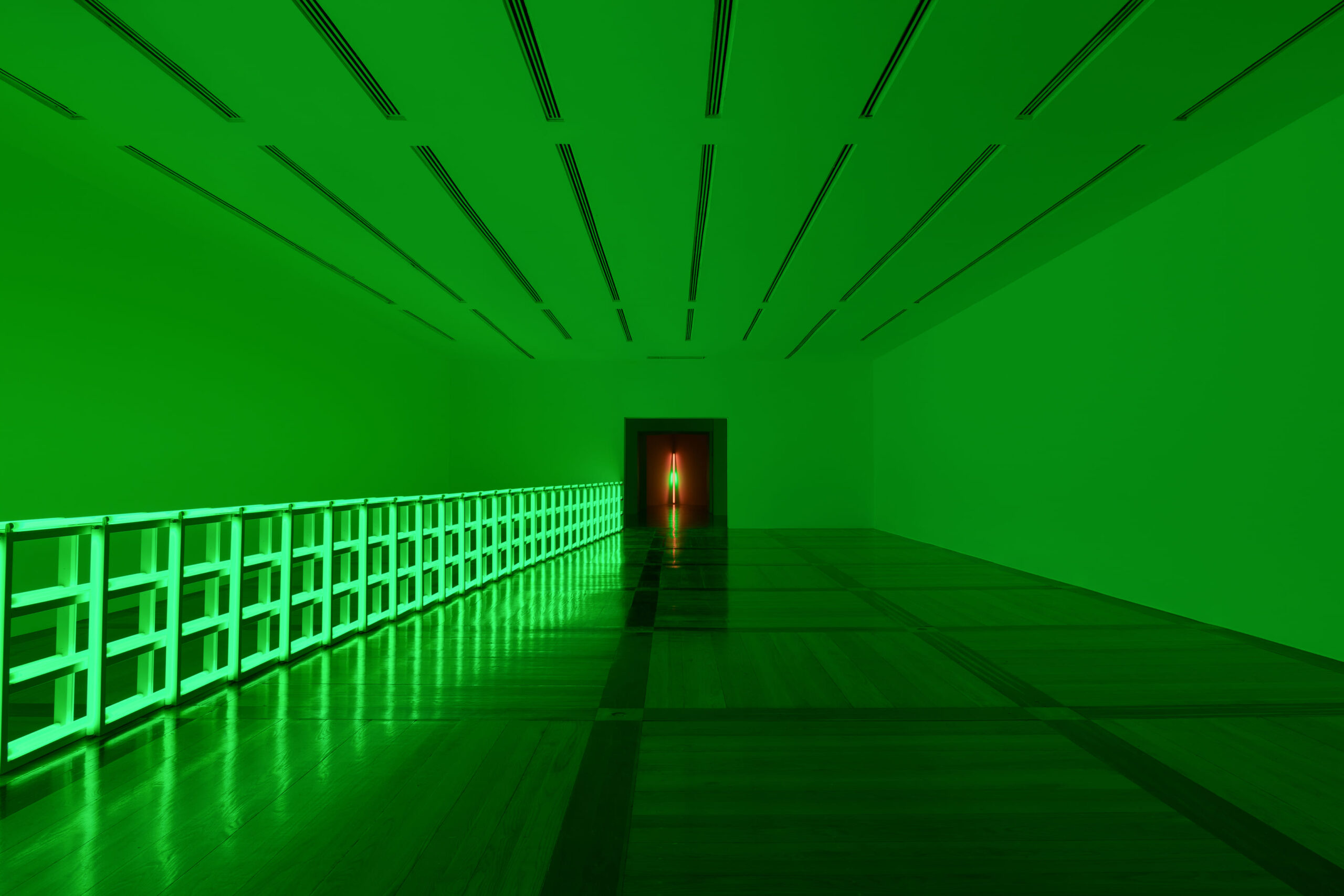
This exhibition presents, among other works, a piece from the “icons” series that the artist created between 1961 and 1964, in which he made the leap from the abundant drawings, objects, watercolors, and assemblages he produced between 1957 and 1962 to his well-known works of art made with light in space. works from the series entitled “monuments” for V Tatlin, consisting of different variations of white lamps arranged in wall formations and dedicated to the Russian constructivist Vladimir Tatlin; the important work “The Nominal Three,” which refers to nominalism and medieval scholasticism through “Ockham’s Razor”; the series entitled “European Couples,” in which the artist emphasizes the idea of dedicating his works to people in an ironic relationship to their context; and the monumental untitled (to you, Heiner, with admiration and affection) from 1973, one of his barriers that prevents access to a certain portion of the gallery through the use of a construction of lamps.
This exhibition articulates two important conceptual relationships with the MARCO building. On the one hand, the exhibition presents another of the artist’s spatial concerns, the use of corners and nooks in spaces, which refers to relationships with Malevich and Tatlin, as well as the limits of traditional art that the artist challenges. On the other hand, the museum building, whose architectural genealogy is linked to its creator, Legorreta, and his teacher, Barragán, embodies complex and ambiguous relationships with the church, representation, light, color, and space—creating an environment of resonances between different media and times.
Curated by Humberto Moro, Deputy Program Director, Dia Art Foundation
Production by John Sprague, Elizabeth Peck, Courtney Smith
Dan Flavin was born in 1933 in New York City, where he later studied art history at the New School for Social Research (1956) and Columbia University (1957–1959). His first solo exhibition was at the Judson Gallery, New York, in 1961. Flavin made his first work with electric light that same year and began using commercial fluorescent bulbs in 1963. Major exhibitions of Flavin’s work include those at the Museum of Contemporary Art, Chicago (1967), the National Gallery of Canada, Ottawa (1969), the Staatliche Kunsthalle, Baden-Baden (1989), and the retrospective organized by Dia in association with the National Gallery of Art, Washington, D.C., in 2004–2005. In 1983, Dia opened the Dan Flavin Art Institute in Bridgehampton, New York, a permanent exhibition designed by the artist in a converted fire station and open to the public each summer. In 1992, Flavin created a monumental installation for the reopening of the Solomon R. Guggenheim Museum in New York. He died in 1996, leaving designs for a light installation for the Chiesa Rossa in Milan, which was realized posthumously with the support of Dia.