Date
From January 22, 2016 to June 05, 2016
Area / Gallery
Gallery 6-11
Curator: Gonzalo Ortega.
The Museum of Contemporary Art of Monterrey presents the exhibition Christian Boltanski: Animitas, which brings together representative works by the renowned French artist that evoke places of spiritual veneration and confront the viewer with the risks of not exercising the ability to remember, as well as with the certainty that life inevitably comes to an end.
In his work, Christian Boltanski (Paris, 1944) has rearticulated the notion of sanctuary through installations endowed with enormous power. In the piece Animitas, 2014, the artist transmitted a real-time video scene from the Atacama Desert in Chile of five hundred small bells producing a magical collective sound as they were moved by the wind. For him, this installation represented the souls of an equal number of people, while also forming a kind of map of the sky. The piece, in essence, also represented a landscape. For Boltanski, the memorial model has allowed him to thoroughly examine the mechanisms available in today’s world to preserve or retain people’s identities.
The title of the work comes from the Latin anima (soul) or animitas (a Spanish appropriation meaning “little souls”). Animitas are structures erected alongside roads and highways (they are known by this name mainly in Chile, although they are found throughout Latin America) to honor the memory of people who lost their lives in accidents. Photographs and personal belongings of the deceased often accompany animitas, memorials that are often receptacles of miraculous expectations on the part of the people.
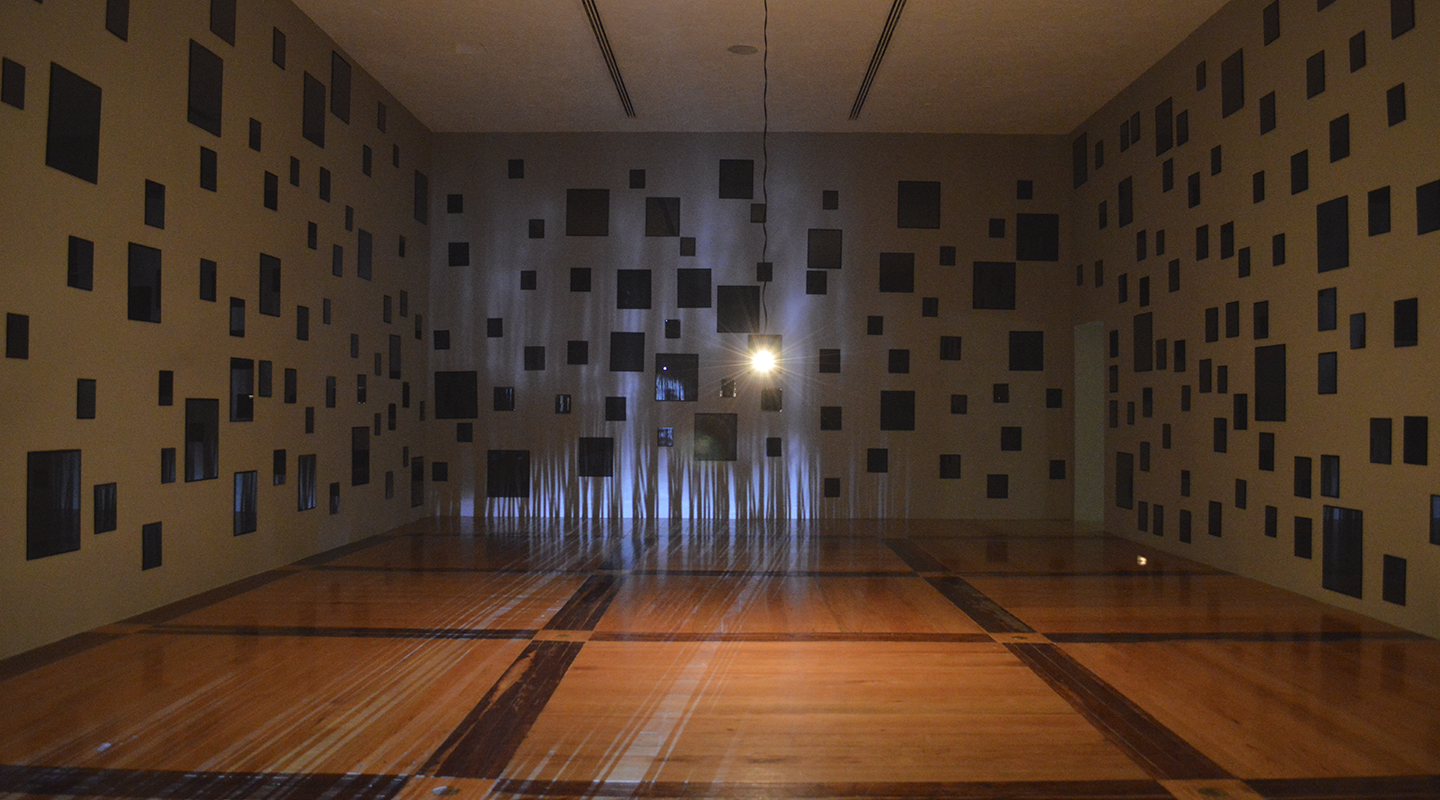
Portraiture is present in many of Christian Boltanski’s artistic projects and installations, such as the Lumières and Monument series, in which he uses photography as a medium that supposedly portrays reality and disrupts it to turn it into a mechanism for highlighting the void of identity. He confronts the viewer with the lack of credibility of the photographic format and forces them to intuit where the true information about the biographies of these people might actually lie. In addition, the artist has called photography into question and stripped it of its value as an archive.
He has also dismantled his contribution to historical memory and remembrance, since this technique has also failed to preserve the identity of the subjects he has captured on photosensitive surfaces. For Boltanski, memory lies elsewhere; it is an entity that changes over time and inevitably fades away.
The artist dismantles the precious notion that many people have about history and creates new ways of approaching it. In his works, the materials serve only a practical function and have no value, just like the spaces where they are displayed. What matters to him is the effect they have.
Metal boxes, cables, lights, and clothing are some of the elements that make up his installations. The durability of certain materials, which effectively evoke the passage of time, allows Boltanski to simultaneously establish a difference and an analogy between synaptic (organic) memory and the memory implicit in the forms of objects. Remnants of the past, residues of distant lives, highlight the persistence of materials, which nevertheless fade away over time.
The exhibition Christian Boltanski. Animitas will be open to the public from Friday, January 22, to Sunday, June 5, 2016.
Christian Boltanski would like to thank Marian Goodman Gallery, New York, Paris, and London, and Agence Eva Albarran & Co, Paris.