Date
From June 13, 2025 to October 05, 2025
Area / Gallery
Gallery 5
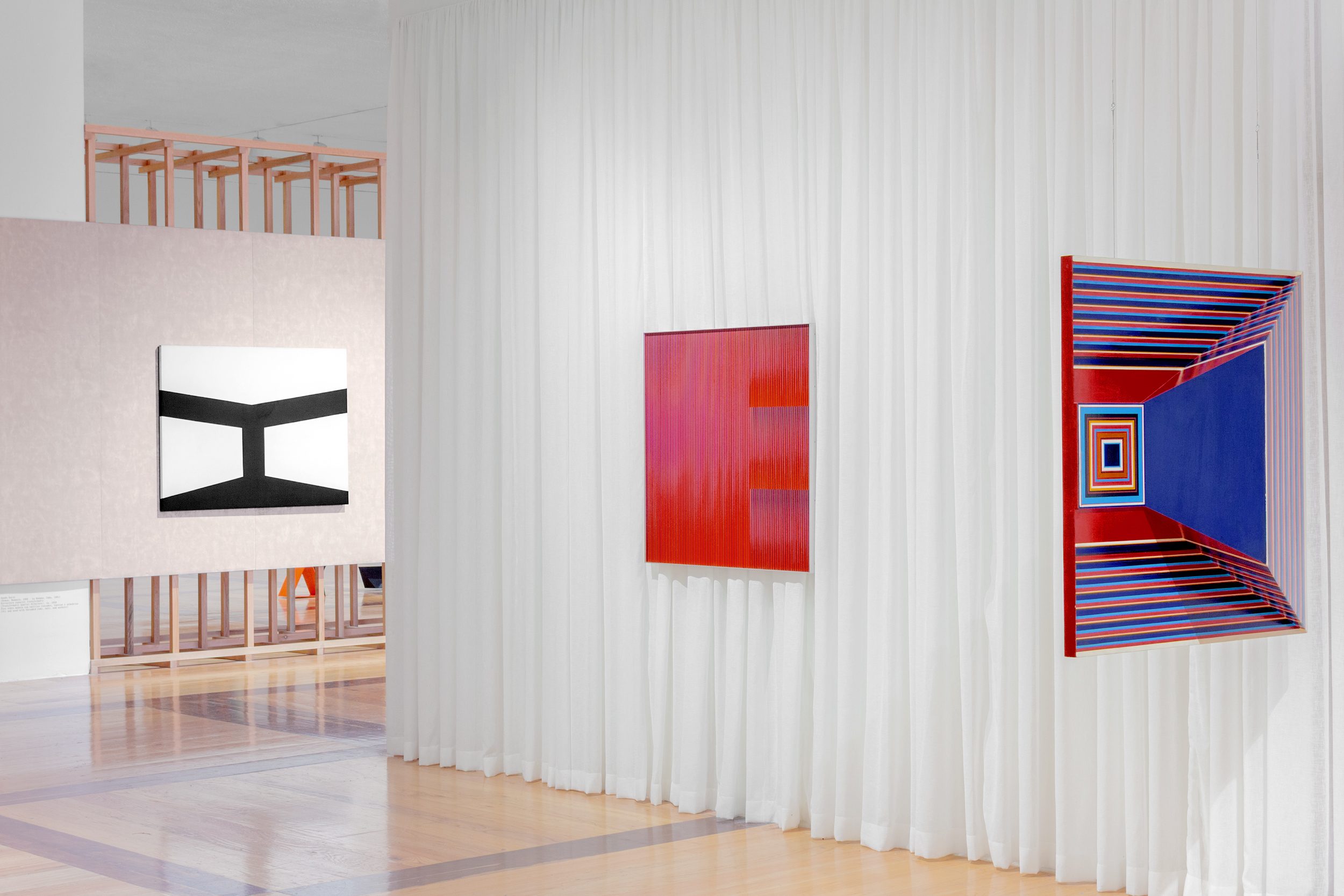
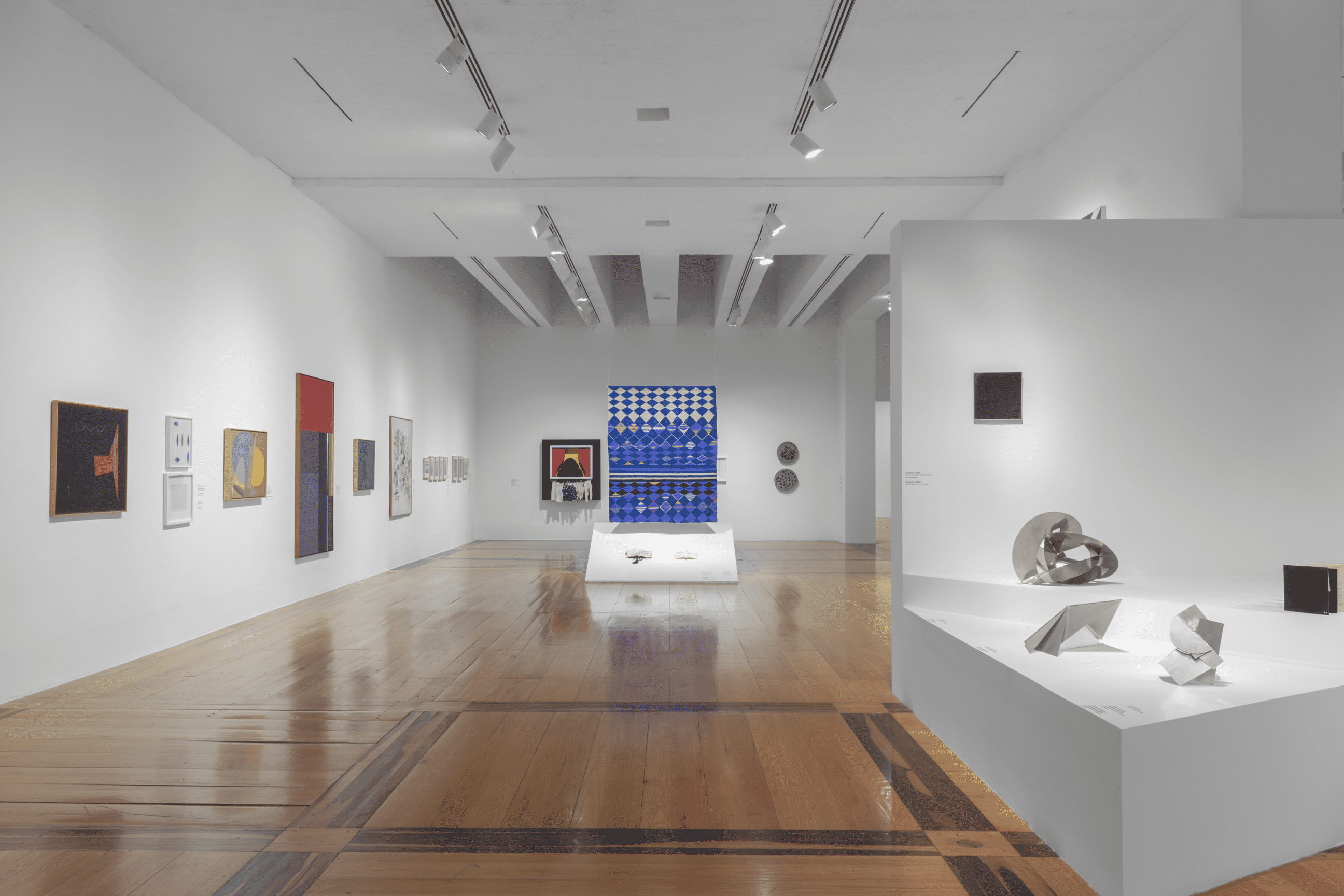
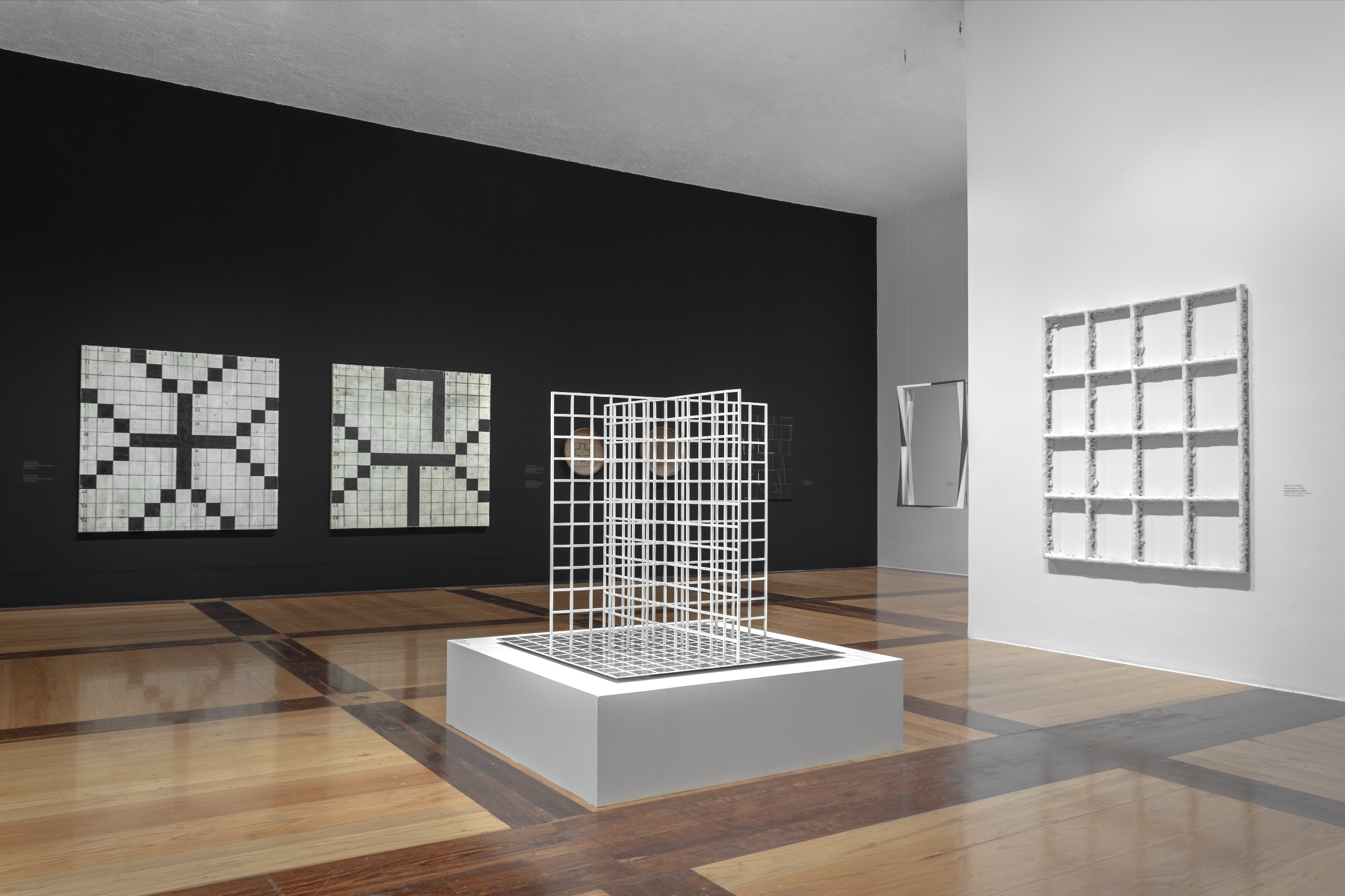
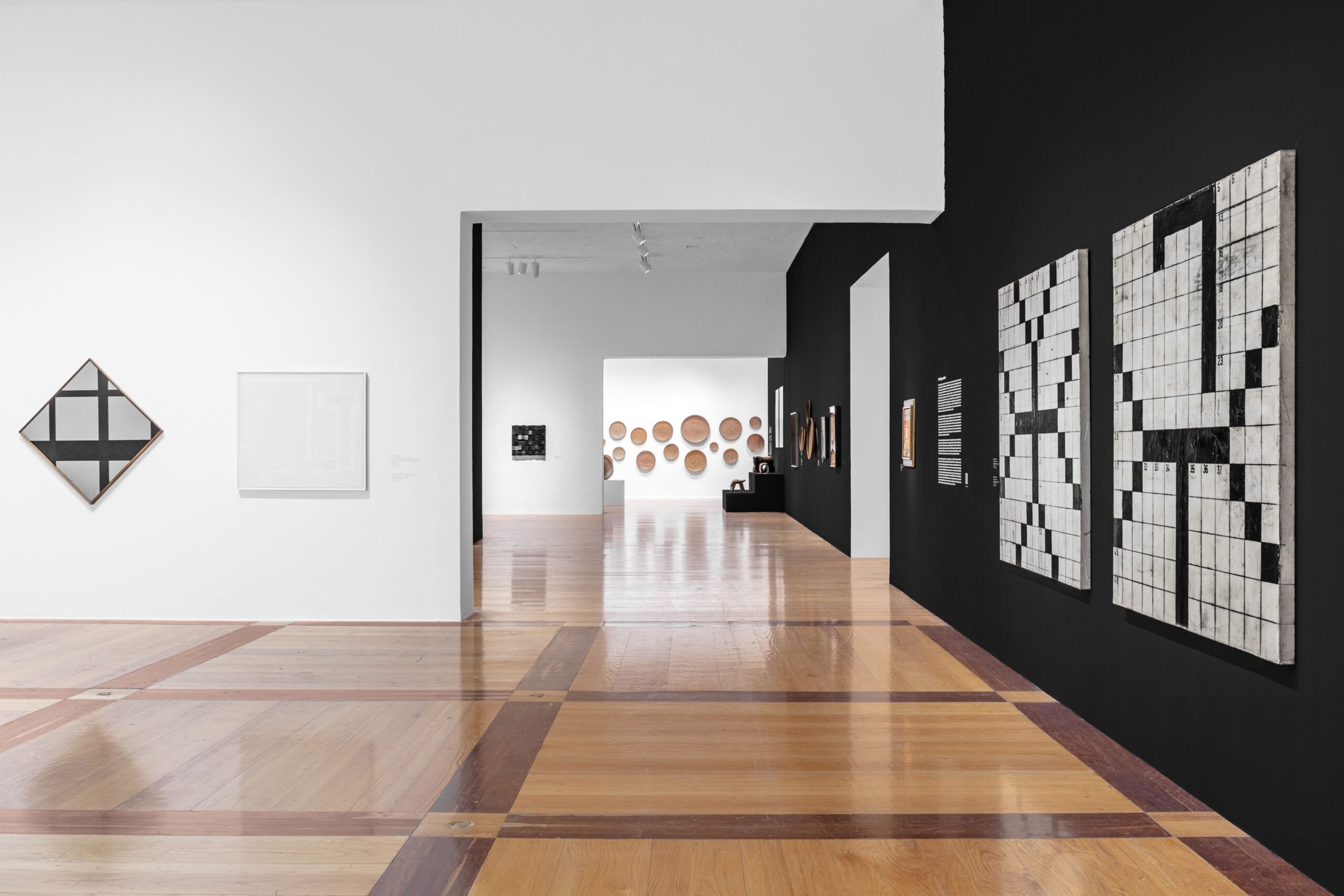
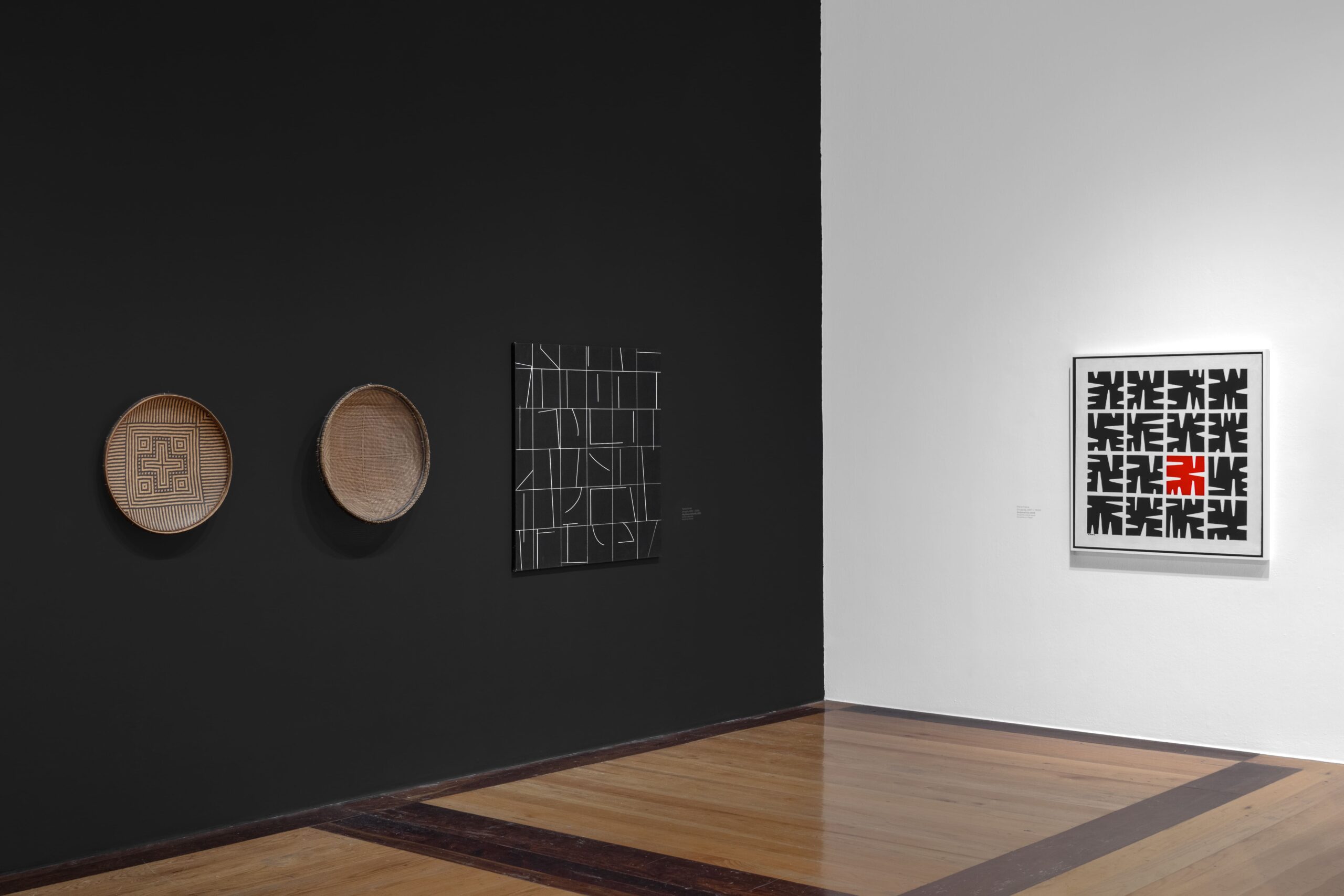
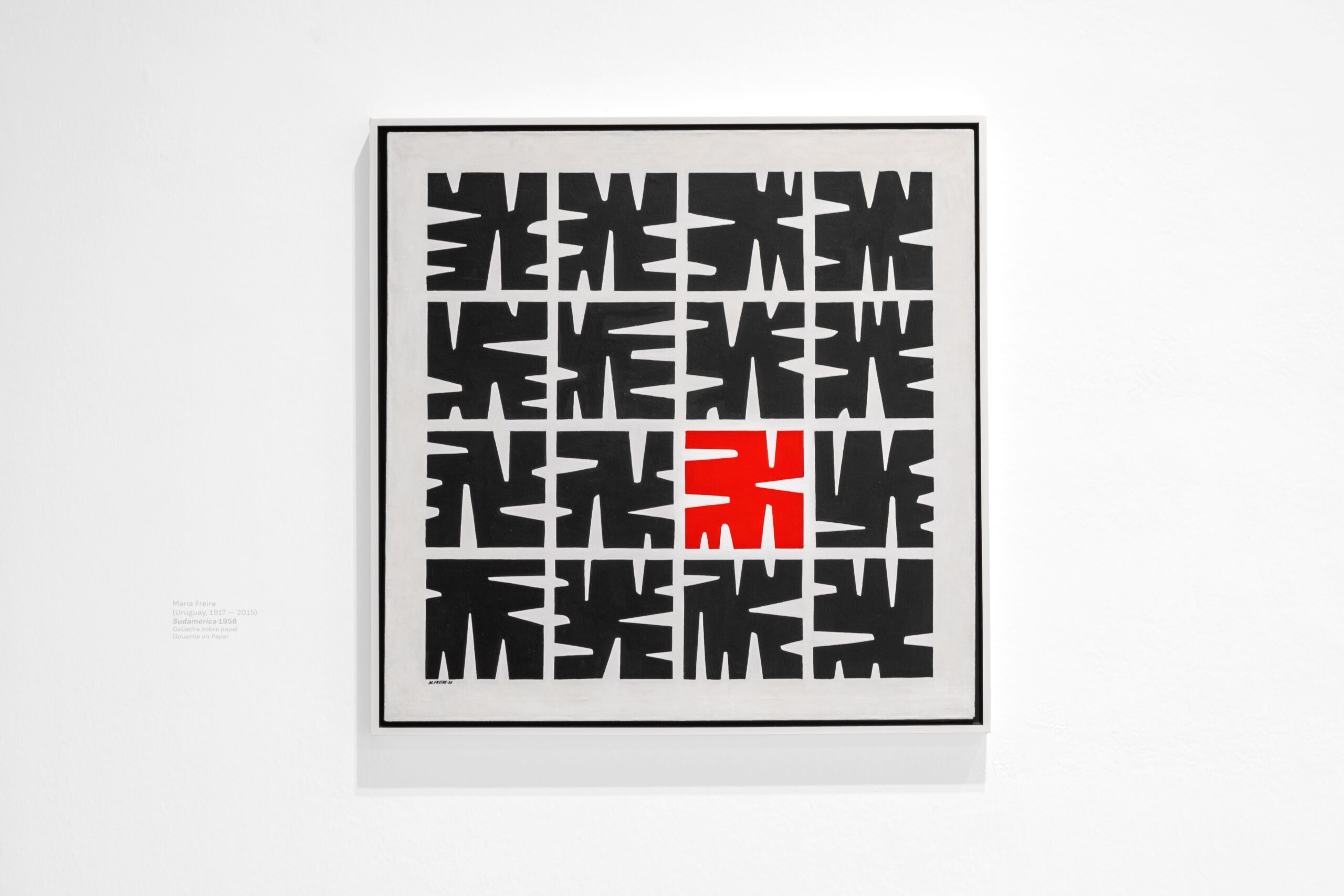
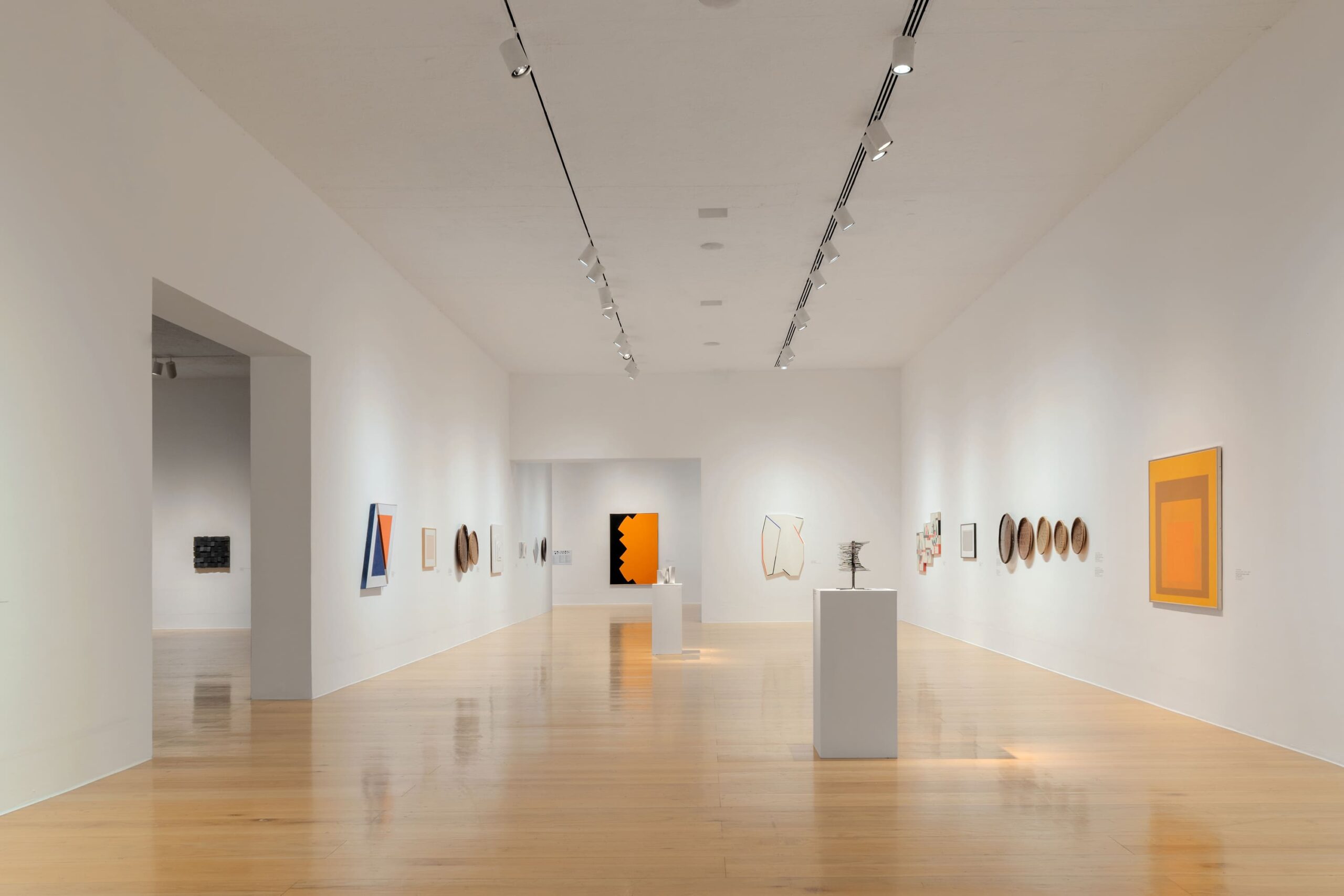
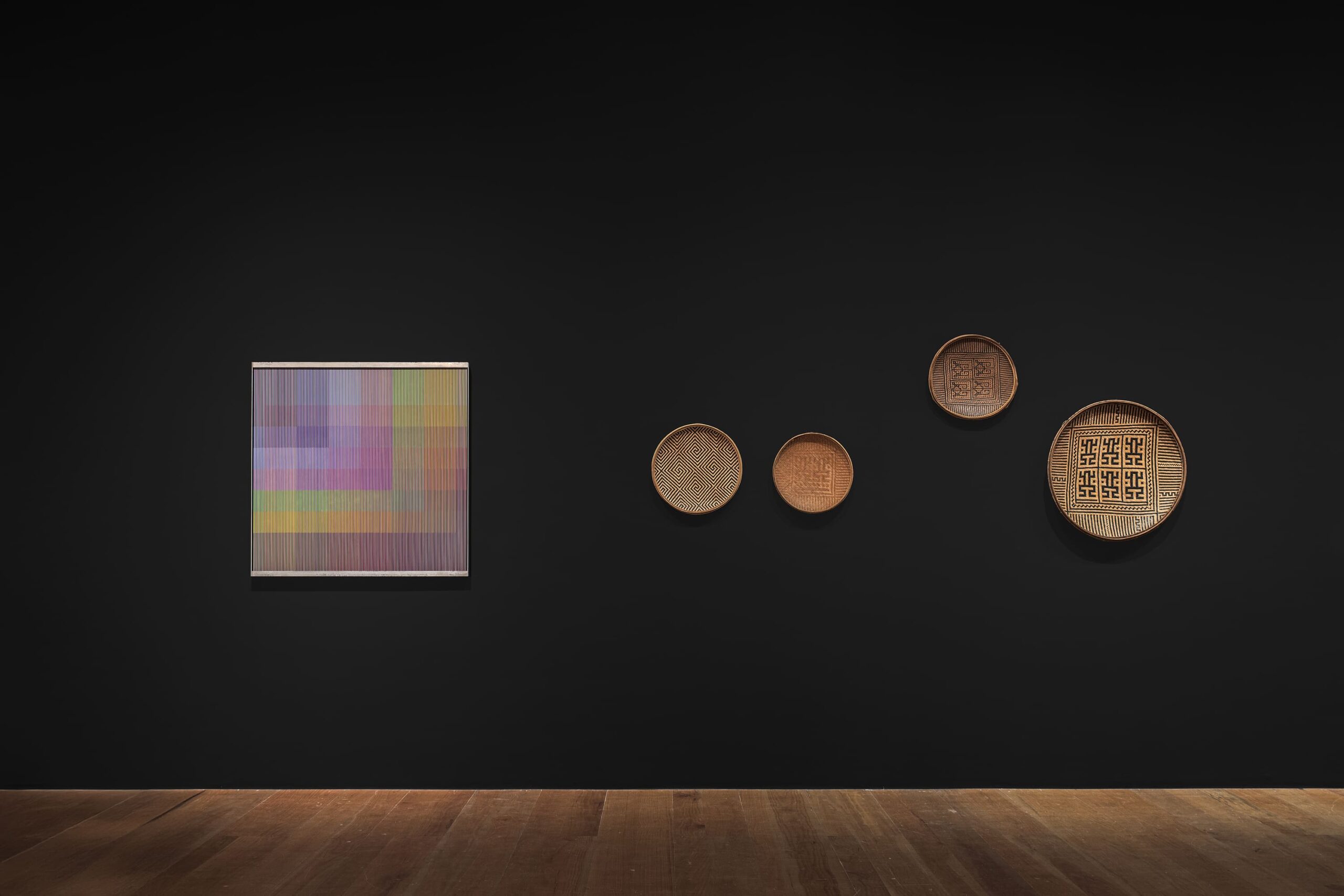
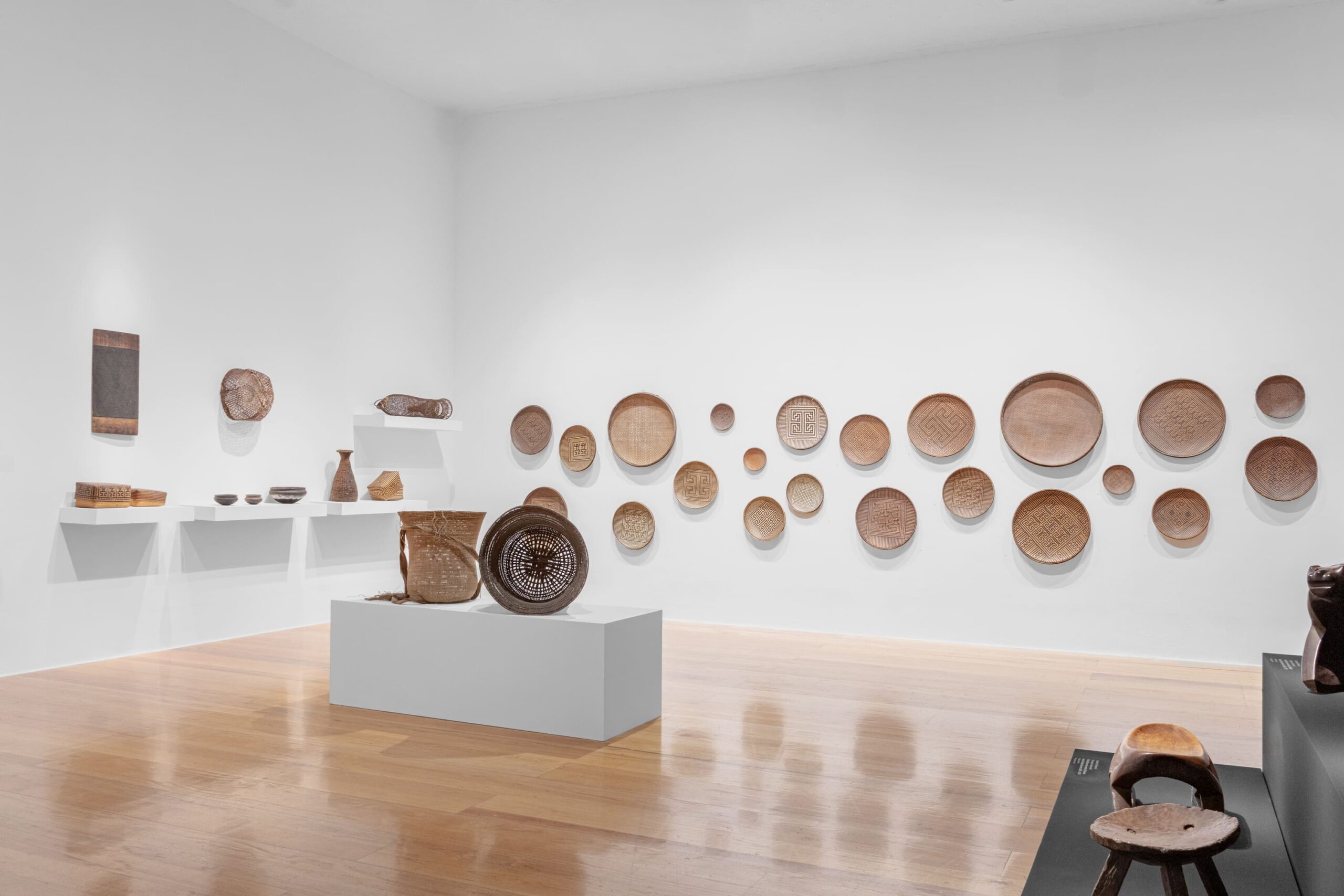
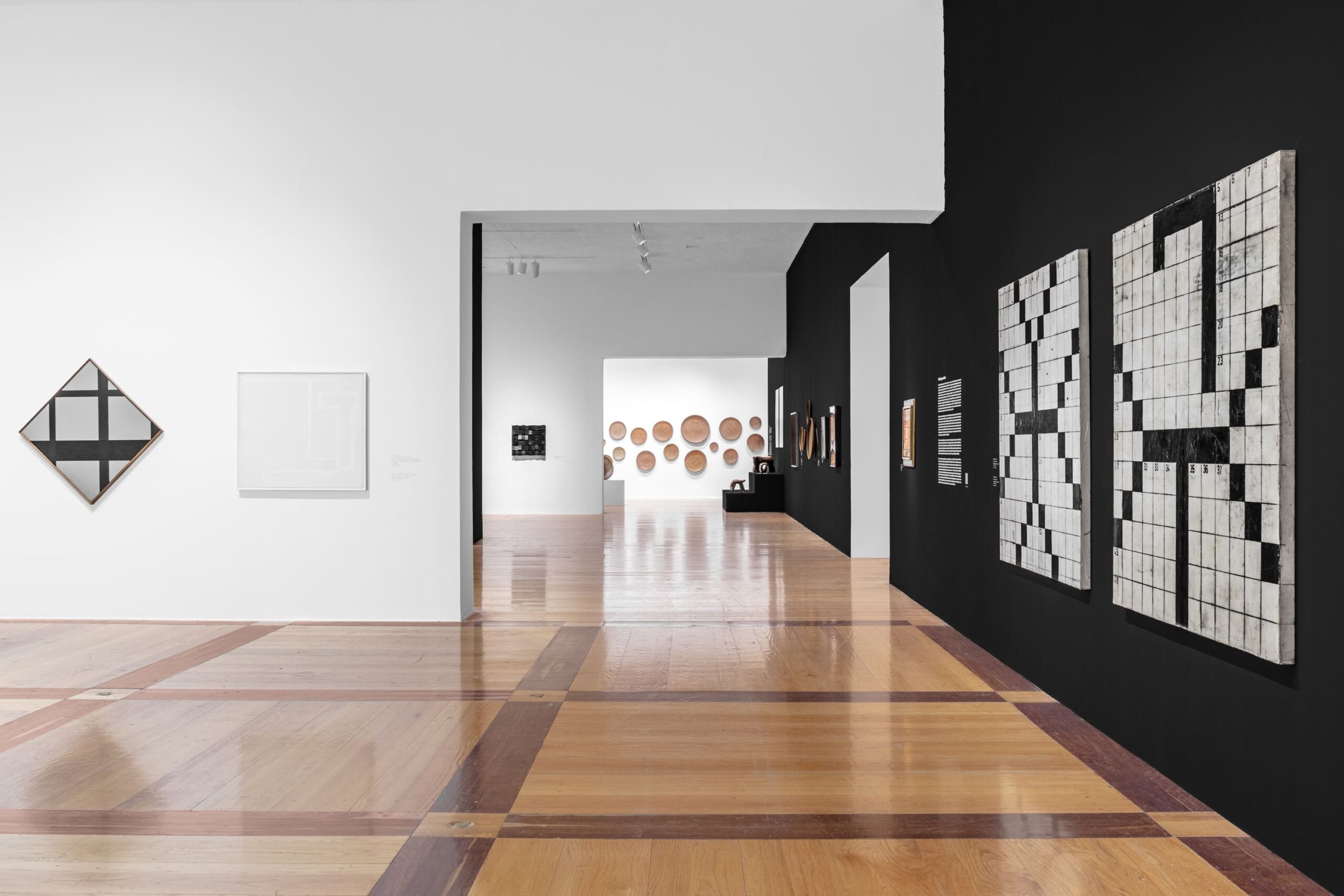
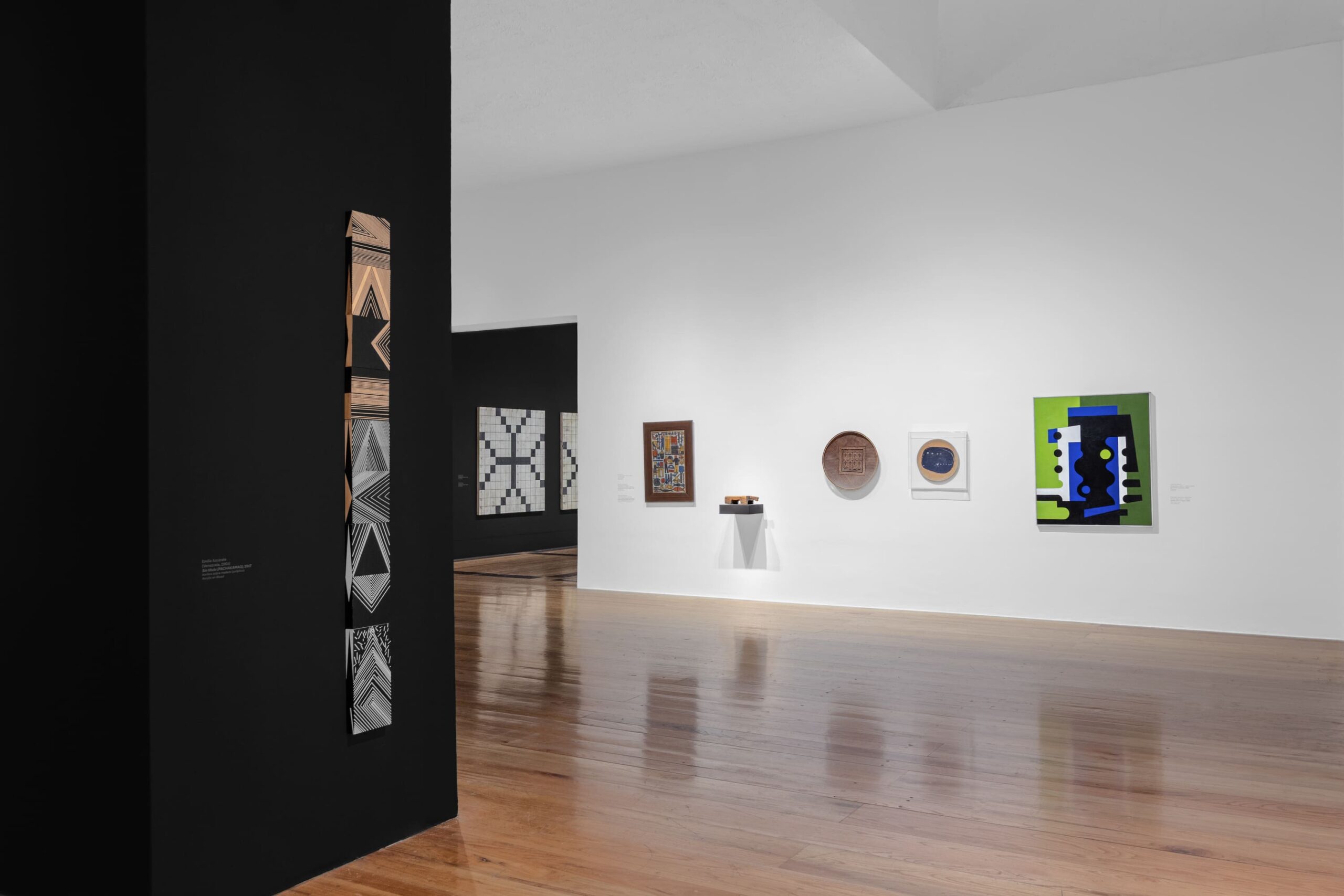
In the exhibition, a dialogue is established between geometric abstraction and contemporary modernity, together with primitive art, especially the symbolic practices of the Ye’kwana community, a Caribbean tribe settled between Brazil and Venezuela. Throughout the exhibition, the public can establish links and contrasts between Western and non-Western traditions, based on geometric explorations, the use of color, among other visual and formal elements. In this way, the exhibition proposes a dialogue between different visual languages united by a common sensibility that transcends cultures and temporal contexts.
This dialogue stems from the vision of the collection and the way Maldonado has shaped it over the years, as the selection of works, curated by Ariel Jiménez, is based on the collector’s vision of showing a “coherence of the dialogues that were created between abstract-geometric artists and indigenous art”.
MARCO is the third venue for the show, whose itinerancy began in 2019 at the Juan Carlos Maldonado Art Collection’s venue in Miami, with the title Convergences / Divergence. Fuentes primitivas de lo moderno; and in 2024 it was shown at Casa América Madrid, in Spain, with the title Convergencias-divergencias. Two aesthetics in dialogue.
Maldonado began his collection 20 years ago, in 2005, and the foundational works were by kinetic and abstract-geometric artists Jesús Rafael Soto, Alejandro Otero and Carlos Cruz-Diez, also from Venezuela. His research into the abstract movement led him to discover artists from other Latin American countries, such as the Uruguayan Joaquín Torres-García, founder of the Escuela del Sur and whose work is influenced by pre-Columbian cultures through abstraction.
Later, in 2008, he expanded his research and included in his collection the Argentines who were part of the Madi movement: Tomás Maldonado, Carmelo Arden Quin, Raúl Lozza and Gyula Koslce; then he moved on to the geometric, concrete and neo-concrete abstraction of Brazil with the artists Lygia Clarck, Willys de Castro and Hélio Oiticica. Although Gego’s works were added in 2010, the collector integrated them as one of the four great Venezuelan artists. When Maldonado managed to put together a collection with the most representative great artists of geometric abstraction from each of the Latin American countries where the movement was present, including Colombia, his interest turned to the United States and Europe.
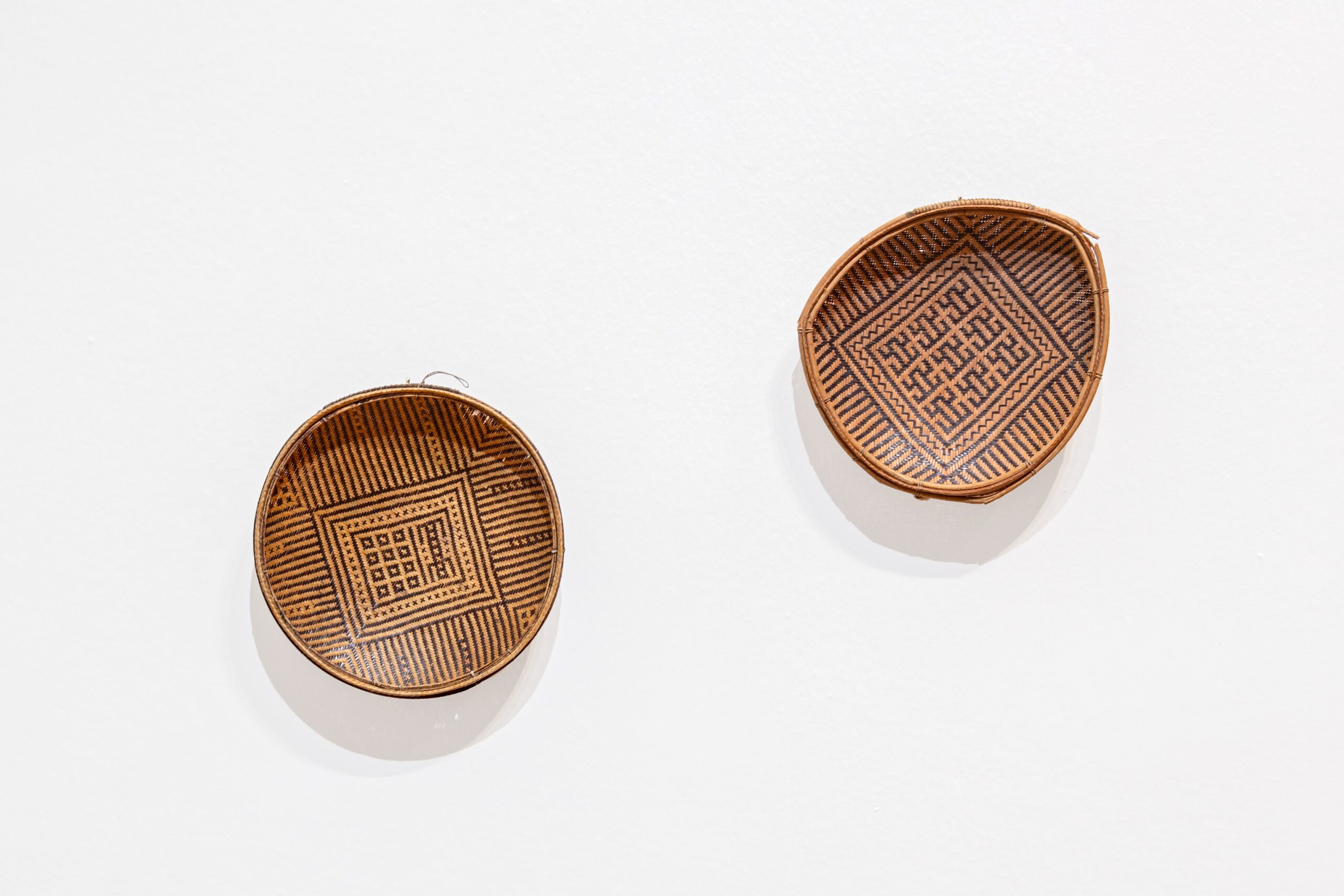
Some of the artists of Latin American modernity are influenced by primitive art, such as Joaquín Torres-García. So, when the collector learned about the collection of baskets and objects produced by the Ye’kwana community of Venezuelan naturalist Charles Brewer-Carías, he immediately connected with the aesthetics, and found a formal parallelism between the weaving technique where they create images with vertical and horizontal crosses, with the aesthetics of geometric and concrete abstraction.
Convergences – Divergences / Two Aesthetics, One Sensibility
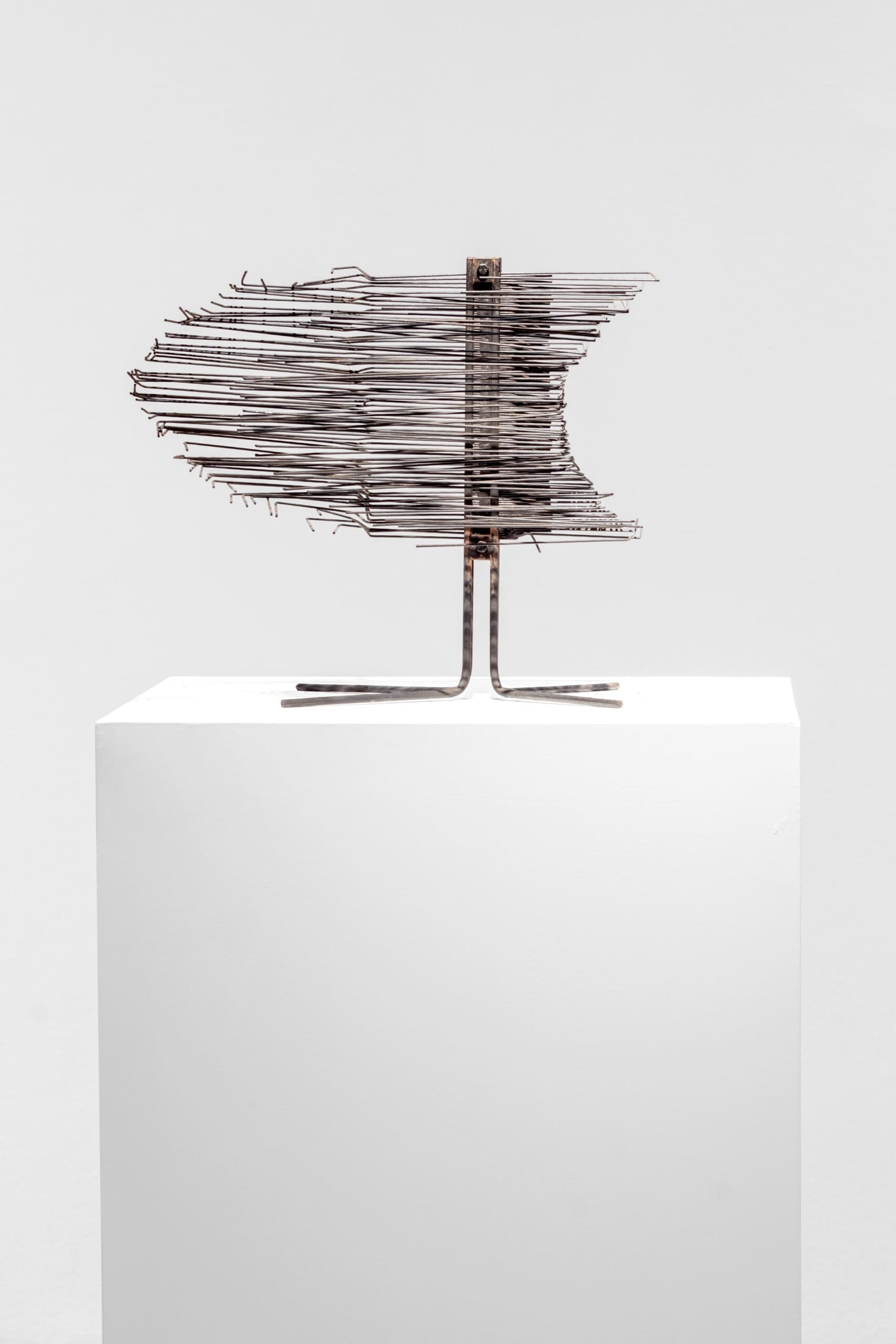
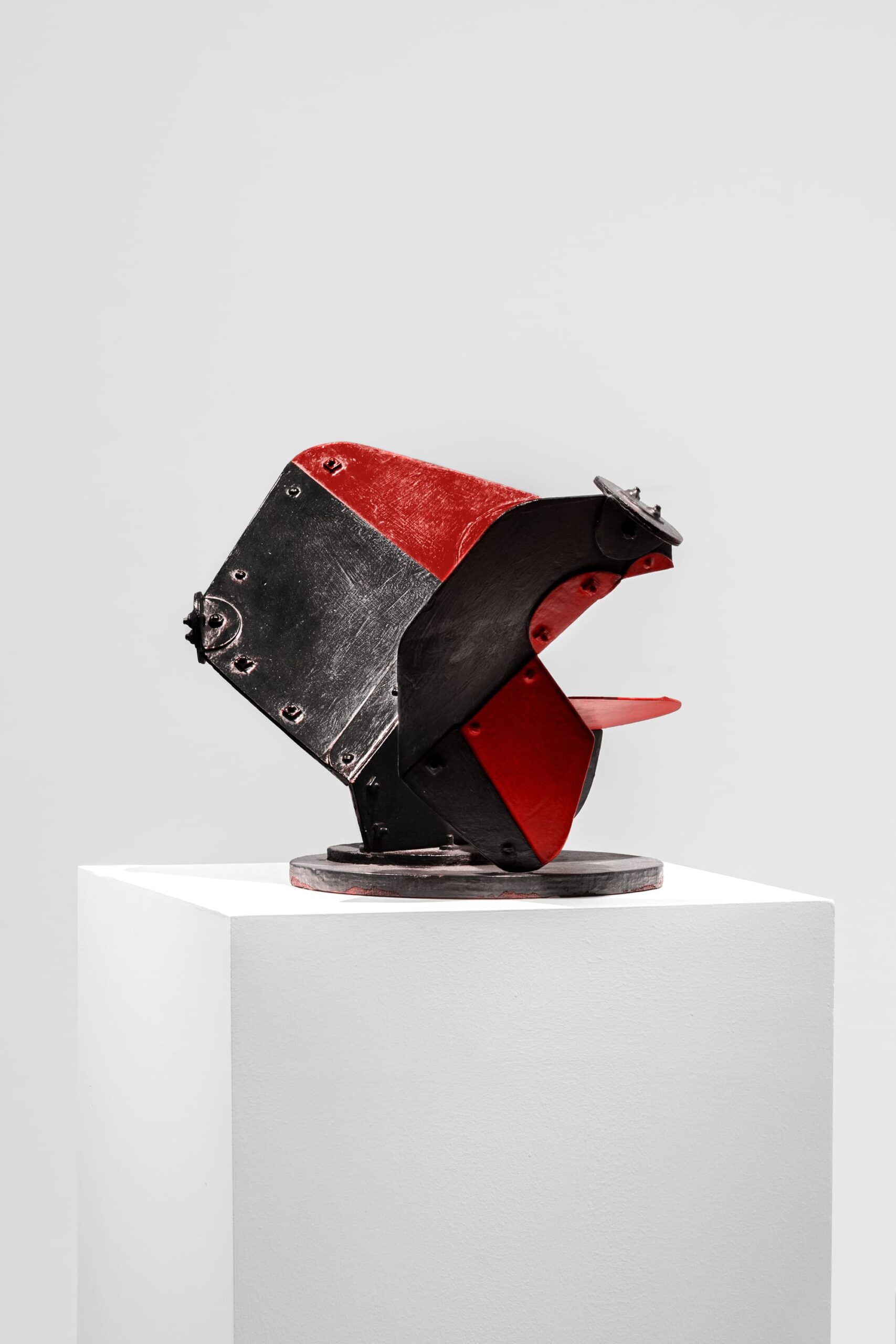
The Juan Carlos Maldonado Collection, characterized by geometric abstract works collected over the past twenty years, presents a selection of its modern and contemporary core at MARCO Museum. This selection engages in dialogue with a collection of basketry and Ye’kwana objects (from one of the Amazon’s most artistically productive communities), recently acquired. The exhibition is presented in three relatively distinct museum sections: Technical Functionality and Symbolic Value; Purity and Economy of Means; and Generative Models.
The coexistence of two such distinct collections raises more questions than answers. This occurrence (although not new) generates a collision; the encounter between two universes of meaning, two symbolic, formal, and technical repertoires, demands an approach—an attempt to understand what is happening. Modern art, and even contemporary art, has drawn and continues to draw from the expressive power found in the productions of similar communities in Africa, Asia, the Americas, and Oceania. Therefore, it is not only legitimate but also natural that a collection like Juan Carlos Maldonado’s would incorporate a Ye’kwana collection, which, while not among the “primary” productions that historically fed modern movements, presents all the characteristics that moved and continue to move modern and contemporary sensibility.
Multiple questions arise when we observe both artistic expressions side by side, especially when we know that we are dealing with often strictly contemporary pieces: Does an art exist that is both primary and contemporary? What relationships does it maintain, in its contemporaneity, with modern and contemporary art among us? How is dialogue established between these “primary” manifestations and the art of our time? What does their sometimes disturbing formal proximity tell us? Where do their differences lie, and what do they reveal to us?
This exhibition was conceived to answer some of the questions that arise when we try to compare such dissimilar aesthetics, not from an ethnographic or anthropological perspective, but in their strictly artistic dimension. Nor is it a historical essay, even partial, that would try to trace the numerous points of contact between these “primary” cultures and Western-type art, but rather an attempt to compare these objects one by one in their techniques and materials, in their ways of proceeding, in their semantic operation, and to see what that encounter can tell us about them and about ourselves.
Technical Functionality and Symbolic Value
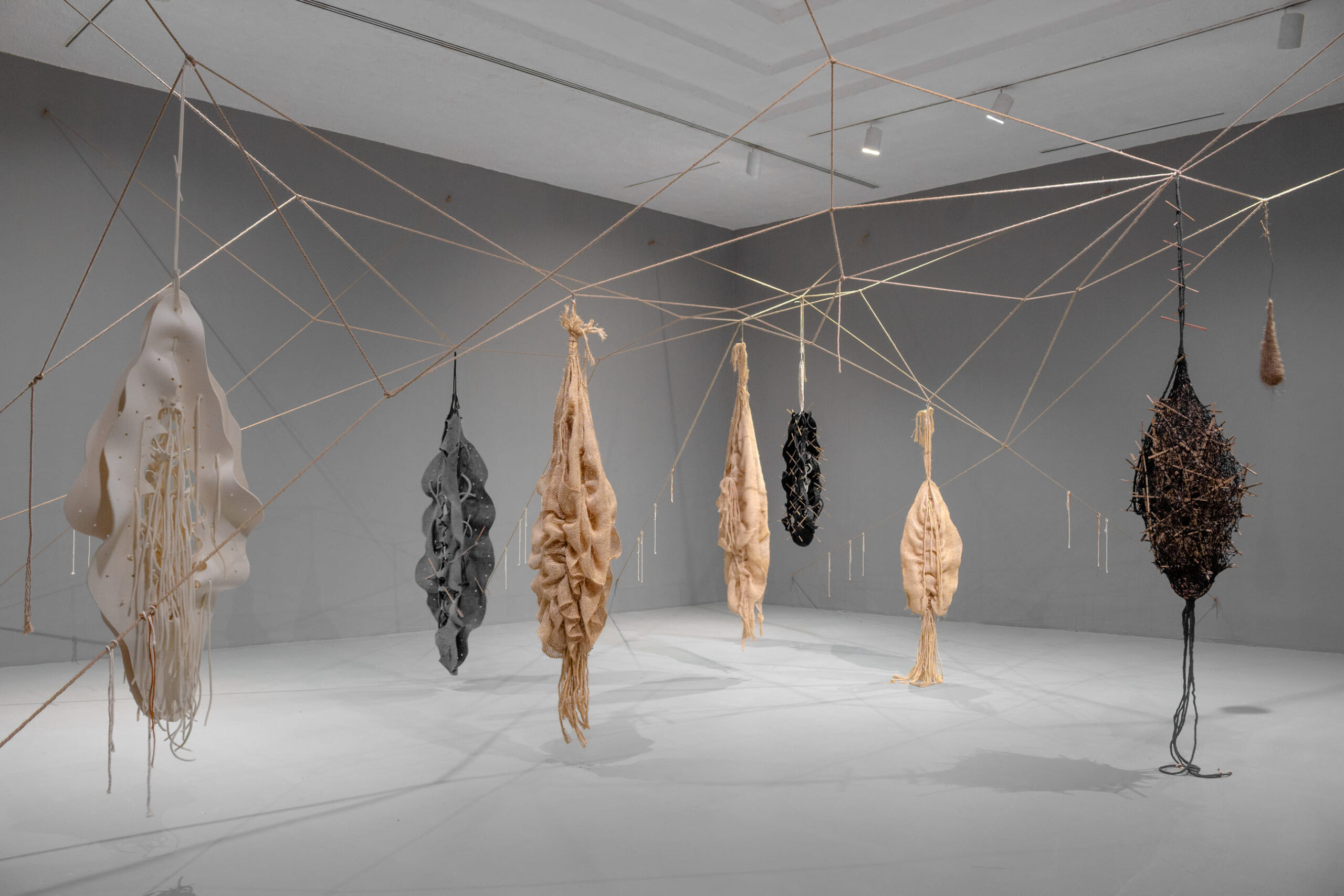
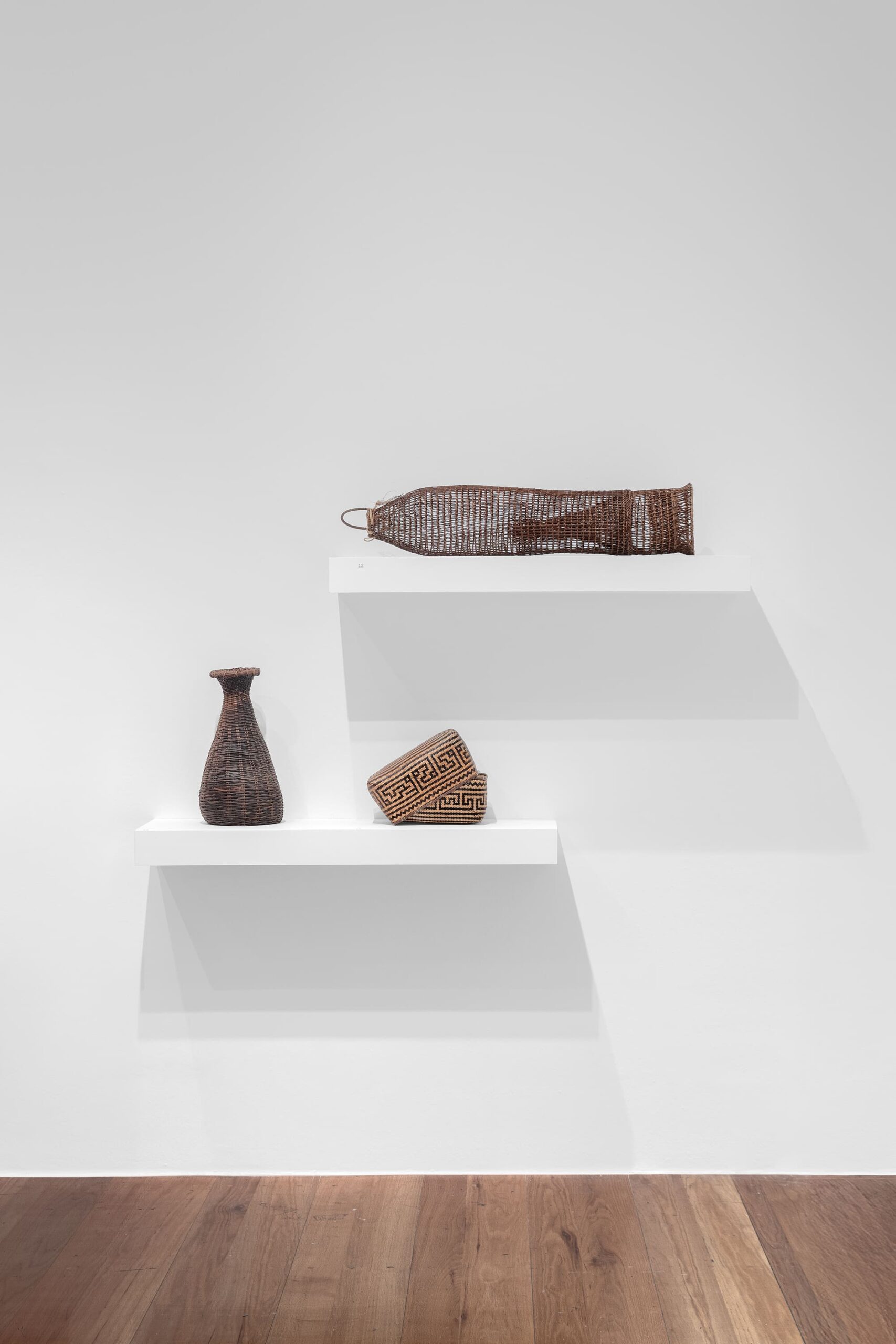
More than mere ornate objects, the Ye’kwana pieces are true symbolic devices that, like works of art among us, are part of that architecture of signs with which we clothe the world to give it meaning. The frogs, monkeys, zigzags, stars, and, in short, the entire repertoire of signs we discover in their baskets and bags function just like the signs in the works of Joaquín Torres García, the letters and numbers in Mira Schendel, and even the gilding in the most abstract pieces of a Mathias Goeritz. As with them, however, the meaning of these signs and the relationships that can be woven between them will be directly proportional to the level of knowledge that an individual possesses about the ideological universe that sustains them. Thus, a frog will immediately awaken in the Ye’kwana the image of a well-known batrachian, and also of one of the wives of Wanadi, their supreme god, just as a stylized fish will immediately refer us to a marine being and a professional and commercial activity, but also to one of the primitive signs of Christianity.
But the signs do not signify only by what they, in themselves, represent, but also by the way in which they are made and organized, and here the comparison between the Ye’kwana works and the geometric abstracts offers convergences of considerable interest. If some are schematic representations of objects or beings to which certain meanings are associated, others are simple geometric forms that say even more in their way of presenting themselves to us: suffice it to compare the baskets identified as Awídi, amohadóto-yekumédi (Whirlwind of 10 turns), and Fhahádi-fhédi (The face of the cachicamo), with a Fisicromía by Carlos Cruz-Diez. Because in both, a perceptual ambiguity is observed that denies the solidity of the form, the substantiality of the matter, and imposes on us, on the contrary, the constant interpenetration between diverse geometric figures, a sensible materialization of a common intuition about the structure of the universe: that the immediately observable material environment is the result of forces that govern it in depth, although in the kinetic ones those forces are strictly physical, subatomic, and electromagnetic, while in the religious and animistic beings that are the Ye’kwana, it is about spirits or supernatural deities.
Purity and Economy of Means
At the base of modern aesthetic thought lies the idea that it is essential to revitalize the resources of the artist and that, for this, it is indispensable to “return” to the purity of the means. Matisse defines it clearly when he says: When the means have been so refined, so reduced that their power of expression is exhausted, it is necessary to return to the essential principles that have formed human language. Then it is the principles that “resurge”, that resume life, that give us life.
And that purity and frankness of the color applied directly on the canvas or wood, the apparent material resources, the assembly procedures also visible, everything, in short, that set of rather rustic operations that the artist of our cities recognizes in his non-Western or “primary” peers, charges his works with a power that moves us. Now, for those who observe with respect the Ye’kwana basketry of the JCMC here exhibited, it is not precisely that taste of the coarse that immediately catches us, but the curious perfection that characterizes its wajas and petacas. To find that rough texture, it would be necessary to refer to less sacred utensils: their benches, their oars, the carrying baskets, and the vessels that they use daily in the kitchen, where that taste of the manufactured object becomes palpable with the delicious “clumsiness” of the “primary” artists, and which authors like Gonzalo Fonseca try to approach thanks to a calculated renunciation, usually the product of an arduous conquest of simplicity.
However, that economy of means in which modern and artists of ancestral cultures, as well as some contemporaries, coincide is not a consequence of an identical attitude, nor of the same expressive deficiencies. The artist of Western cultures has had a considerable number of techniques for centuries, and an unlimited formal and chromatic repertoire, so that when he feels the need to return to the most elementary principles, it is through a voluntary effort that he manages to achieve it. The same cannot be said of the Ye’kwana, who always work to the top of their possibilities and do not know a wider range of those they usually employ.
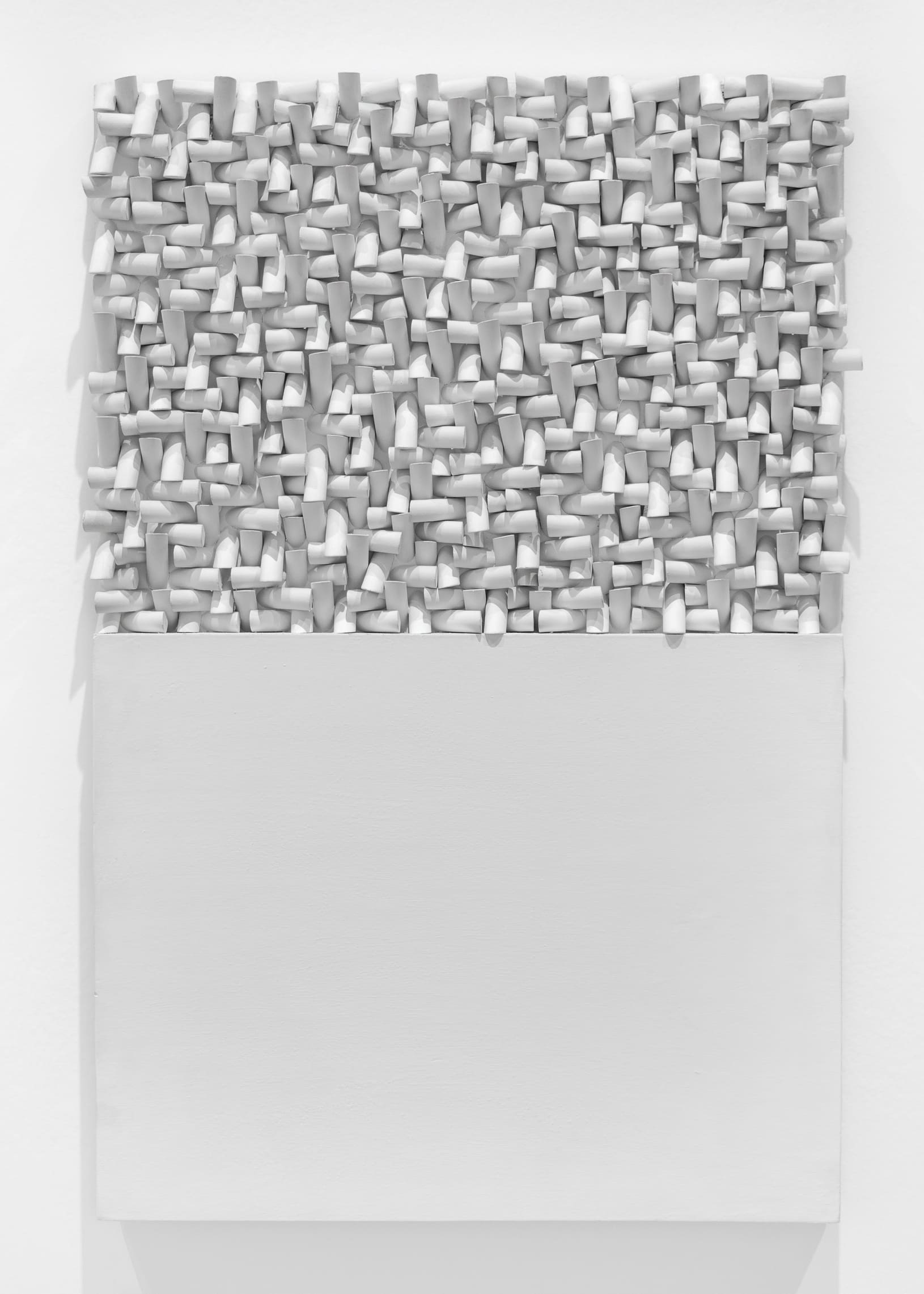
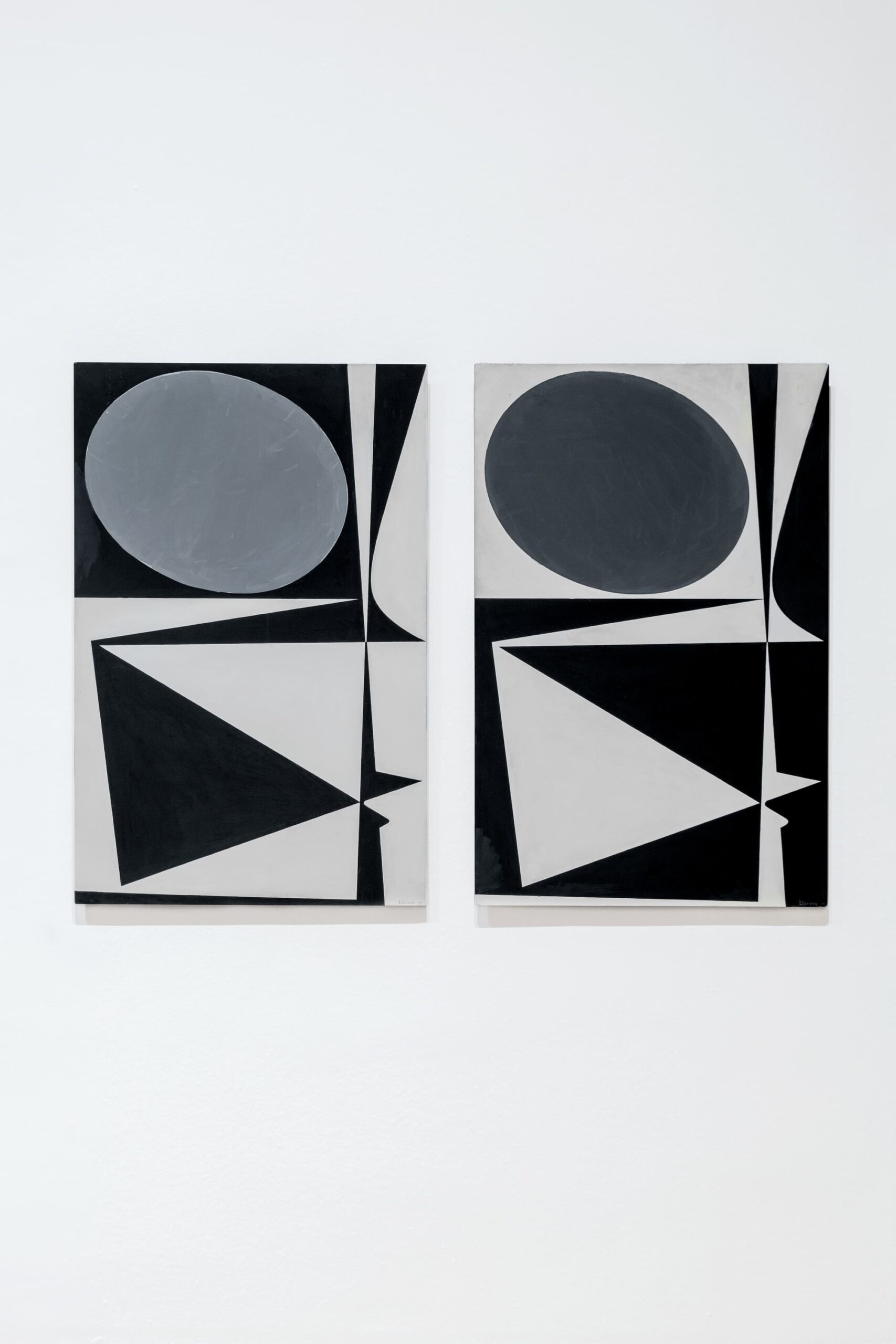
But that strict economy, that sort of asceticism of painting, opens the door to Western artists towards another richness, the richness of the essential, of the strictly necessary (“less is more,” said Mies Van der Rohe), and in this it is clear that the abstract geometricians coincide again with the artists of these tribal cultures, although coming from opposite poles: some from an abundance that ends up drowning their expressive freedom, others from such a radical lack that forces them to concentrate their forces on the indispensable minimum.
Generative Models
This third dialogue focuses on a common factor for numerous modern and contemporary artists, which, in more elementary forms, are detectable among the Ye’kwana. It is about the use of operative models that precede the realization of the work and prescribe its definitive configuration. In the former, they are usually procedures that are used with the intention of introducing non-optional mechanisms. They are, therefore, voluntary restrictions, more or less systematic, of authorial freedom. It is the case of 10 trames 0, 8, 16, 32, 64… by François Morellet, where ten white wefts are superimposed on a black background with a double inclination each time. It is also the case of Spirale, by Jesús Soto, where two spirals (one being the negative of the other) are superimposed a few centimeters apart, and even the Crossword with flies No. 3, by Sigfredo Chacón, who takes advantage of the crosswords usually published in the Venezuelan press of the time, introducing them into his painting as a formal and cultural quote.
In simpler forms, the Ye’kwana also act according to patterns that limit their authorial freedom and precede the realization of their pieces: the obligation to work from the interweaving of bands that cross at angles of 90 degrees and, additionally, the obligation not to superimpose the black weft on more than three to five elements of the warp. All the forms that can be produced will be the result of that type of weaving, and will consequently have the tessellated appearance that identifies them. And of course, the objectives of these patterns are not the same in both, to such an extent that the divergences are even greater than the convergences. As an example of these frictions, we reference two outstanding characteristics.
For Western artists, the use of these generative models is, first, voluntary and, then, aims to deactivate the notions of personal taste, composition, balance, etc., to access other forms of language and, ultimately, to broaden the horizon of the possible. In the Ye’kwana, on the contrary, we are in the presence of a limitation that is imposed on them both by the degree of technical development that is theirs, as well as by cultural and ritual requirements, since they are not asked to invent new expressive forms, but to keep their ancestral traditions alive.
Among the most programmatic geometric abstracts, such as Sol LeWitt, François Morellet, or Carlos Cruz-Diez, the works are entirely projected from the beginning in true instruction manuals, to then be executed in an almost independent way by him or his assistants. Artistic action thus becomes a kind of autonomous mechanism surrendered to the vagaries of the world (the accidents that may occur or be induced during the realization), reproducing in miniature the forces that we assume act in the universe, blind and subjectless forces. In the Ye’kwana, of course, who do not believe in the possibility of a self-regulated universe, but in one governed by supernatural forces, their generative models are not thought of as independent mechanisms, but as voluntary constructions of an individual who seeks to give visible form to the stories that describe the actions of their gods.
When an artist uses a conceptual artistic form, it means that all plans and decisions are made previously and execution is a secondary matter. The idea becomes a machine that makes art.
Sol LeWitt
The Ye’kwana
The Ye’kwana, or Makiritare, are a tribe of Caribbean origin that inhabits the south of Venezuelan territory and the north of Brazil, around the headwaters of the Orinoco River and its tributaries. They form small communities of up to one hundred members and live by hunting, fishing, gathering, and cultivating a few plant species, especially cassava. They prefer the closed forest, rather than the savannas, to settle their villages and usually settle on the edge of a river. Traditionally, each tribe occupied a large round house, or Atta, symbolically organized as a double of the universe. Today, however, and although they retain the collective Atta, each family nucleus owns a cabin.
They are also known for having a considerably sophisticated and rich craft and artistic production, material support of an equally complex symbolic-mythological tradition: the Watunna. The objects gathered in this exhibition come, for the most part, from the expeditions carried out by the Venezuelan explorer Charles Brewer-Carías, who for more than sixty years toured the Ye’kwana villages and studied their forms of life, both in their material expressions and on the metaphysical level. Another important set comes from the collection assembled by the North American explorers Stephen Baker and Peggy Belanger.
The daily life of a Ye’kwana village unfolds slowly between the manufacture of the indispensable utensils for the transformation and cooking of yucca, hunting, and fishing, in the case of men; the care of children, cooking, the house, the cultivation and transformation of yucca, for women. Subsisting in the midst of the forests, and with so few tools, is not an easy task, nor anything that can be left for tomorrow. And that enormous challenge can only be overcome thanks to a double combat with the world: with the here and now of our biological needs (protecting ourselves from the elements, illness, and hunger) and the one that is also fought with and against the hidden forces that govern the universe for them. There is no gap in the Ye’kwana life that can be conceived alien to its powers. And so no activity can be separated from the spiritual, or the religious if you will, provided that it is conceived in its purest or primitive sense: that of individuals in whose universe each being and each gesture has a double dimension, both material and spiritual, because nothing exists outside of divine designs and hidden powers, which although they can be benign, can also reveal themselves as aggressive and harmful. That which we call art is, in such circumstances, a useful utensil for daily life, and a symbolic tool to communicate with the hidden forces that govern the universe making them docile to human life.
Curated by: Ariel Jiménez